
Personalised medicine spent decades pursuing the right molecule for the right patient. This week demonstrated why that is no longer enough. The FDA linked a new breast cancer treatment to an ESR1 liquid-biopsy result. Europe moved towards embedding predictive diagnostics throughout a medicine’s regulatory lifecycle. Artificial intelligence is progressing from identifying cancers to helping determine when molecular testing is necessary. Meanwhile, personalised mRNA cancer vaccines are generating encouraging evidence in melanoma, opening new possibilities for treating disease according to an individual tumour’s genetic characteristics.
The molecule is no longer the whole product. Diagnostics, clinical evidence, data and treatment decisions are becoming inseparable. A therapy cannot be genuinely personalised if patients cannot access the test that determines their eligibility. Nor can technological advances transform care without the infrastructure to deliver them.
But innovation also needs humility. Two major cardiovascular trials delivered uncomfortable results: reducing a biological risk marker or suppressing inflammation did not translate into the expected improvements in cardiovascular outcomes. These findings challenge assumptions about biological targets and reinforce a fundamental principle: precision must apply to evidence, not simply intervention.
The questions extend across the life course. Five-year lecanemab findings in Alzheimer’s disease support further investigation of earlier intervention, while exposing the limitations of long-term comparisons without concurrent randomised controls. New findings on GLP-1 medicines in children as young as six demonstrate considerable potential against severe obesity, but raise difficult questions about growth, development and lifelong treatment. The challenge is no longer simply whether innovation works, but for whom, when, at what cost and with what long-term consequences.
Capital is moving faster than many healthcare systems. Johnson & Johnson and Lilly committed up to $4.8 billion in potential acquisition consideration to programmes targeting precisely defined biology. Investors recognise the commercial value of precision. Governments and payers must now confront the less glamorous question of who finances the diagnostics, workforce and clinical pathways necessary to make it accessible.
Politics is complicating the picture. Washington’s battles over research funding, scientific independence and AI regulation are reshaping the environment for innovation. Europe is confronting the relationship between medicines, diagnostics and evidence requirements. Changes to patient-data access rules in the United States underline another reality: personalised medicine depends increasingly on information moving between institutions, not remaining trapped within them.
Meanwhile, WHO’s antimicrobial-resistance findings expose the distance between national commitments and functioning laboratories. Developments in the Democratic Republic of the Congo demonstrate how insecurity can undermine disease surveillance, referral and treatment. Technology cannot compensate for healthcare systems that fail to deliver.
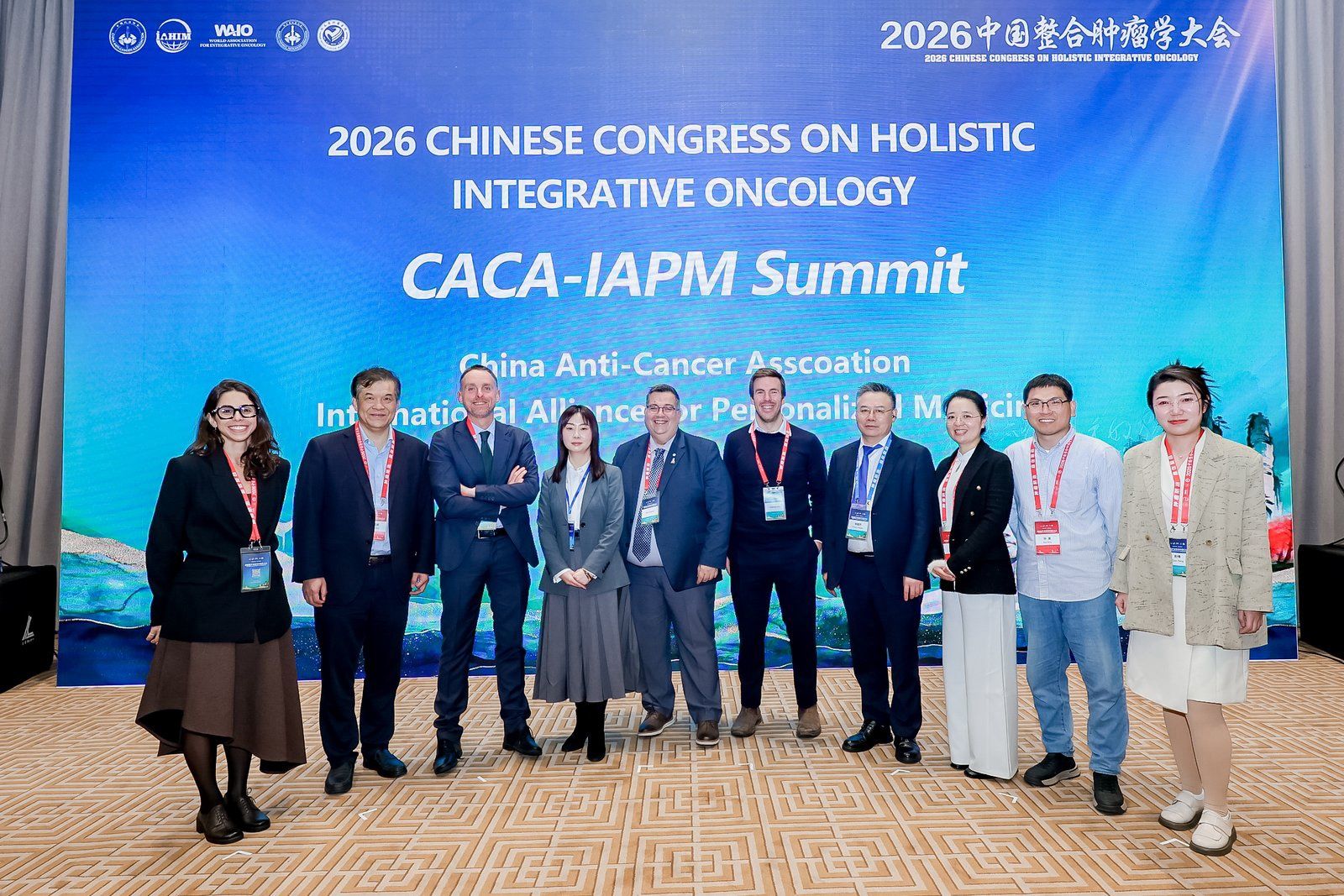
Against this backdrop, last week’s discussions in Changsha carried particular significance. IAPM and the China Anti-Cancer Association brought together Chinese and international expertise to examine how scientific innovation becomes clinical reality. Molecular diagnostics, AI, clinical trials, regulatory evidence, financing and patient access were not treated as separate conversations, but as connected responsibilities.
China’s clinical scale and growing innovation capacity offer considerable opportunities for international cooperation. Yet the objective must extend beyond scientific exchange. It must produce shared standards, stronger laboratory networks, practical implementation partnerships and measurable improvements in patient care. This is the thinking behind IAPM’s proposed Advanced Diagnostics and AI Delivery Compact.
In an increasingly fragmented geopolitical environment, healthcare cooperation must also demonstrate that scientific progress can cross political and economic boundaries. Innovation may be global, but access remains stubbornly local.
The next era of personalised medicine will not be defined simply by who discovers the next molecule, develops the next algorithm or sequences the next genome. It will be defined by who can connect the science, the diagnostic, the evidence, the clinical decision and the patient.
The pathway is becoming the product. And the ability to deliver it is becoming the real test of health policy.
This week
- The prescription begins in plasma | FDA approval turns an ESR1 ctDNA result into the gateway to giredestrant.
- Europe puts the assay inside the medicine | EMA moves predictive-biomarker evidence across the full product lifecycle.
- Washington halves the wait for your own record | A HIPAA rewrite gives patients faster access to electronic health information.
- AI is learning when not to test | New molecular-pathology studies combine classification, evidence checking and test triage.
- Cisplatin loses its veto | A perioperative bladder-cancer regimen opens another route around chemotherapy ineligibility.
- Five years of lecanemab, eighteen months of control | Long-term data strengthen the early-treatment case but also its methodological warning.
- Monday priced precision at $4.8 billion | J&J and Lilly buy sharply defined biology at opposite ends of development.
- AMR has plans. Patients need laboratories | Only 22% of countries report fully funded and implemented national action.
- Ebola built laboratories. War broke the chain | Diagnostic capacity expanded twelve-fold while violence severed contact tracing.
| This is not another health news digest. It’s a twice-weekly readout of where evidence meets power and where power must turn into action. |
The prescription begins in plasma
The FDA approved giredestrant plus everolimus for adults with ER-positive, HER2-negative, ESR1-mutatedlocally advanced or metastatic breast cancer following recurrence or progression on endocrine therapy. The agency simultaneously authorised FoundationOne Liquid CDx to identify eligible patients through circulating tumour DNA. Among 207 patients with ESR1-mutated disease, median progression-free survival reached 10 months, compared with 5.5 months under physician-selected endocrine therapy plus everolimus. The hazard ratio was 0.38, while response rates were 27% versus 14%; overall-survival data remain immature. (FDA’s approval notice)
The FDA did not simply approve another endocrine regimen. It formalised a test–treatment dependency in which plasma testing determines who may receive the medicine. For laboratories and oncology services, ESR1 testing at progression can no longer be treated as optional profiling. For payers, covering the drug without ensuring timely access to the companion diagnostic would create approval on paper and exclusion in practice. The review, completed four weeks ahead of the FDA goal date, also ran through Project Orbis with Canada and Israel—making diagnostic readiness an international implementation question.
IPM News
Changsha put global cooperation to the patient test
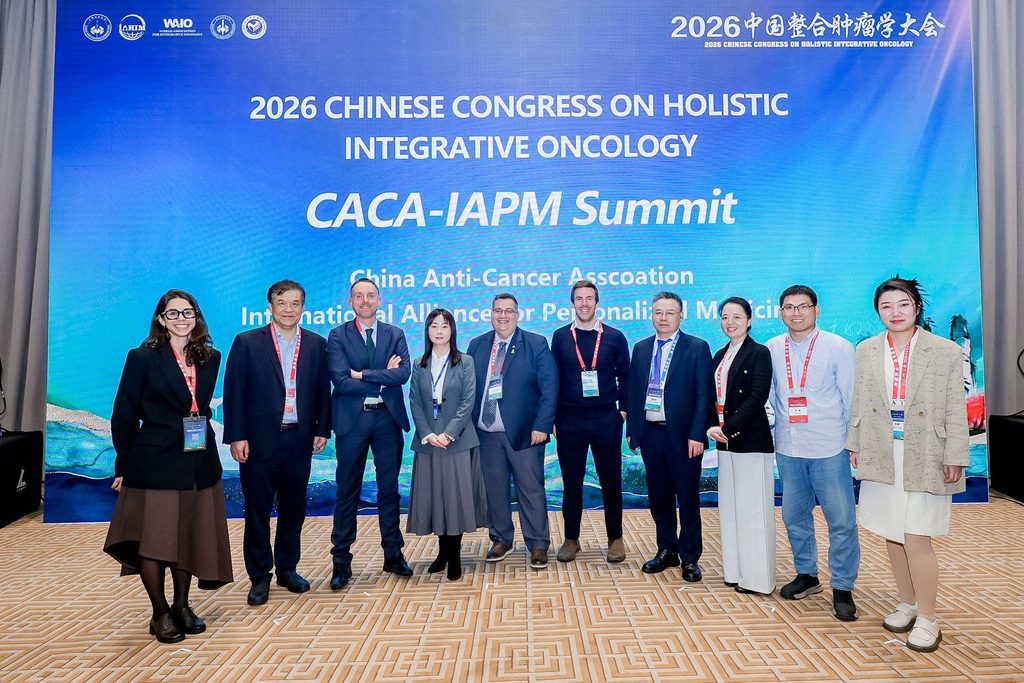
At the 2026 Chinese Congress on Holistic Integrative Oncology in Changsha, IAPM and the China Anti-Cancer Association convened two connected discussions examining what happens after scientific discovery. The first addressed the assurance needed to introduce artificial intelligence and advanced diagnostics responsibly: representative data, clinical validation, laboratory quality, reliable specimens, human oversight and clear accountability. The second followed innovation through the complete patient pathway—from identification and molecular testing to expert interpretation, referral, treatment or clinical-trial access, financing and follow-up. Together, expertise spanning clinical practice, cancer networks, laboratory systems, biobanking, genomic counselling, clinical trials and AI governance turned a broad debate about innovation into a practical discussion about delivery.
The political message from Changsha was clear: global cooperation cannot stop at exchanging research, algorithms or technologies. It must build pathways capable of carrying those innovations safely into routine care across different health systems. The discussions connected China’s clinical scale and implementation capacity with international experience in evidence generation, regional access, laboratory readiness and regulatory assurance. They also advanced the logic behind IAPM’s proposed Advanced Diagnostics and AI Delivery Compact—a shared framework connecting testing, interpretation and treatment decisions through measurable and accountable clinical pathways. Innovation without implementation risks becoming another form of inequality; the real test is not whether a technology can cross borders, but whether the patient can reach the right decision.
Europe puts the assay inside the medicine
The European Medicines Agency has opened consultation on a draft guideline covering predictive biomarkers, companion diagnostics and their associated assays throughout a medicine’s development and post-authorisation lifecycle. It sets expectations for the biomarker and assay data package submitted with a marketing-authorisation application, the evidence required when products change after approval, and the information that should appear in the medicine’s product documentation. The consultation remains open until 31 March 2027. (EMA’s draft guideline)
This matters because Europe still regulates medicines and in-vitro diagnostics through separate systems, even when the clinical value of one depends completely on the other. The draft pushes pharmaceutical developers and diagnostic manufacturers towards earlier co-development and makes assay reliability part of the medicine’s benefit-risk proposition. A biomarker-guided therapy cannot remain “personalised” if different platforms, cut-offs or laboratories identify different patients. Europe is beginning to recognise that the assay is not packaging around the medicine—it is part of the intervention.
Washington halves the wait for your own record

The US Department of Health and Human Services issued a final HIPAA Privacy Rule that cuts the maximum response time for patient access requests from 30 to 15 calendar days. It clarifies when electronic protected health information must be delivered through a personal health application, when electronic copies must be provided without charge, and how patients can direct an electronic health record to another person or service. The rule becomes effective 60 days after publication, with most compliance required 180 days later. (HHS’s final-rule fact sheet)
For personalised medicine, data access is clinical infrastructure. A genomic second opinion, cross-centre tumour board or digital decision-support service cannot operate if records, images and molecular reports remain trapped for a month. But faster release does not automatically deliver interoperability or usable data. Health systems must now prove that they can transmit complete, structured and secure records—not merely send patients another unreadable PDF. Access to one’s data is moving from an administrative courtesy towards a condition of coordinated care.
AI is learning when not to test
Studies presented at the Association for Molecular Pathology meeting pushed AI beyond image recognition. The ALMA 3 model, trained on more than 110,000 patient samples, detected haematolymphoid tumours with 99.5% sensitivity and assigned 81 cancer subtypes with a 90.9% positive predictive value in independent testing. An evidence-linked reporting platform produced claims supported by citations approximately 95% of the time, compared with 65% for a conventional AI approach. In a separate 80-case lung-cancer study, human reviewers supported by pathology AI could have deferred rapid EGFR testing in 33% of cases without missing any confirmed EGFR-positive samples. (AMP’s molecular-diagnostics findings)
The important shift is not that AI can replace molecular testing. It is that it may classify difficult cases, verify evidence, preserve scarce tissue and direct testing towards the patients who need it most. These remain preliminary studies, and the strongest numbers will still require external validation across laboratories, populations and workflows. The implementation question is therefore sharper than the performance claim: who audits the model, who can override it, and what happens when the patient population changes?
Cisplatin loses its veto
The FDA approved durvalumab with enfortumab vedotin before radical cystectomy, followed by adjuvant durvalumab, for adults with muscle-invasive bladder cancer who are ineligible for or have refused cisplatin-based chemotherapy. In the 695-patient VOLGA trial, the regimen reduced the risk of an event or death by 49% compared with surgery alone. The overall-survival hazard ratio was 0.58, with median survival not yet reached in either group. (FDA’s bladder-cancer approval)
The approval changes a pathway historically divided by whether a patient can tolerate cisplatin. Ineligibility or informed refusal no longer automatically sends the patient towards surgery without effective perioperative systemic treatment. The review was completed six weeks early through Project Orbis with regulators in Australia, Brazil, Canada, Israel, Singapore and the United Kingdom. The remaining challenge is operational: coordinating systemic treatment, surgery, immune-related risk and neuropathy management across a pathway that can fail if any handoff is delayed.
Five years of lecanemab, eighteen months of control
Eisai and Biogen reported five-year findings from the Clarity AD extension among 351 patients who received continuous lecanemab. Compared with the external ADNI natural-history cohort, treatment was associated with a 36% lower relative risk of progressing to the next disease stage. In the optional low-tau subgroup, 66% remained stable or improved on the CDR-SB scale and 62% improved. Amyloid-related imaging abnormalities with oedema were concentrated early: 13.5% during the first year, falling below 4% in every subsequent annual interval. (Eisai and Biogen’s five-year results)
The findings strengthen the biological case for diagnosing and treating Alzheimer’s disease earlier, when tau burden is lower. They do not provide five years of randomised evidence. The placebo-controlled phase lasted 18 months; the later comparisons use external cohorts, and only a selected group remained on treatment for five years. Regulators, payers and health systems should take the durability signal seriously without treating it as equivalent to a concurrent control. The result is promising, but it also demonstrates why biomarker-defined early treatment requires equally precise evidence standards.
Monday priced precision at $4.8 billion
Johnson & Johnson agreed to acquire Ollin Biosciences for $2.2 billion upfront, with up to $1.125 billion in additional milestones. The transaction brings J&J the Phase III-ready OLN324, a compact bispecific antibody targeting VEGF and Ang2 in wet age-related macular degeneration and diabetic macular oedema. On the same day, Lilly agreed to pay up to $1.5 billion for Calytrix Bio and its preclinical biparatopic antibody targeting Type 1 and Type 2 mutant CALRin essential thrombocythaemia and myelofibrosis. (J&J’s Ollin announcement; Calytrix’s Lilly announcement)
The two transactions place up to approximately $4.8 billion in acquisition consideration behind sharply defined biology at opposite ends of clinical development. J&J is buying a late-stage programme and financing route; Lilly is buying a preclinical proposition that could deplete a disease-driving clone while sparing normal tissue. Precision medicine’s commercial value increasingly lies in defining which biological group qualifies and why. The political risk is that consolidation and asset pricing advance much faster than reimbursement, diagnostic access and delivery capacity.
AMR has plans. Patients need laboratories
WHO reported that 173 countries now have national antimicrobial-resistance plans, up from 79 in 2017. Yet only 22%report that those plans are fully implemented and financed. Just 36% of countries have a national reference laboratory equipped to test selected resistant bacteria and fungi, far below the 80% target for 2030. Meanwhile, approximately one in six laboratory-confirmed bacterial infections recorded globally in 2023 was resistant to antibiotics. (WHO’s AMR assessment)
The figures expose a familiar political habit: counting strategies instead of capacity. Without diagnostic testing, stewardship collapses into guesswork, resistant infections remain invisible and clinicians cannot reliably match treatment to the organism in front of them. The consequences reach beyond infectious disease into surgery, childbirth, transplantation and cancer care. This is personalised medicine at its least glamorous and most essential—identifying the pathogen and its resistance profile before choosing the treatment.
Ebola built laboratories. War broke the chain
Six months into the Bundibugyo Ebola outbreak in the Democratic Republic of the Congo, more than 11,000 cases and 5,400 deaths have been reported. Transmission continues at 400–500 new cases each week across 67 health zones in eight provinces. Children account for more than one-quarter of confirmed cases and one-third of deaths, while seven in ten infected children under five have died. Diagnostic capacity has nevertheless expanded from two laboratories to more than two dozen, supported by almost 2,000 treatment beds across 104 centres. (Africa CDC and partners’ six-month assessment)
The laboratory expansion has not repaired the pathway around it. More than 80 attacks on healthcare have been recorded since the outbreak began. One recent attack killed 66 civilians, including three health workers, looted three facilities and caused more than 1,000 contacts to disappear from follow-up. Imported cases in Kenya and Nigeria underline the regional risk. The outbreak demonstrates the limit of technical readiness: laboratories can identify the virus, but they cannot trace contacts through gunfire. Security is not context for outbreak control. It is one of its clinical inputs.
The November watch
| 16–19 November — CTAD 2026, Boston: |
| Watch long-term anti-amyloid evidence, blood-based biomarkers, tau-directed therapies and real-world safety. |
| 18–19 November — Annual Personalized Medicine Conference, Boston/Cambridge: |
| Business, clinical and policy leaders confront implementation, evidence and reimbursement. |
| 18–24 November — World AMR Awareness Week: |
| The test will be whether governments move beyond national plans towards funded laboratories and treatment access. |
| 29–30 November — WISH 2026, Doha: |
| Financing, AI governance, health diplomacy and healthy longevity converge, including the pathway towards earlier cancer diagnosis. |
| 30 November — ESMO Asia abstracts: |
| Regular abstracts go public ahead of the 4–6 December congress in Singapore. |
Follow the last-mile conversation!
IPM Alliance tracks the decisions, bottlenecks and implementation gaps shaping personalised medicine access. Follow us for briefings, events, policy signals and practical insights from across regions and disease areas.
We want to hear from you
When a patient becomes eligible for personalised care, where does the system most often lose them: identification, testing, referral, reimbursement, delivery capacity or equity?
Know someone who should be reading this?
IPM Brief is built for people working where science, policy and patient access collide. If one colleague would find this useful, forward it to them and help bring them into the conversation.
International Alliance for Personalised Medicine
Avenue de l’Armée / Legerlaan 10, 1041 Brussels, Belgium
