

Dear friends,
It is November 10th. Tomorrow’s 11/11 might have offered a catchier opening, although 007 would surely have suited Ian Fleming rather better than a newsletter on personalised medicine. Then again, with national politics heating up, international alliances shifting and geopolitical intrigue increasingly resembling a Bond screenplay, perhaps Fleming would have felt entirely at home in 2026.
Even Nvidia has entered the plot, caught between allegations of espionage, congressional scrutiny and the battle for artificial intelligence supremacy. The allegations remain under investigation, but the political consequences are already unfolding. One suspects that even James Bond might struggle to distinguish the semiconductor business from the intelligence business. Apparently, a licence to export chips can be nearly as controversial as a licence to kill.
November 10th, however, deserves recognition in its own right. Today is World Science Day for Peace and Development, dedicated this year to finding common ground through science diplomacy. An admirable ambition when political divisions are widening and scientific cooperation is increasingly competing with economic nationalism, strategic rivalry and domestic political calculations.
Across the Atlantic, America’s post-midterm political landscape is shifting, with implications well beyond Washington. Europe continues its balancing act between pharmaceutical competitiveness, innovation and affordable healthcare. India is intervening in cancer-medicine prices, while China is making scientific and technological leadership central to its international ambitions.
Meanwhile, in Antalya, climate diplomacy confronts a familiar dilemma: governments readily endorse ambitious objectives, but financing their implementation proves considerably less fashionable.
The irony is difficult to miss. We celebrate science as a bridge between nations while simultaneously erecting political and economic barriers to the technologies, knowledge and medicines that could improve lives.
And herein lies the challenge for personalised medicine. Scientific discovery is accelerating, artificial intelligence is transforming what may become possible, and diagnostics are opening extraordinary opportunities. Yet healthcare systems still struggle with the fundamental questions of affordability, infrastructure, implementation and equitable access.
Science is advancing. National politics is heating up. The bills are arriving.
The challenge is no longer simply whether we can innovate, but whether our political and healthcare systems can keep pace.
Because a breakthrough without access is not yet progress and somebody, somewhere, will ultimately pay the price.
Welcome to this week’s IPM Brief.
This week, the bill changes hands
- The cancer bill just lost its markup: New retail prices for more than 1,300 cancer-medicine formulations have taken effect.
- Pharma’s €11 billion disappearing act: Investors have crossed the ownership threshold that clears a path to taking Recordati private.
- Three passports, zero approvals: Experimental treatments for lung cancer, Huntington’s and Alzheimer’s enter a coordinated development pathway.
- A second stroke gets a new adversary: The first approved factor XIa inhibitor adds an option for certain patients already receiving antiplatelet treatment.
- The breast scan that travels: Trained clinicians used portable ultrasound to triage abnormal examinations where specialist imaging is scarce.
- The weight-loss boom meets the optic nerve: A rare potential eye risk is going onto GLP-1 medicine labels.
- Big Food objects to the ingredient list: WHO’s draft food rules have drawn an industry challenge.
- Measles found 45 counties: Pennsylvania’s outbreak has passed 1,500 confirmed cases.
- Rain entered the paediatric department: Flooding has interrupted healthcare in Gaza and exposed a shortage of shelter and equipment.
- The climate summit opened with a stethoscope: A new health-resilience initiative now faces the familiar test of money and delivery.
| This is not another health news digest. It’s a twice-weekly readout of where evidence meets power and where power must turn into action. |
The cancer bill just lost its markup
Revised maximum retail prices took effect on 9 November for 1,364 cancer-medicine formulations reported by 85 companies. India’s pricing authority capped trade margins on 137 identified anti-cancer drugs; by 8 November, companies had submitted revised prices covering 121 of them. The government says 679 brands reported price reductions greater than 50% and estimates annual consumer savings of ₹3,540 crore. (India’s Department of Pharmaceuticals)
Those are reported and projected figures, not proof that every patient will save the same amount. But the political choice is unmistakable: the margin between a medicine’s supply price and its retail price is now a matter for public intervention. The next test happens at the pharmacy counter. A price cap means little if patients cannot find the drug, verify its price or challenge a higher charge.
Pharma’s €11 billion disappearing act

The consortium led by CVC and Belgium’s GBL has secured more than 90% of Italian drugmaker Recordati after the reopened takeover offer closed on Monday. Reuters calculated its holding at approximately 91.9%, crossing the threshold that clears a path towards buying the remaining shares and delisting a company valued at around €11 billion. The delisting itself is still ahead. (Reuters)
For investors, this is a transaction. For health policy, it is a reminder that the ownership of pharmaceutical capacity can change on a timetable quite separate from the needs of patients. New owners may invest, reorganise or acquire; the deal alone tells us nothing about future prices or access. It does tell us who will have the power to make those decisions.
Three passports, zero approvals
Three investigational medicines have received UK Innovation Passports: an RNA-interference treatment for Huntington’s disease, a targeted small molecule being developed for lung cancer, and an antisense therapy for early Alzheimer’s disease. The designation gives developers access to coordinated advice from the medicines regulator, the NHS and health-technology assessment bodies. None of the three has been approved for patients. (MHRA)
The distinction matters. A passport opens conversations about evidence and access while a medicine is still being developed; it does not let the product through the final gate. That is a sensible place for health systems to enter the story. If trial design cannot answer the questions a payer or clinician will eventually ask, discovering that problem after approval is an expensive way to learn it.
A second stroke gets a new adversary
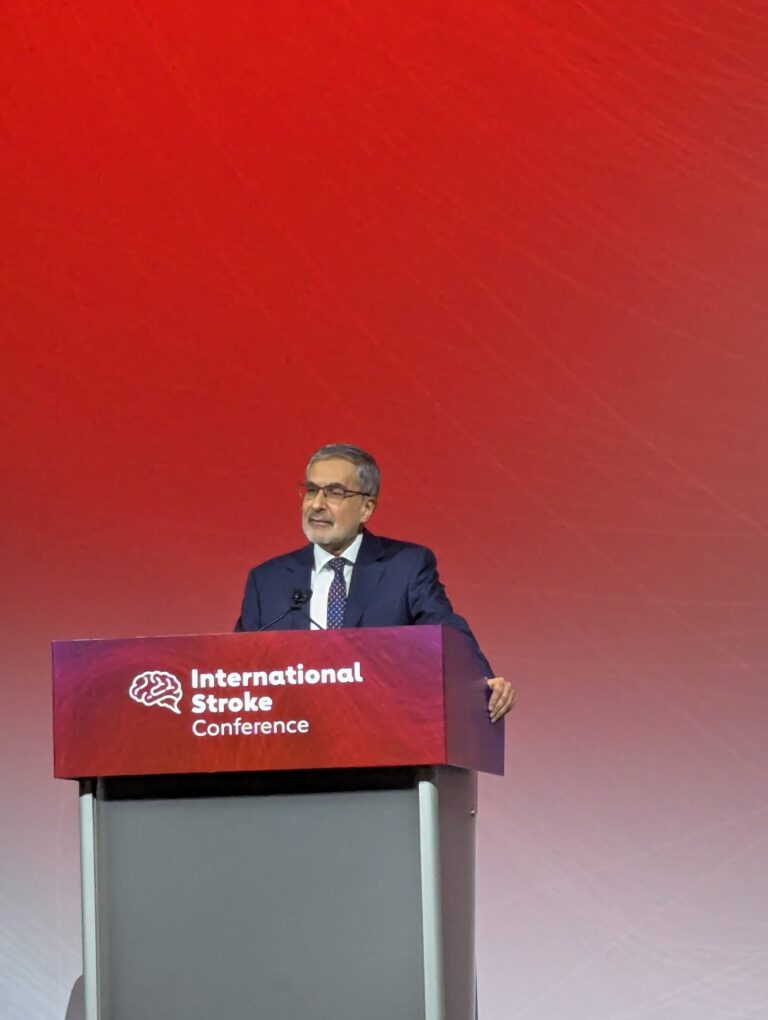
The FDA has approved asundexian, the first factor XIa inhibitor, alongside antiplatelet therapy for certain adults following a recent non-cardioembolic ischaemic stroke or high-risk transient ischaemic attack. In a trial involving 12,327 people, it reduced the relative risk of ischaemic stroke by 26% versus placebo over a median 14.2 months of treatment. Both groups received antiplatelet therapy. (FDA)
Preventing a second stroke is an unusually concrete definition of progress: fewer people facing another event that could take away speech, movement or independence. The safety ledger still matters. Overall major bleeding rates were similar between groups, but bleeding increased with asundexian among people older than 75 and during the first 90 days; gastrointestinal bleeding was also more common. The new option gives clinicians another decision to make, not a decision they can stop making.
The breast scan that travels
In a prospective study involving 319 women with abnormal clinical breast examinations in India, trained clinicians who were not radiologists used portable ultrasound to decide who needed further investigation. The approach achieved 94.3% sensitivity and 76.7% specificity for breast cancer and reduced referrals for additional assessment by roughly half. (JCO Global Oncology)
This was triage after an abnormal examination, not a trial of portable ultrasound as a stand-alone population screening programme. Larger studies in routine services are still needed. Even so, the policy argument is powerful: a diagnostic pathway should not depend entirely on whether a specialist scanner and radiologist happen to be nearby. A small device and well-trained clinician might make the first referral more useful for everyone waiting behind it.
The weight-loss boom meets the optic nerve
The FDA is requiring updated warnings for GLP-1 receptor agonist medicines about a potential increased risk of non-arteritic anterior ischaemic optic neuropathy, or NAION. The rare condition can cause sudden, painless vision loss. In the agency’s analysis of 126 trials, there were 6.4 probable cases per 100,000 person-years among GLP-1 users, compared with 3.8 among comparator patients. (FDA)
The evidence is not a licence for panic: the event is rare, patients have other risk factors, and different analyses produced different estimates. It is a reason to communicate clearly while millions use these medicines for diabetes, weight management and other approved conditions. A safety warning does not erase a treatment’s benefits. It makes the terms of taking it more honest.
Big Food objects to the ingredient list
WHO has proposed a food-profiling model that looks beyond sugar, salt and fat. Its draft also considers specified colours, flavours and sweeteners used to increase a product’s sensory appeal when identifying packaged foods that governments might subject to measures such as labelling or marketing restrictions. Food-industry representatives have challenged the approach, arguing that it could capture too many products and distract from nutritional quality. (WHO draft; Reuters)
This is a consultation, open until 27 November, not an enacted global rule. WHO also says including those ingredients does not mean they are inherently unsafe. The argument is over something more political: which products public authorities should be able to identify and regulate, and who gets to shape that definition. The companies selling the products want a seat at the table. So should the people eating them.
Measles found 45 counties
Pennsylvania reported 1,505 confirmed measles cases across 45 counties as of Monday, including 290 hospitalisations and six confirmed measles-associated deaths this year. Eighteen cases had been confirmed since the state’s 6 November update. Health officials have mounted vaccination clinics and recommend an additional early dose for some infants aged six to eleven months in areas with sustained transmission; that dose does not replace the routine schedule. (Pennsylvania Department of Health)
This is what a preventable disease looks like when it becomes a health-system assignment again: tracing contacts, staffing clinics, admitting patients and protecting babies too young for their routine first dose. The state says its teams have administered more than 7,000 MMR vaccinations at 244 pop-up clinics since the outbreak began. The vaccine is doing its job. Public policy has to reach people before the virus does.
Rain entered the paediatric department
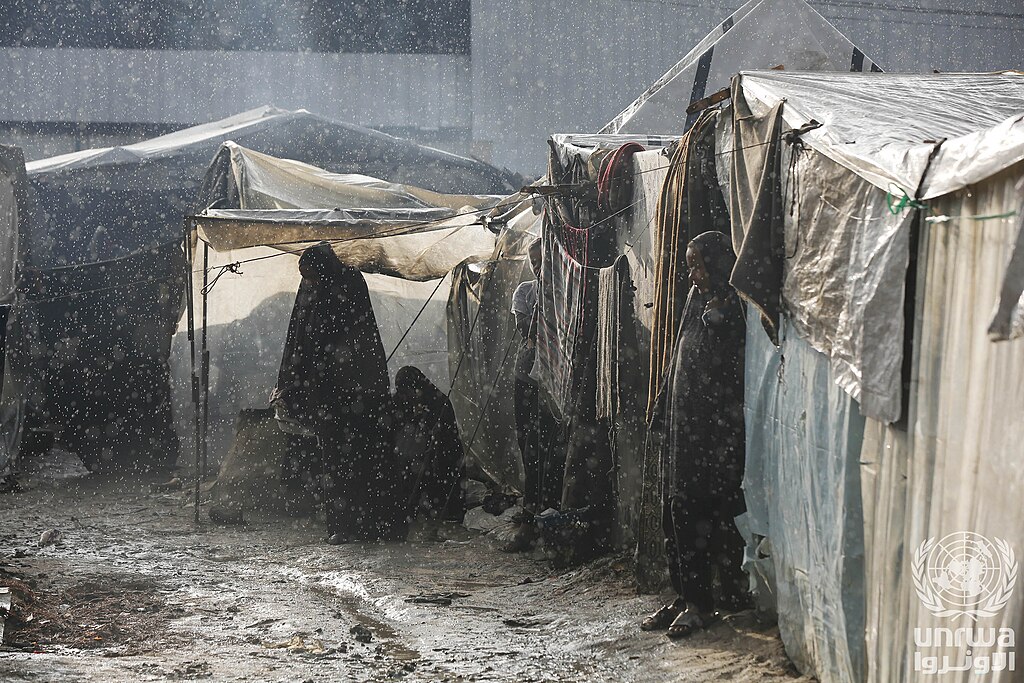
Heavy rain from the evening of 6 November flooded shelters and health facilities across Gaza. Water entered departments at Nasser Medical Complex; the basement of Patient’s Friends Benevolent Society Hospital, which houses paediatrics, pharmacy and radiology, also flooded. Mobile health services were suspended, roads delayed staff, and one provider recorded a 54% fall in consultations during the disruption. (UN OCHA)
The storm is weather. The shortage of working drainage, shelter, equipment and medical supplies is a policy and humanitarian emergency. By 8 November, partners had received appeals from more than 26,000 households whose shelters or belongings were damaged. OCHA says tents and other materials were waiting outside Gaza while entry approvals and funding remained urgent needs. A hospital cannot treat its way out of a flooded city.
The climate summit opened with a stethoscope
COP31 opened in Antalya on Monday with a dedicated Health Day and the launch of the Antalya Initiative for Health Resilience. The initiative is a voluntary way for countries to share practical approaches to protecting health systems against climate risks. WHO’s director-general told ministers that more than 90% of countries in its survey identified insufficient finance as a major barrier to carrying out national climate-and-health plans. (WHO; Antalya initiative)
A knowledge-sharing initiative can help governments avoid repeating one another’s mistakes. It cannot, by itself, reinforce a hospital, pay a health worker or finance a warning system. That is the test as leaders arrive for the summit: whether health appears in budgets and negotiated commitments as confidently as it appears in speeches.
The November watch
| 9–12 November — European medicines decisions: |
| EMA’s CHMP meeting is under way. Watch for its opinions on new medicines; a committee opinion is not yet a European Commission authorisation. European Medicines Agency (EMA) |
| 13 November — Climate, displacement and care: |
| A WHO-led COP31 session examines how climate-related mobility changes health needs and response. who.int |
| 14 November — World Diabetes Day: |
| WHO’s “Early action on diabetes” campaign puts diagnosis, affordable care and stigma in focus. Its estimate that more than 40% of people living with diabetes are undiagnosed deserves more than a commemorative post. who.int |
| 17 November — Cervical cancer elimination: |
| The global day of action is a chance to ask whether vaccination, screening and treatment are reaching the same communities. who.int |
Follow the last-mile conversation!
IPM Alliance tracks the decisions, bottlenecks and implementation gaps shaping personalised medicine access. Follow us for briefings, events, policy signals and practical insights from across regions and disease areas.
We want to hear from you
When a patient becomes eligible for personalised care, where does the system most often lose them: identification, testing, referral, reimbursement, delivery capacity or equity?
Know someone who should be reading this?
IPM Brief is built for people working where science, policy and patient access collide. If one colleague would find this useful, forward it to them and help bring them into the conversation.
International Alliance for Personalised Medicine
Avenue de l’Armée / Legerlaan 10, 1041 Brussels, Belgium
