
Dear friends,
It is mid-October already. The clocks have not gone back, but time seems to be running away from itself. This year’s Nobel Prize winner in Literature, Anne Carson, captured the feeling rather beautifully: “Time got the jump on me yes it did.” Quite. Scientists in China and Europe have even developed working nuclear clocks, presumably because ordinary timekeeping can no longer keep up with events. Science is accelerating, politics is struggling to follow, and Brussels is still trying to reduce the paperwork.
For anyone contemplating a tattoo, there is encouraging news. Scientists have developed experimental invisible ink that appears under ultraviolet light and disappears under bright visible light. In Florida, meanwhile, a court has ordered a grand-jury report concerning $10 million in Medicaid settlement funds expunged. Apparently, making things disappear is not confined to the laboratory.
Elsewhere, researchers have analysed 10 million immune cells from 1,108 people, uncovering previously elusive genetic mechanisms of disease. Ursula von der Leyen wants AI to help European businesses report information just once. An excellent ambition. Perhaps someone could introduce the concept to health systems, where patients still repeat their medical histories, chase diagnostic results and navigate reimbursement decisions.
Even nuclear power is attracting renewed attention as AI demands ever more electricity. Yet another resource is disappearing: the doctors connecting scientific discovery with clinical practice. Physician-scientists represented nearly 5% of the American medical workforce in the 1980s; today, closer to 1.5%. We are investing billions in intelligent machines while losing some of the human intelligence needed to translate discovery into care.
And the contradictions extend well beyond Europe and America.
China is advancing rapidly in AI, diagnostics and new cancer treatments. Brazil is increasingly important to international oncology research and the debate over equitable access. Across Africa, building sustainable diagnostic capacity, clinical networks and locally led research remains essential. Meanwhile, patients from Havana to New Delhi face familiar questions about medicine availability, affordability and the ability of health systems to deliver.
Different continents, different political systems, but a remarkably similar problem: science is moving faster than the institutions responsible for delivering its benefits.
The World Health Assembly’s resolution on precision medicine earlier this year established an important global commitment. But resolutions do not sequence tumours, fund diagnostic laboratories, train physicians or reimburse treatments. Implementation does.
For the International Alliance for Personalised Medicine, this is precisely the agenda we are advancing, from Brussels and Madrid this October to Rio de Janeiro and China’s Hunan province in November, alongside our engagement with partners across Africa and other regions. Connecting science, patients, industry and policymakers is essential, but the real measure of success is whether those connections change care.
We can predict cancer-related deterioration, anticipate future health threats and develop treatments of extraordinary precision. Yet patients still encounter empty pharmacy shelves, delayed diagnoses and fragmented pathways to innovation.
The future is arriving ahead of schedule. Unfortunately, the patient is still waiting.
This week, someone has a hand on the switch
- Seventeen ways to lose tomorrow: A Lancet Commission maps the threats governments can still act on.
- The pandemic promise still has an unfinished clause: A UN declaration passes, while the bargain over pathogen sharing remains unresolved.
- A death in the plague lab, and no diagnosis: WHO reports no evidence of onward transmission, but the cause remains unknown.
- The pharmacy moved into an apartment: Volunteers distribute donated medicines as Cuba’s formal supply falters.
- The court put the markup on trial: Judges ask why a cap on cancer-drug margins should stop at cancer.
- The cancer drug came back carrying an isotope: An experimental therapy slows progression after an earlier radioactive treatment fails.
- The tumour was not the only thing consuming the patient: A large study makes cancer-related wasting easier to anticipate.
- The birth dose outlasted the headlines: Two countries reach validated hepatitis B control targets through sustained prevention.
- The bill learned to read the patient: AI is entering medical debt collection as well as clinical care.
| This is not another health news digest. It’s a twice-weekly readout of where evidence meets power and where power must turn into action. |
Seventeen ways to lose tomorrow
A new Lancet Commission identifies 17 interlinked threats capable of causing catastrophic losses of health by 2100. Its scope runs from obesity, malnutrition and antimicrobial resistance to climate change, pandemics, nuclear conflict and malicious uses of AI. The assessment spans 204 countries and territories and asks how much future suffering could be avoided through decisions made now (The Lancet)
This is a planning tool, not a timetable for catastrophe. The least familiar risks carry substantial uncertainty, and the Commission does not offer a fixed ranking of what governments must fund first. Its more pointed finding is political: health ministries cannot manage threats produced by finance, defence, agriculture, technology and climate policy on their own. The future has been entered into the evidence base. It still needs to make it into the budget.
The pandemic promise still has an unfinished clause
The UN General Assembly adopted a new political declaration on pandemic prevention, preparedness and response on Monday. It calls for stronger surveillance, national capacity, local manufacturing, financing and fairer access to the products needed in a crisis. On the same day, WHO launched a strategy aiming for every country to be able to detect and understand an emerging health threat within 24 hours by 2030. (WHO; WHO Hub)
The 24-hour ambition is a target, not a capability the world already possesses. The harder bargain is also unfinished: countries have yet to agree on the pathogen-access and benefit-sharing annex needed before the WHO Pandemic Agreement can open for signature. Even supporters of the UN declaration registered objections to parts of its wording. A faster warning system would be valuable. It would be more convincing if the country sounding the alarm could also count on receiving the resulting tests, treatments and vaccines.
A death in the plague lab, and no diagnosis
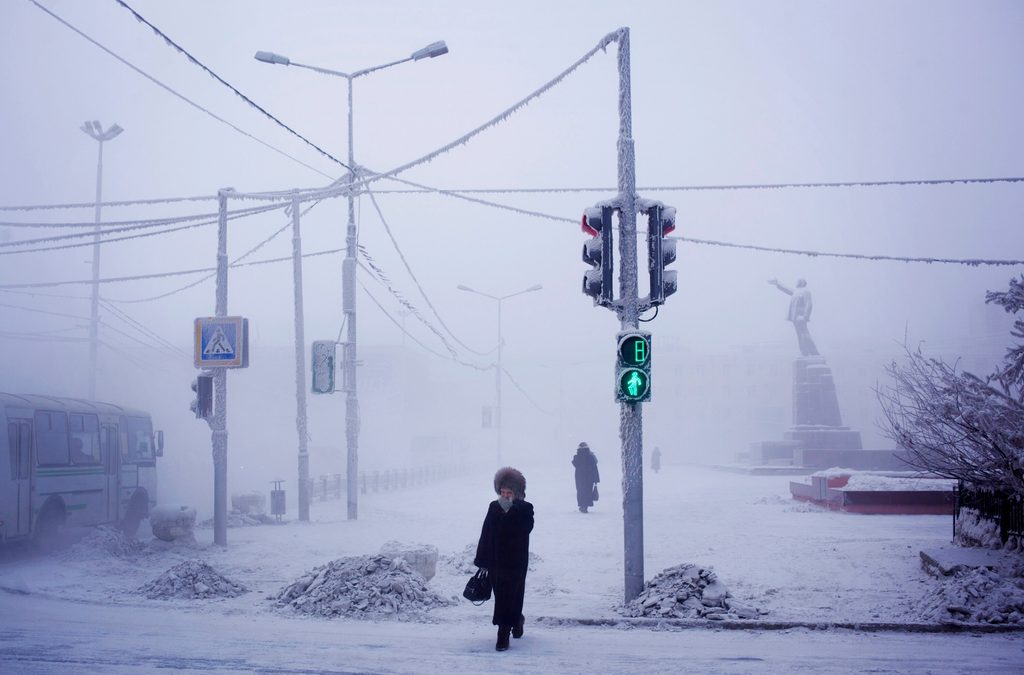
A 28-year-old worker died after developing pneumonia at an anti-plague research institute in Siberia. WHO says the cause has not been confirmed. Russian authorities report negative tests for the high-threat pathogens examined and no severe pneumonia among her contacts; WHO says it has found no evidence of ongoing transmission linked to the incident. No plague case has been registered (Reuters)
Those facts deserve to be held together. This is a death requiring an explanation, not evidence of a plague outbreak. The public-health question is whether the clinical and laboratory investigation can establish what happened and communicate it clearly. A surveillance system earns trust by resisting both secrecy and speculation. Behind the international anxiety is a worker whose family still deserves an answer.
The pharmacy moved into an apartment
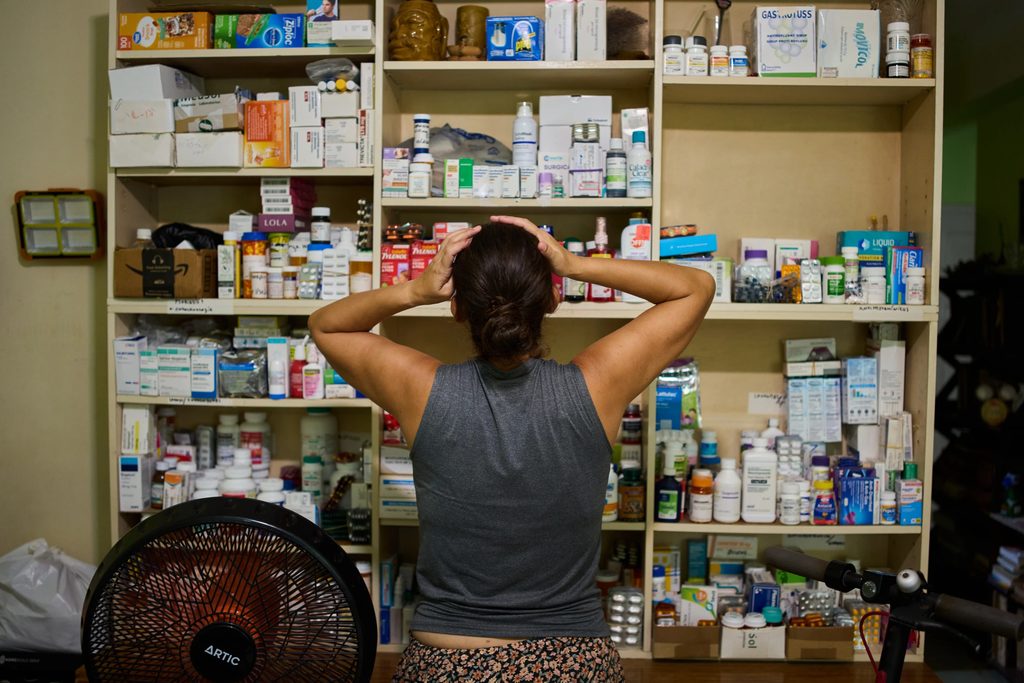
On two days each week, people gather outside a building in Havana while Laura Mendoza distributes medicines requested through WhatsApp. Her volunteer project charges nothing and relies on donations. Cuba’s basic drug programme lists 603 medicines, but only slightly more than one-third are currently available, according to the health ministry figures reported by AP. The country has authorised private pharmacies, though the new system has yet to fill the gap. (AP)
A community pharmacy can be an act of solidarity. It is also a warning about what happens when supply chains, fuel, imported materials, public finance and external restrictions converge on the same prescription. Donated antihistamines and antibiotics can help a neighbour today. Medicines needing refrigeration and cancer treatments are much harder to move through an apartment. Policy debates about health-system models sound different when the dispensing counter is someone’s front door.
The court put the markup on trial
India’s Supreme Court questioned why a 30% cap on trade margins for certain non-scheduled anti-cancer medicines should not extend further. Hearing petitions on medicine prices, generic prescriptions and medical devices, the judges pressed the government on steep differences between supply prices and what patients are charged. They asked for a broader response by 27 October. (Financial Express)
The court has not ordered a general price cap. The government argues that distribution margins also help medicines reach remote areas. That is a real policy question, but it does not make every markup defensible. A medicine can clear a regulator, appear on a prescription and still fail the last test of access: the price at the counter. The judges have asked who benefits from the distance between those two numbers.
The cancer drug came back carrying an isotope
Bristol Myers Squibb says its experimental radiopharmaceutical RYZ101 met the primary endpoint in a Phase III trial involving people with advanced gastroenteropancreatic neuroendocrine tumours whose disease had progressed after lutetium-177 treatment. RYZ101 uses actinium-225 to deliver short-range radiation to tumour cells. At an interim analysis, the company reported a statistically significant improvement in progression-free survival against the trial’s standard-care options (BMS)
This is an important opening for patients who have already exhausted a related radioactive treatment. It is still a company-announced top-line result: the size of the benefit and detailed safety findings have not yet been presented publicly, and overall survival follow-up continues. Regulators will have to judge the complete evidence. Precision oncology has acquired a promising next move; patients need to know how much time that move actually buys.
The tumour was not the only thing consuming the patient
Researchers analysed clinical and genomic records from 52,236 people with cancer and found that nearly 47% met criteria for an episode of substantial weight loss during follow-up. These episodes often clustered around disease progression and were associated with poorer outcomes. The team also built models of impending weight-loss risk for three cancer types and tested them in a separate cohort. (Nature Medicine)
Cancer care has become exceptionally good at describing a tumour while sometimes treating the patient’s shrinking body as a side note. This study cannot show that predicting weight loss will prevent it, or that weight loss itself caused the worse outcomes. It does show that routine measurements can make a dangerous change visible earlier. A treatment plan should have room for the person losing strength between scans.
The birth dose outlasted the headlines
WHO announced that Albania and Armenia have reached its regional hepatitis B control targets, validated after a technical review of national evidence. The gains reflect sustained vaccination and efforts to prevent transmission from mother to child, including vaccination around birth. In the childhood serosurveys cited by WHO, no tested children aged six to eight were positive for hepatitis B surface antigen. (WHO Europe)
This is a validated control milestone, not a claim that hepatitis B has disappeared from either population. Its force lies in the timeline: prevention carried out consistently for more than two decades is now protecting children from an infection that can later cause cirrhosis and liver cancer. The most effective personalised cancer intervention may sometimes be a public-health programme delivered before a person is old enough to remember it.
The bill learned to read the patient
AI is moving through the American medical billing chain: documenting visits, suggesting codes, sending payment messages and helping tailor settlement offers. A Guardian investigation describes companies using patient and hospital data to estimate the likelihood that an individual will pay. This is happening as researchers warn that medical debt and gaps in coverage may grow. (The Guardian)
Some of these tools may identify financial assistance or make an incomprehensible bill easier to resolve. The political question is what they are optimised to achieve. Health systems are investing in increasingly precise knowledge of a patient’s ability to pay while patients often struggle to get a clear price before receiving care. If medicine can personalise the invoice faster than it can personalise access, the algorithm has learned the wrong lesson.
The October watch
| 13–15 October — The regulator’s next move. |
| The EMA’s medicines committee meets. Watch its recommendations; an opinion is a step toward a decision, not an approval. www.ema.europa.eu |
| 13–15 October — Health policy under pressure. |
| The WHO Eastern Mediterranean committee meets in Cairo. Its decisions will matter in a region confronting conflict, outbreaks and strained health systems. applications.emro.who.int |
| 14 October — The pandemic question has feathers. |
| A WHO briefing on H9N2 avian influenza examines current risks and preparedness. The point is to assess the signal before it becomes a crisis. www.who.int |
| 14 October — A cancer drug is useless if nobody can buy it. |
| WHO turns to the market for childhood cancer medicines: availability and affordability are the tests beyond the laboratory. www.who.int |
| 12–16 October — The rulebook behind the medicine. |
| WHO’s pharmaceutical standards committee meets on the specifications that help determine medicine quality worldwide. Quiet work, enormous reach. who.int |
| 23–27 October — Oncology’s evidence test. |
| ESMO convenes in Madrid. Watch which trial results alter treatment decisions, and which headlines still need longer follow-up. IFEMA MADRID |
| 27 October — Who pays the markup? |
| India’s Supreme Court returns to medicine pricing, after questioning why action on trade margins has focused on cancer drugs. The next hearing could widen the political fight over prices. barandbench.com |
| 27–29 October — Europe writes its health agenda. |
| WHO Europe’s regional committee will consider strategies on healthy ageing and AI in health. Watch what ministers adopt, and what they fund. who.int |
| 30 October — Childhood myopia faces the evidence panel. |
| An FDA advisory committee reviews low-dose atropine drops intended to slow progression in children. Its discussion could shape the regulatory path; it is not itself an approval. FDA |
Follow the last-mile conversation!
IPM Alliance tracks the decisions, bottlenecks and implementation gaps shaping personalised medicine access. Follow us for briefings, events, policy signals and practical insights from across regions and disease areas.
We want to hear from you
When a patient becomes eligible for personalised care, where does the system most often lose them: identification, testing, referral, reimbursement, delivery capacity or equity?
Know someone who should be reading this?
IPM Brief is built for people working where science, policy and patient access collide. If one colleague would find this useful, forward it to them and help bring them into the conversation.
International Alliance for Personalised Medicine
Avenue de l’Armée / Legerlaan 10, 1041 Brussels, Belgium
