
Dear friends,
UNGA was not the end of a conversation. It was the point at which we had to decide what to do with it.
Across two days of International Alliance for Personalised Medicine high-level political meetings during United Nations General Assembly High-Level Week, we moved from trade, pricing and industrial policy to a more fundamental question: what does it actually take to build health systems capable of turning scientific progress into care?
Two answers came through repeatedly.
First, diagnostics are the essential utilities of modern healthcare. They are so fundamental that they are often taken for granted – until they are not there. Diagnostic capacity does not simply exist. Policy determines whether laboratories are funded, tests are reimbursed, trained professionals are available, supply chains function and results return in time to guide treatment.
Second, innovation only creates value when the health system is capable of using it. Personalised medicine therefore does not begin with the medicine. It begins with identifying the right patient, at the right time, and being able to act on that information. That requires diagnostics, workforce, data, reimbursement, referral pathways and clinical capacity to function as one system.
This is where IAPM has a role.
Our task is to bring together the policymakers, patients, clinicians, researchers, regulators, payers and innovators who control different parts of the same pathway — and ask whether the decisions they make separately can work together for the patient. UNGA showed why this matters.
A government can lower the price of a medicine while the test needed to prescribe it remains unavailable. A regulator can approve a treatment while its companion diagnostic is unfunded. An algorithm can identify risk while the clinic has no pathway to respond. So the question is no longer simply whether innovation exists. It is whether policy enables health systems to use it.
Across oncology, brain health, cardiovascular disease and infectious disease, one lesson kept resurfacing: the whole pathway is the unit of policy. A lower invoice is not access. A test result is not treatment. A successful pilot is not a service. And later this week, we take that discussion from UNGA to Dublin — and from the global level to national and European implementation.
On Friday, 2 October 2026, IAPM will convene “Innovation and Securing Patient Access to Personalised Medicine”during the Irish Presidency at RCSI University of Medicine and Health Sciences in Dublin.
The timing matters. Ireland holds the EU Presidency while also hosting a major concentration of global life-sciences companies. That makes Dublin a particularly relevant place to ask how global innovation translates into national health-system delivery. Who pays for the diagnostic? Who builds the laboratory capacity? How does evidence move through regulation and HTA into reimbursement? How does a successful clinical trial translate into routine access? And who is responsible when one of those handoffs fails?
Those questions run through the Dublin programme: from a possible European Health Innovation Fund, to liquid biopsy and digital pathology as diagnostic infrastructure, to global clinical trials and local access, and finally to trade, tariffs, supply chains and MFN pricing. The purpose is not to repeat UNGA in another city.
UNGA helped us consolidate the issues. Dublin is about testing what action looks like when those issues meet a real health system. Government, European policymakers, patients, clinicians, researchers, laboratories, payers and industry all have a role. None can construct the pathway alone.
That is precisely the point. The proposed New York Principles and innovation-to-care framework should become practical tools for identifying where pathways break, who has responsibility to repair them, and whether policy on diagnostics, evidence, financing and delivery is being judged against the same measure:
Can the patient actually move through the pathway?
From UNGA to Dublin, the direction is clear:
Global science. European policy. National implementation. Patient access.
In this issue
- A lower price is not a patient outcome: MFN can change incentives across markets, but the real measure is access and health.
- The missing test can cancel the medicine: Diagnostics, equipment and reagents belong in every trade and access calculation.
- You cannot put the whole supply chain in one country: Resilience calls for capability and reliable cross-border links.
- Africa wants a place in the evidence, not just the trial: Participation means data capacity, fair partnerships and local benefit.
- The New York Principles still have work to do: The closing roundtable produced proposals, with important differences unresolved.
- Start with the need, not the algorithm: Prevention, screening and follow-up should shape innovation from the outset.
- The guideline never reached the patient: Existing science loses value when screening and biomarker results do not change care.
- Approval is only half a permission slip: Regulation, diagnostics, reimbursement and delivery need to move together.
- A pilot is not a health system: Scale depends on evidence, incentives, accountability and a budget that survives the launch.
| This is a special edition of IPM Brief, reporting from IPM Alliance’s New York discussions on 23 and 24 September 2026. |
A lower price is not a patient outcome
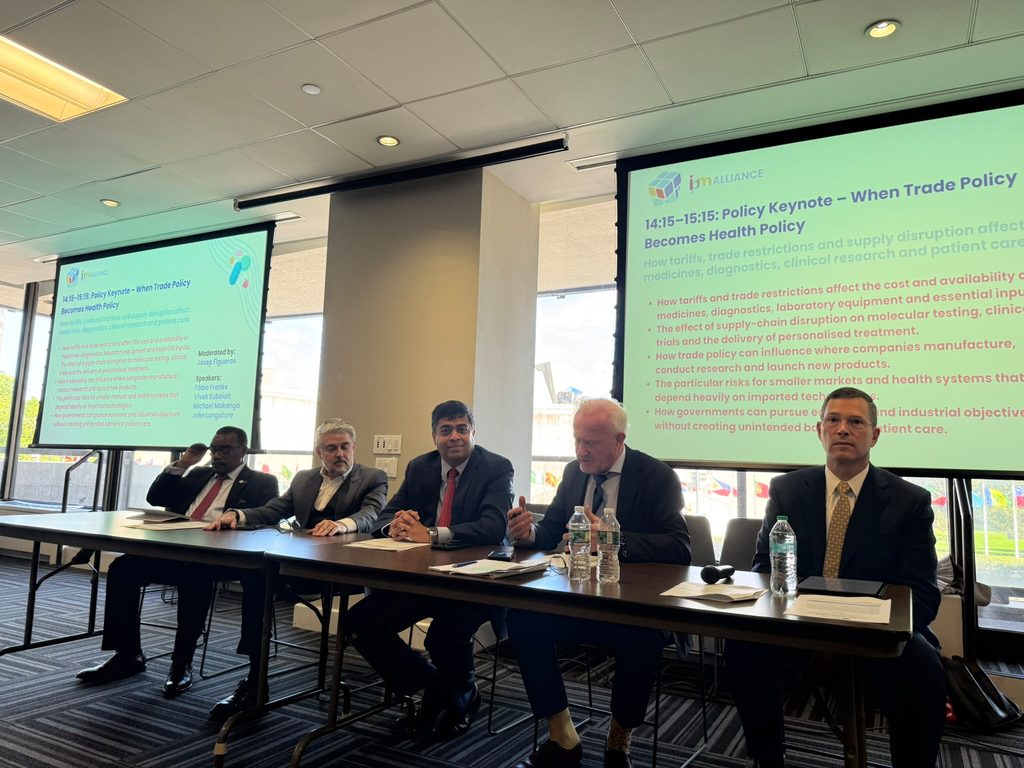
MFN pricing sounds like a clean comparison: why should one country pay more for a medicine than another? The first afternoon in New York showed how quickly that question becomes more complicated. Kelly Saldana of the ISPOR Institute for Healthcare Transformation argued that a price negotiated elsewhere reflects that country’s own assessment of value, budget and health-system priorities. Importing the price does not import the system that produced it. Manmeet Ahluwalia, speaking from clinical research and cancer care, raised another concern: companies could respond to international reference pricing by changing where and when they launch treatments, particularly for small patient populations. These were risks discussed by participants, not outcomes established by the meeting.
Fábio Franke described a more immediate access problem from Brazil. A medicine may be available to some patients while the biomarker testing needed to identify eligible patients remains unevenly accessible. The meeting therefore resisted the temptation to treat the price of a finished drug as the entire patient bill. A policy designed to improve affordability needs to monitor launch timing, access to testing, treatment uptake and the effects on research, as well as the price printed on a page.
The disagreement matters. Pricing reform has a legitimate purpose, and the discussion did not produce a verdict for or against MFN. It produced a tougher standard for judging it: who gets treated sooner, who waits longer, and what changes in the markets from which the reference price was borrowed? If a reform cannot answer those questions, it is a price policy still waiting to become a health policy.
The missing test can cancel the medicine
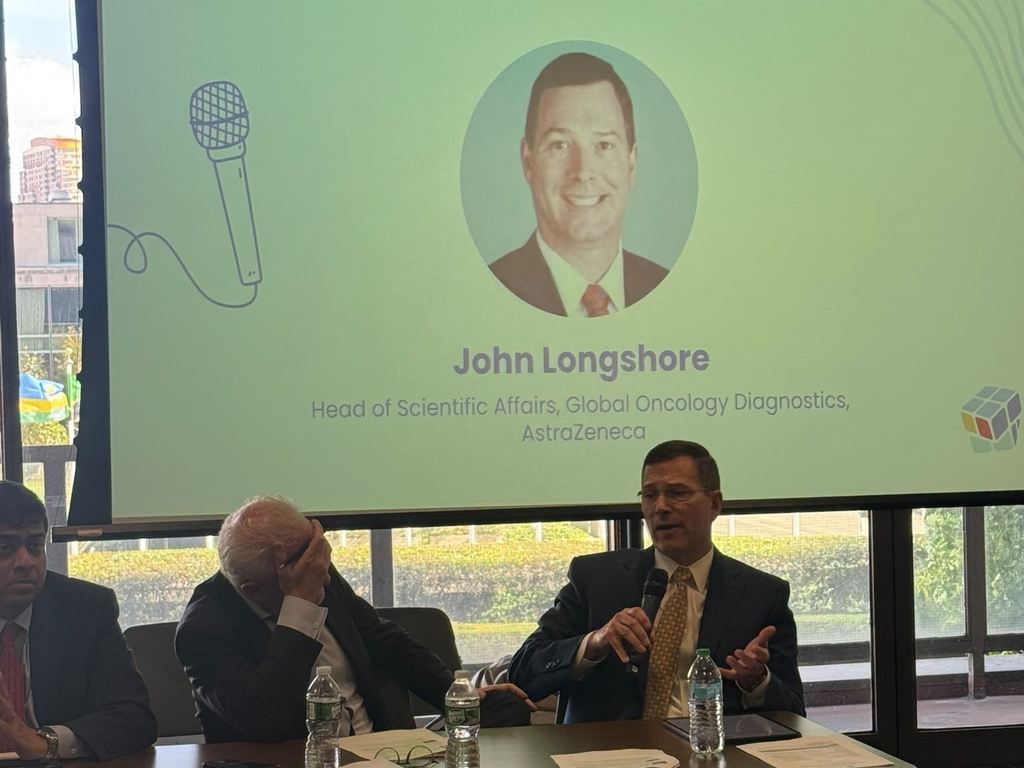
John Longshore of AstraZeneca kept bringing the room back to a modest but decisive object: the diagnostic test. Precision medicines depend on laboratory instruments, reagents, specialist staff and biomarker results, often sourced or delivered across borders. Vivek Subbiah made the clinical consequence plain. If the test is unavailable, a lower-priced targeted therapy still cannot be matched to the patient who needs it. Franke described how this separation plays out in Brazil, while Zelia Bukhari of The Wellbeing Foundation Africa described the point at which care can stall in Nigerian communities when a test or supply is missing.
The trade debate often pictures a finished medicine crossing a border. The actual pathway includes machines, components and people, and a disruption upstream can reach the patient before a tariff on a drug ever does. Longshore proposed advance notice of trade changes and consideration of protections for critical diagnostic inputs. Participants did not agree that every proposed exemption was the answer; the closing roundtable explicitly left that question open.
What was harder to dispute was the need to count the test. A government announcing access to a biomarker-guided therapy should be able to answer whether the relevant test is approved, paid for, supplied and performed in time to inform the decision. Otherwise, precision medicine exists in the formulary and disappears at the clinic door.
You cannot put the whole supply chain in one country
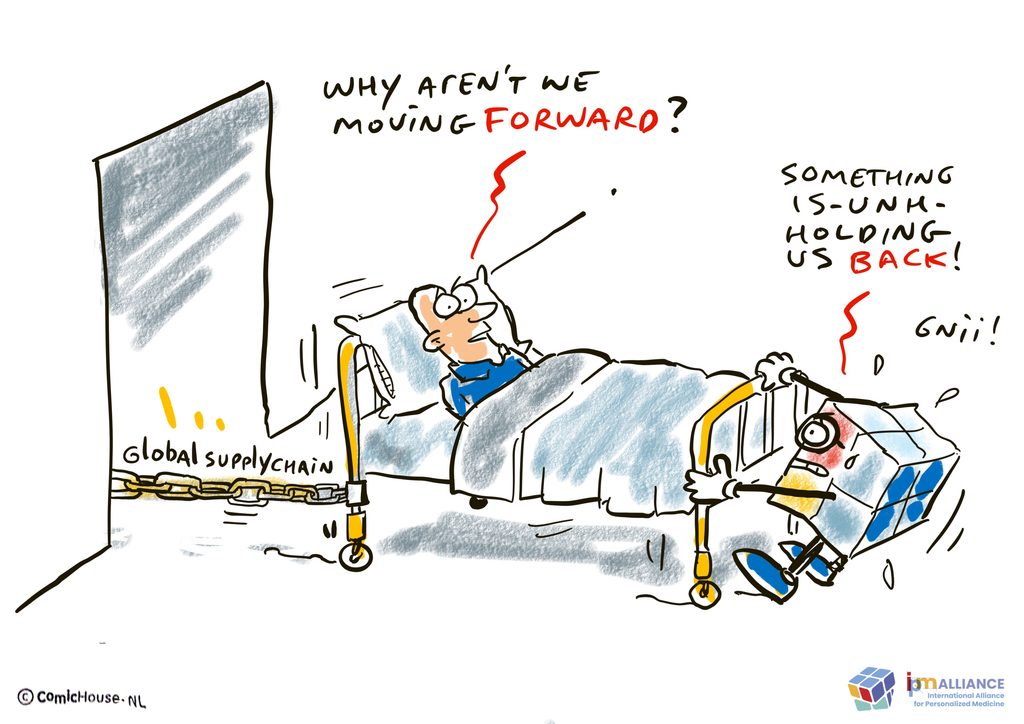
Prashant Yadav of the Council on Foreign Relations pressed the room to take industrial policy seriously. Concentration of manufacturing and technical capacity is a real vulnerability, he argued; dismissing tariffs without proposing another way to build capability is an incomplete response. Yet full national self-sufficiency is an implausible blueprint for complex therapies, sequencing and the movement of patient cells. His emphasis was practical: invest in registries, clinical infrastructure, regulatory capacity and dependable routes for essential materials, then ask which policies actually attract durable activity.
Mitchell Elkind of the American Heart Association supplied a clinical analogy. Stroke care improved by mapping a time-sensitive sequence, measuring performance and finding where handoffs failed. The same discipline can map the journey of a personalised treatment from research to test, manufacture and follow-up. Bukhari added that African manufacturing needs viable regional demand and regulatory cooperation, not a separate factory for every national market. Local capability and cross-border reliability have to be designed together.
This is a more demanding account of resilience than a slogan about bringing everything home. It asks where a single supplier, customs delay or missing skill can stop care; which capacities should be built locally or regionally; and which international flows must remain dependable. A tariff can announce a political intention overnight. Building a functioning pathway takes longer, and patients need it to work during the transition.
Africa wants a place in the evidence, not just the trial
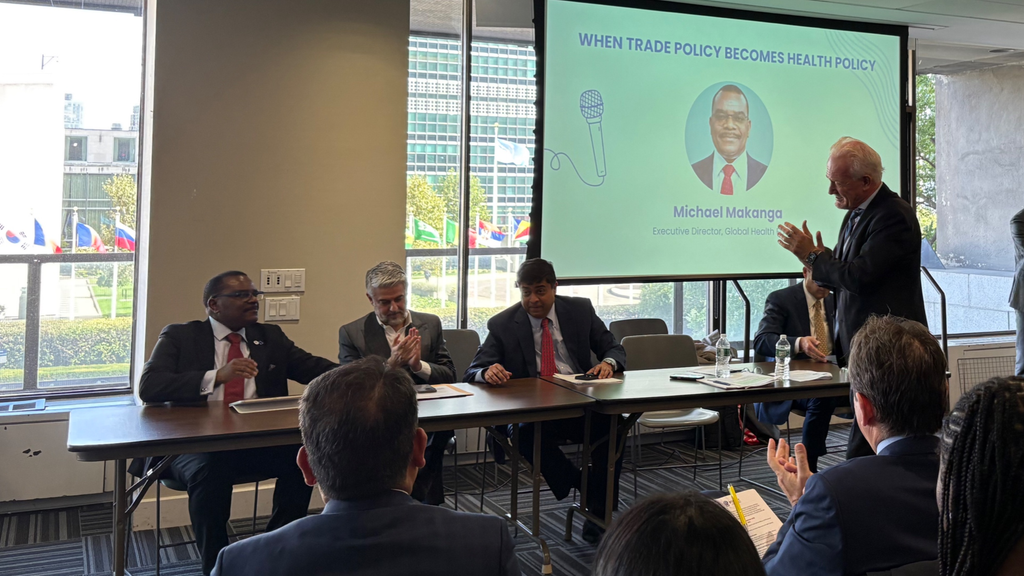
Michael Makanga of Global Health EDCTP3 described what expensive and slow access to research supplies means before a medicine even reaches the market. Ntobeko Ntusi of the South African Medical Research Council widened the point on the second day: African populations should help shape the questions, generate and analyse the data, and share in the benefits, rather than supply samples for decisions made elsewhere. His objection was to a research economy that can call itself global while leaving local scientific and clinical capacity thin.
Lara Pandya offered a concrete alternative from the EDCTP partnership model. She described access plans built into research funding and regional participation in decisions, then traced the child-friendly schistosomiasis treatment arpraziquantel from research through regulatory steps to its first use with a preschool-aged child in Uganda. That sequence is documented by EDCTP’s account of the ADOPT project. It shows why planning for introduction begins before the last paper is published. EDCTP
Jennifer Dent of BIO Ventures for Global Health made the complementary implementation argument: partnerships have to start with the priorities, institutions and delivery capacity in the countries concerned. More diverse genomic evidence is essential, but representation alone does not put a test in a laboratory or treatment in a clinic. Participation has to extend from the first research decision to ownership, affordability and the ability to use the result.
The New York Principles still have work to do
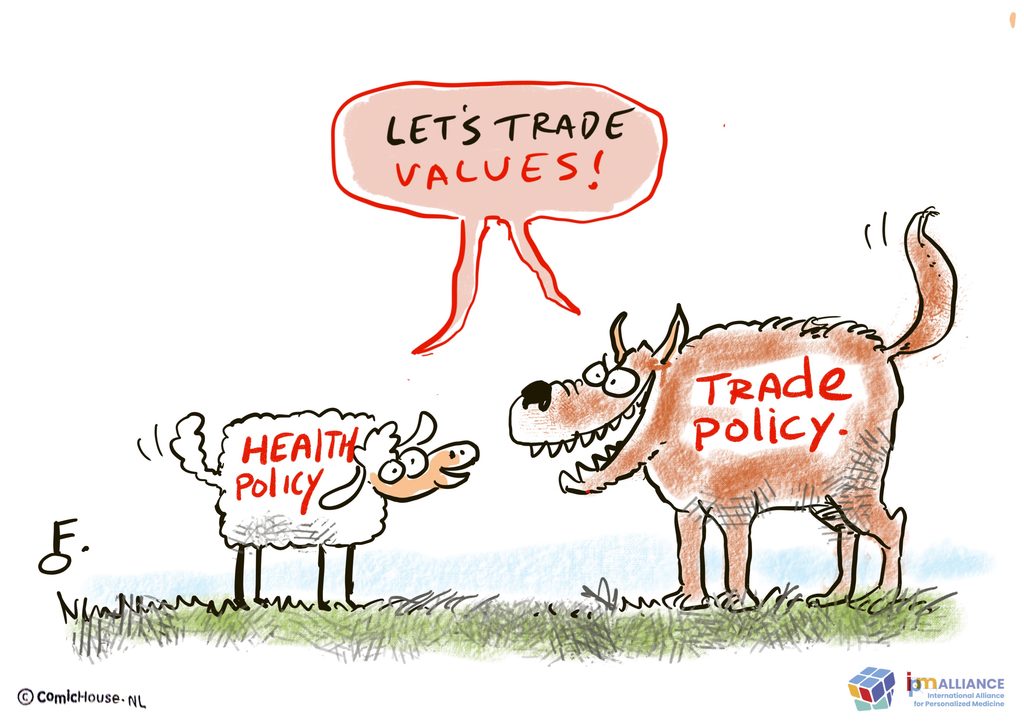
The first day’s closing roundtable was designed to feed the New York Principles on MFN, Trade and Personalised Medicine. Participants put forward a patient-centred impact test, advance notice for measures that could interrupt critical supplies, mapping of the full research-to-care pathway, and stronger attention to diagnostics, trials and smaller markets. Denis Horgan argued that pricing and industrial decisions should be checked against access to diagnosis, data and treatment, rather than assessed in separate policy silos.
But a productive list is not yet an agreed code. Participants differed on the case for trade exemptions. They also asked who would finance equitable access, how to weigh rare conditions against broader population needs, and what evidence would reveal unintended effects after a policy took force. One contributor urged the group to distinguish shared objectives from contested instruments. That distinction is a good basis for the next stage of work.
The strongest principle may therefore be a method: before acting, trace the likely consequences across patients, markets and supply chains; after acting, measure what happened and be willing to correct course. The New York discussion supplied proposals for that method. It did not settle every trade-off, and an honest brief should not pretend that it did.
Start with the need, not the algorithm
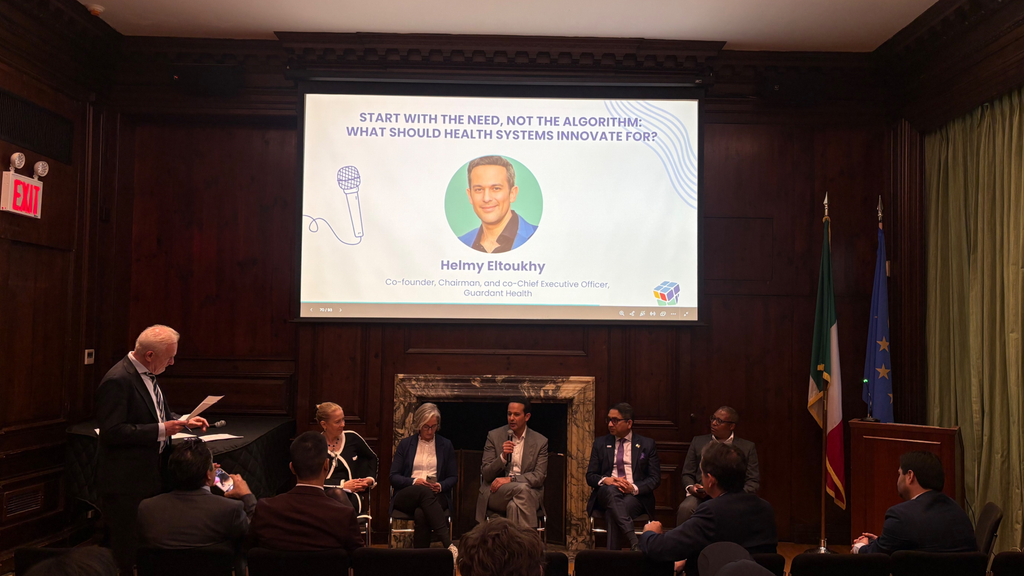
The second morning began with an uncomfortable question from moderator Josep Figueras: who decides what health systems should innovate for? Ann Kurth of the New York Academy of Medicine pushed the discussion beyond a single disease or technological breakthrough. Prevention, healthy years of life and the conditions in which people live belong in the innovation brief too. A system that funds ever more sophisticated treatment while neglecting the people who never reach screening has made a choice, even if it has never stated it aloud.
Helmy Eltoukhy of Guardant Health described the other side of the problem from a diagnostics developer’s perspective. A screening result has consequences: false alarms, missed disease, follow-up appointments, colonoscopy capacity and the time it takes to start treatment. He pointed to the NHS experience with blood-based tumour testing as an example of redesigning a pathway around speed to an actionable result. NHS England has described its expansion of circulating tumour DNA testing for patients with suspected lung cancer and other defined uses. (england.nhs.uk)
The political question is not whether a blood test or AI model is impressive. It is what happens after it produces a signal, who receives the benefit, and whether a health system can afford and deliver the next step. The most useful innovation may be the one built around a need the system can name and a response it is prepared to provide.
The guideline never reached the patient
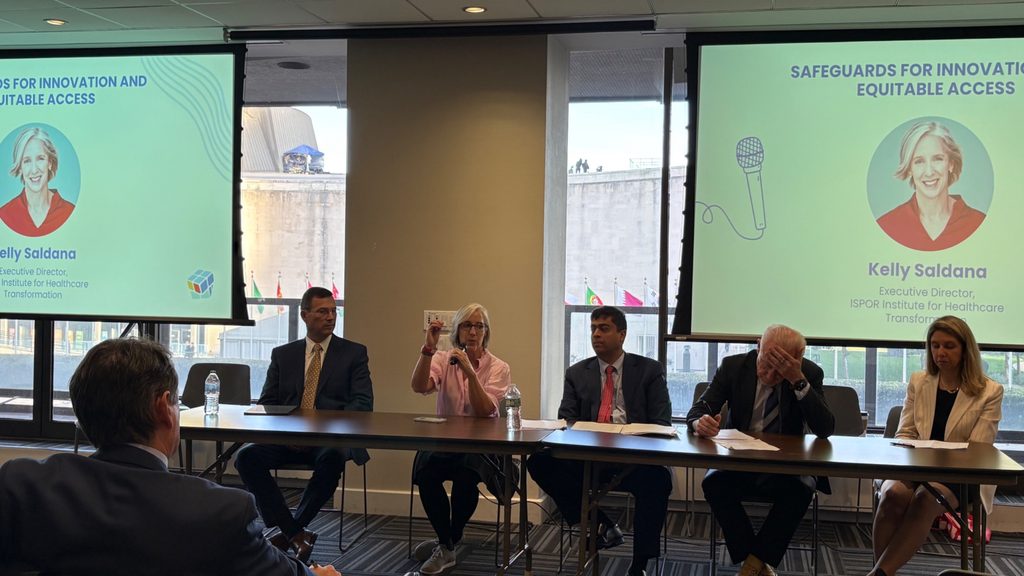
Manmeet Ahluwalia described an implementation failure from inside a well-resourced US cancer system. Lung cancer screening was available, but too few eligible people were receiving it. His team worked with primary care, reminders and local incentives to increase uptake. He also described a separate gap in advanced lung cancer: a molecular result can identify a treatment path, yet a patient may start another therapy before the result is returned or acted on. The story is less about a missing discovery than about an ordinary sequence of decisions that can waste one.
This is where a guideline has to become a workflow. Someone must identify the eligible patient, order the test, track the result, revisit the treatment plan and notice when any step fails. Kelly Saldana argued that evidence of expected value will not translate into actual value unless the system accounts for paperwork, professional roles, incentives and local resistance. Those details can look small from a conference podium. They decide whether the patient gets the intervention.
The answer is not to blame an individual clinician for every broken handoff. It is to measure where the handoff breaks and make the right action easier to perform and harder to overlook. The public can reasonably ask why a system is paying for the frontier of medicine while still struggling to deliver care it already knows how to provide.
Approval is only half a permission slip
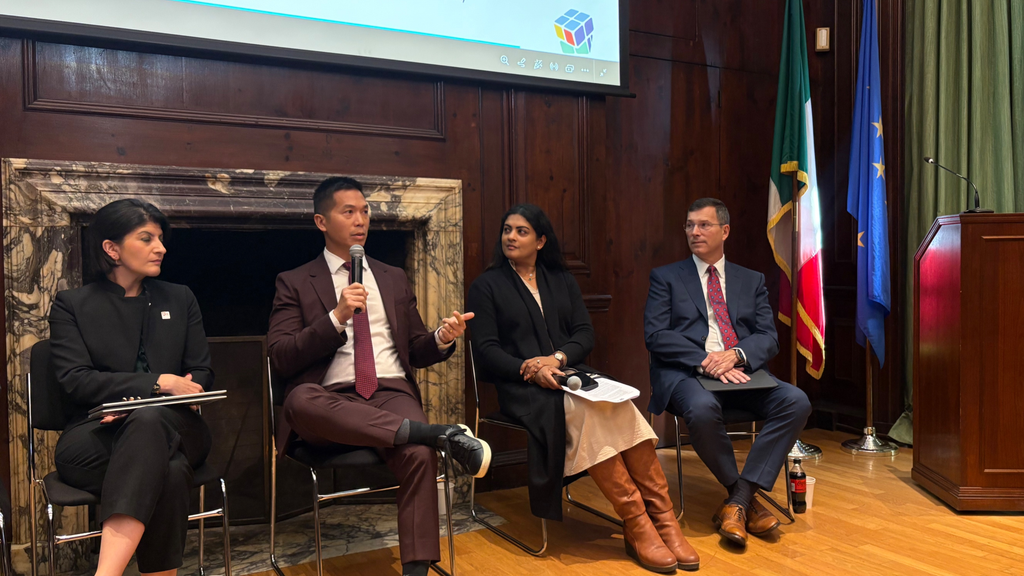
The second day’s adoption panel followed the baton after scientific validation. Longshore described a recurring mismatch: a treatment can be approved and available while the test that identifies the right patient lacks a timely approval, reimbursement decision or laboratory route. Paulo Liao of MSD argued that a politician may celebrate reimbursement of an innovative medicine while the patient still cannot receive radiotherapy or biomarker testing. His practical request was to bring the diagnostic and delivery infrastructure into the same political conversation as the medicine.
Pandya’s account of arpraziquantel showed a different path. Research partners planned access, regulatory work and country introduction together, with local actors involved throughout. A positive scientific opinion and WHO prequalification were important steps; getting treatment to a child in Uganda required further implementation work. Oncology faces different technologies and budgets, but the lesson about sequencing is transferable. (EDCTP)
Regulators, health technology assessors, payers, procurement teams and clinical services need to talk while evidence is being built. Their decisions need not be identical or automatic, and standards should remain rigorous. But a medicine, its necessary test and the ability to deliver care cannot be financed as if they belonged to unrelated patients.
A pilot is not a health system
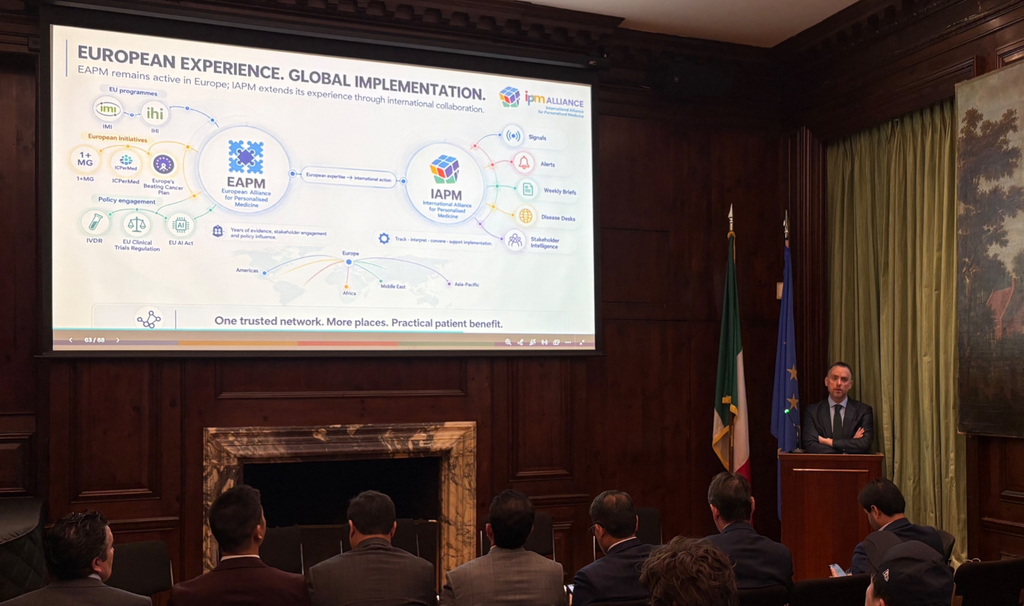
The closing discussion on 24 September returned to an old institutional habit: proving that an innovation can work in a project and assuming the service will somehow follow. Saldana argued for ongoing assessment rather than a single straight line from trial to policy to implementation. Quantitative outcomes matter, but rigorous qualitative evidence can also reveal why a service is stalling and what needs to change. A decision to scale should come with a way to detect poor performance and adapt.
Elkind’s account of stroke systems offered a real-world illustration. Guidelines became more usable when registries, quality measures and organisational accountability were attached to the clinical pathway. The American Heart Association’s Get With The Guidelines–Stroke programme documents that infrastructure. The comparison is not a claim that every AI tool should copy stroke care. It is a reminder that publication, procurement and routine delivery are different achievements. (American Heart Association)
Denis Horgan closed by calling for common standards with room for local delivery, and for policy conversations that include the people who finance and operate care. The proposed New York Framework for Innovation-to-Care can be useful if it makes six questions unavoidable: What need does an innovation meet? What evidence shows benefit and value? Can staff and data systems use it? Who will pay and procure it? Who will maintain it? And will access and trust improve? A pilot earns scale by answering those questions in the health system where patients actually live.
The question after New York
If a patient is eligible for an innovation tomorrow, which institution is responsible for making the entire pathway work?
The trade ministry may control an input. A regulator may authorise a product. A payer may cover the medicine. A hospital may own the workflow. The patient experiences one pathway. The next phase of the New York work is to make those separate decisions answer to it.
Registrations also remain open for upcoming IPM Alliance event in Dublin on 2 October. Visit the IPM Alliance website for programme updates.
Follow the last-mile conversation!
IPM Alliance tracks the decisions, bottlenecks and implementation gaps shaping personalised medicine access. Follow us for briefings, events, policy signals and practical insights from across regions and disease areas.
We want to hear from you
When a patient becomes eligible for personalised care, where does the system most often lose them: identification, testing, referral, reimbursement, delivery capacity or equity?
Know someone who should be reading this?
IPM Brief is built for people working where science, policy and patient access collide. If one colleague would find this useful, forward it to them and help bring them into the conversation.
International Alliance for Personalised Medicine
Avenue de l’Armée / Legerlaan 10, 1041 Brussels, Belgium
