

Dear friends,
Staying healthy is becoming a surprisingly risky business. Getting sick, meanwhile, presents challenges no instruction manual can prepare us for. Take the humble salad. After years of being told to eat our vegetables, we discover that even jalapeño avocado dressing can carry a serious health warning. The US Food and Drug Administration has assigned its highest-risk classification to a recall over possible salmonella contamination.
Apparently, healthy living now requires checking regulatory notices before lunch. But elsewhere came better news. A landmark trial found that a structured exercise programme for patients treated for colon cancer produced 90% overall survival after eight years, compared with 83% in the control group. The programme cost approximately $3,000 per patient and may even save healthcare systems money.
If those results came from a new cancer medicine, we would rightly celebrate the innovation and discuss reimbursement. Yet structured exercise programmes remain difficult to access. Innovation takes many forms. Health systems need to recognise them all.
Meanwhile, scientists are unravelling one of cancer’s molecular mysteries: MYC, a major driver of tumour growth that has resisted decades of therapeutic efforts. New laboratory research offers insights into how MYC amplification occurs, although clinical applications remain distant. Its constantly shifting protein structure has been compared to a floppy spaghetti noodle.
So, in one week, we discover that salad dressing can be dangerous, exercise can save lives, and cancer biology resembles something on an Italian restaurant menu.
Personalised medicine, however, is delivering tangible progress. A new treatment combination for advanced HER2-positive breast cancer has demonstrated median progression-free survival of 24.9 months versus 16.3 months, although overall-survival results remain immature.
But a breakthrough medicine can only fulfil its promise when patients have access to the diagnostics, expertise and treatment pathways needed to benefit. Science is becoming increasingly personalised. Are our healthcare systems keeping pace?
Across the Atlantic, the politics is equally interesting. At Washington’s Make America Healthy Again summit, Robert F. Kennedy Jr. championed AI as a means of challenging established medical authority. There is some irony in a movement concerned about corporate influence embracing technologies developed by some of the world’s largest technology companies. Will AI empower patients or create another generation of gatekeepers?
For IAPM, this is no abstract debate. This week, we participated in Professor Paul Hofman’s meeting in Nice on AI in thoracic pathology. Building on our UN engagement in New York, our Dublin conference and continuing discussions in Brussels and other capitals, we are bringing these questions directly to policymakers. From biomarker testing and liquid biopsy to digital pathology, clinical trials and AI, the challenge is turning scientific advances into functioning patient pathways. Our proposed Innovation Fund for Transformative Health Technologies aims to help bridge that gap.
And then there is death. In Sarah Perry’s Death of an Ordinary Man, her father-in-law dies nine days after an oesophageal cancer diagnosis. No spectacular breakthrough. Just family conversations, cups of tea, small kindnesses and a life ending.
Another account describes a man with advanced lung cancer seeking hope through largely unproven alternative treatments. His family spends around $200,000. When evidence-based medicine fails to provide empathy, someone else may be ready to sell the illusion of it.
And that is where science, politics and humanity meet. Personalised medicine is advancing rapidly. But connecting early detection, molecular diagnostics, treatment, monitoring and supportive care requires political commitment, sustainable financing and health systems ready to deliver.
That is IAPM’s mission as we engage internationally, including at ESMO and CACA: bringing patients, science, industry and policymakers together to turn innovation into access. We do not have only an innovation challenge. We have an implementation challenge – and increasingly, a political one.
This week’s IPM Brief explores precisely these tensions. We have become very good at asking what medicine can do. We need to become much better at asking what patients actually need. And in the meantime, perhaps we should check the salad dressing.
This week, someone has a hand on the switch
- The drug-price fight has hired lawyers: The pharmaceutical lobby is challenging a Medicare model that ties some medicine rebates to prices abroad.
- The quicker cancer injection met a patent wall: A Dutch court has blocked the rollout of injectable Keytruda in eight European markets.
- Breast cancer gained time, with an important asterisk: A new maintenance combination delayed disease progression; survival results are still immature.
- The child is not an adult-sized drug market: WHO’s first global childhood-obesity guidelines put comprehensive care before medication.
- The virtual cell has a funding agreement: Public science and technology companies are pooling data and money to model biology.
- Cancer care is also about the next drainage procedure: A newly approved treatment addresses a painful complication that often disappears behind the tumour headline.
- The border form missed the patient: An Ebola case in Kenya has exposed the limits of airport screening and health declarations.
- The prescription has an affiliate-link problem: A proposed law would curb paid medicine promotions by non-medical influencers.
- A patient asked who wrote the mental-health policy: A Pakistani advocate is bringing lived experience into decisions shaped by work, housing and rights.
| This is not another health news digest. It’s a twice-weekly readout of where evidence meets power and where power must turn into action. |
The drug-price fight has hired lawyers
PhRMA, the leading US pharmaceutical lobby, sued on 7 October to overturn GLOBE, a new Medicare payment model that benchmarks rebates on some clinician-administered medicines against prices in 19 other countries. The group argues that the Centers for Medicare & Medicaid Services has used its authority to test payment models to rewrite pricing law without Congress. (PhRMA’s complaint and statement; CMS final model)
The immediate reach may be small: separate company agreements could leave only a handful of manufacturers subject to the model, and the government has sharply reduced its projected savings. That makes the lawsuit more revealing. Industry is fighting over the precedent that public insurance can look beyond US borders when deciding what a medicine should cost. The administration calls it a payment experiment. PhRMA calls it unlawful price control. Patients will have to wait for a judge—and for evidence that the model actually lowers their bills.
The quicker cancer injection met a patent wall
A Dutch patent court has ordered Merck’s subcutaneous version of Keytruda off the market in Belgium, Denmark, France, Ireland, Italy, Sweden, Switzerland and the Netherlands. The ruling favours Halozyme, which says the formulation infringes its drug-delivery patent. Merck disputes both the infringement claim and the patent’s validity and is considering its next steps. (Halozyme’s announcement of the order; Reuters on Merck’s response)
The intravenous medicine remains available; the order concerns the under-the-skin version designed to make administration quicker. That distinction matters clinically and politically. A change in how a cancer drug reaches the body can become a valuable invention in its own right—and a contested tollgate on patient convenience. The court has ruled, but the wider patent fight continues.
IPM News
AI can read the slide. Who pays for the diagnosis?
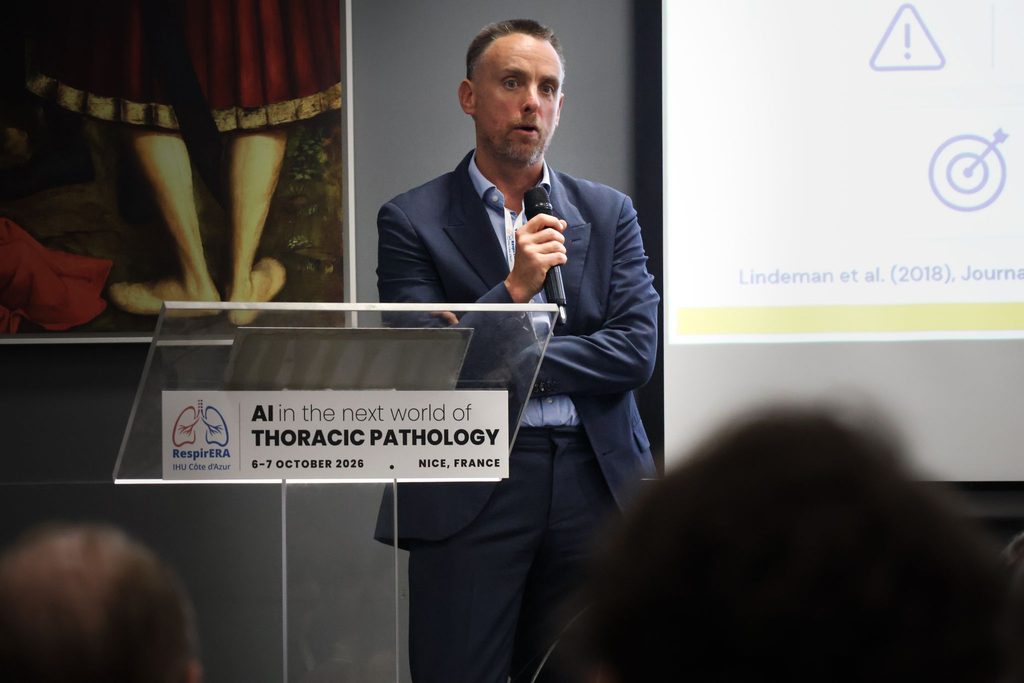
At IHU RespirERA’s AI in the Next World of Thoracic Pathology congress in Nice on 6–7 October, Denis Horgan brought IPM Alliance’s implementation perspective into a room of pathologists, oncologists and AI researchers. The technology can analyse tissue images and help interpret biomarkers. The political question is whether health systems can make those findings usable for the person waiting for a treatment decision. (IHU RespirERA event programme)
Horgan’s presentation followed the lung-cancer pathway from biopsy to treatment: connect clinical and biological data, define who is responsible for an AI-assisted decision, and fund the diagnostic service that delivers it. A convincing algorithm is only one part of that chain. If hospitals cannot exchange the data, staff cannot use the result, or payers will not cover the test, the breakthrough stops at the pathology desk.
Breast cancer gained time, with an important asterisk
The US FDA has approved tucatinib alongside trastuzumab and pertuzumab as maintenance treatment for adults with advanced HER2-positive breast cancer whose disease has not progressed after initial treatment. In a 654-person trial, median time before disease progression or death was 24.9 months, compared with 16.3 months for the control group. (FDA approval and trial results)
For someone living between scans, additional time without progression is consequential. It is also the precise result to report: overall-survival data were not yet mature when the FDA assessed the trial. The prescribing information carries a boxed warning for liver toxicity. This is a genuine expansion of treatment after induction, with a benefit measured carefully rather than inflated into a promise of longer life.
The child is not an adult-sized drug market
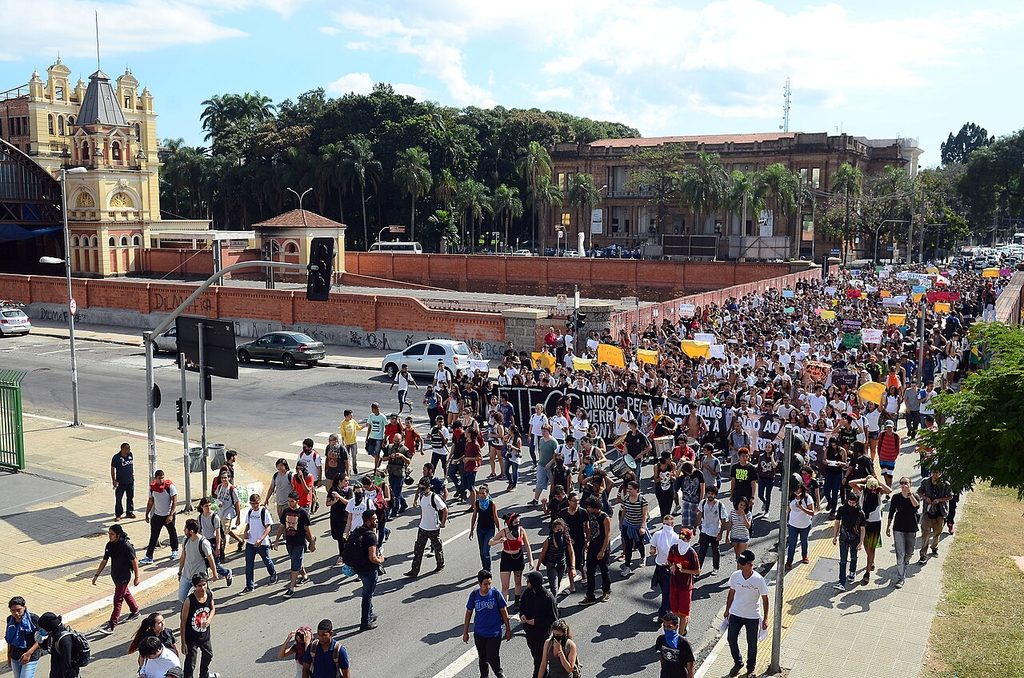
WHO has issued its first global guidelines for managing obesity in children and adolescents. It recommends structured support covering diet, activity and behaviour. For children aged 0–9, it does not recommend weight-loss medicines, surgery or devices. Approved medicines may be considered for adolescents aged 10–19 only after a supervised, combined lifestyle programme has failed to achieve the intended result. (WHO guidelines announcement; adolescent guideline)
The guidelines arrive as obesity treatment becomes one of medicine’s biggest commercial markets. WHO’s point is more demanding than a debate over a prescription: care must fit a child’s development, include mental health, and continue beyond a short intervention. It also calls on governments to make healthy food and physical activity more accessible. The clinic has a job. So do the food system, schools and city planners.
The virtual cell has a funding agreement
Biohub, the US Department of Energy, the National Institutes of Health and technology partners announced a $1.8 billion combined commitment to build biological datasets for predictive AI. The figure includes Biohub’s earlier $500 million pledge and more than $500 million in previously funded NIH data resources; it should not be read as $1.8 billion in newly appropriated cash. Google DeepMind, Isomorphic Labs and Meta are collectively contributing $300 million. (Biohub initiative announcement)
The ambition is to learn enough about how cells respond to interventions to make useful predictions before researchers begin every experiment from scratch. The governance question has already arrived: Biohub says the resource will become open, while commercial funders can receive a temporary period of early access to the data they support. Government-funded work is intended to carry no such restriction. Public science may gain a powerful shared tool. It should also keep a close eye on who gets the first look.
Cancer care is also about the next drainage procedure
The UK medicines regulator has approved catumaxomab for adults with malignant ascites, a painful build-up of cancer-containing fluid in the abdomen, when standard cancer treatment is no longer feasible. In a study of 258 patients, those given the antibody after fluid drainage went around 46 days before needing another drainage procedure, compared with 11 days for patients who had drainage alone. (MHRA approval and study results)
It is easy to overlook a treatment whose headline is fewer procedures rather than a vanishing tumour. Patients cannot. Catumaxomab is infused into the abdominal cavity and can cause substantial adverse effects, including inflammatory reactions, so this is a supervised option for a specific group. The approval recognises something oncology policy sometimes loses in its pursuit of dramatic endpoints: the time between burdensome hospital visits is part of a person’s life.
The border form missed the patient
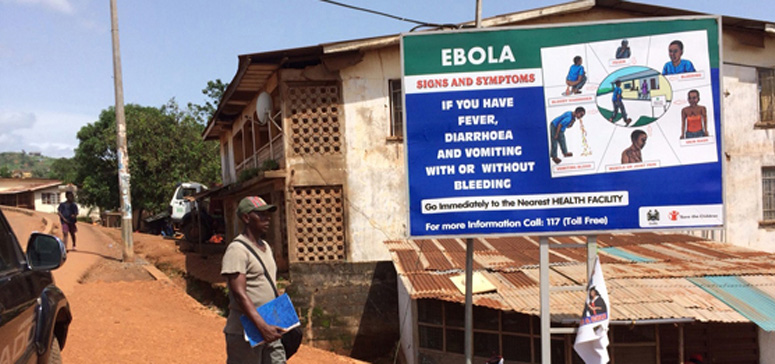
A man with Ebola travelled from the Democratic Republic of Congo through Uganda to Kenya and died after reaching a Nairobi hospital. By Wednesday, Kenyan authorities had identified 57 contacts, including 10 in quarantine. The journey passed through border and airport checks designed to detect precisely this kind of risk. (Reuters investigation and health-official accounts)
A thermal scanner records a temperature at a moment in time; a health declaration depends on what a traveller knows and reports. Neither is a substitute for contact tracing, clinical readiness or cross-border cooperation. Officials are still reconstructing the journey, so it is too early to assign one decisive failure. The case is a harsh reminder that preparedness is a working network of people, not a form completed at a gate.
The prescription has an affiliate-link problem
Mexican senator Laura Esquivel Torres has proposed changes to health, consumer and telecommunications law to prohibit paid commercial promotion of medicines by influencers without medical training. She pointed to sponsored testimonials, discount codes, gifts and subscription links as ways a medicine can be sold using a creator’s apparent personal trust. This is a proposal, not an enacted ban. (Senator Esquivel Torres’s presentation and proposed reforms)
Her proposal draws a line between discussing health online and being paid to move a drug. Legislators will have to make that distinction clear enough to enforce without suppressing useful information. The larger point travels well beyond Mexico: a patient should be able to tell when the advice appearing between friends’ posts is actually an advertisement. A medicine is a poor place to hide an affiliate link.
A patient asked who wrote the mental-health policy
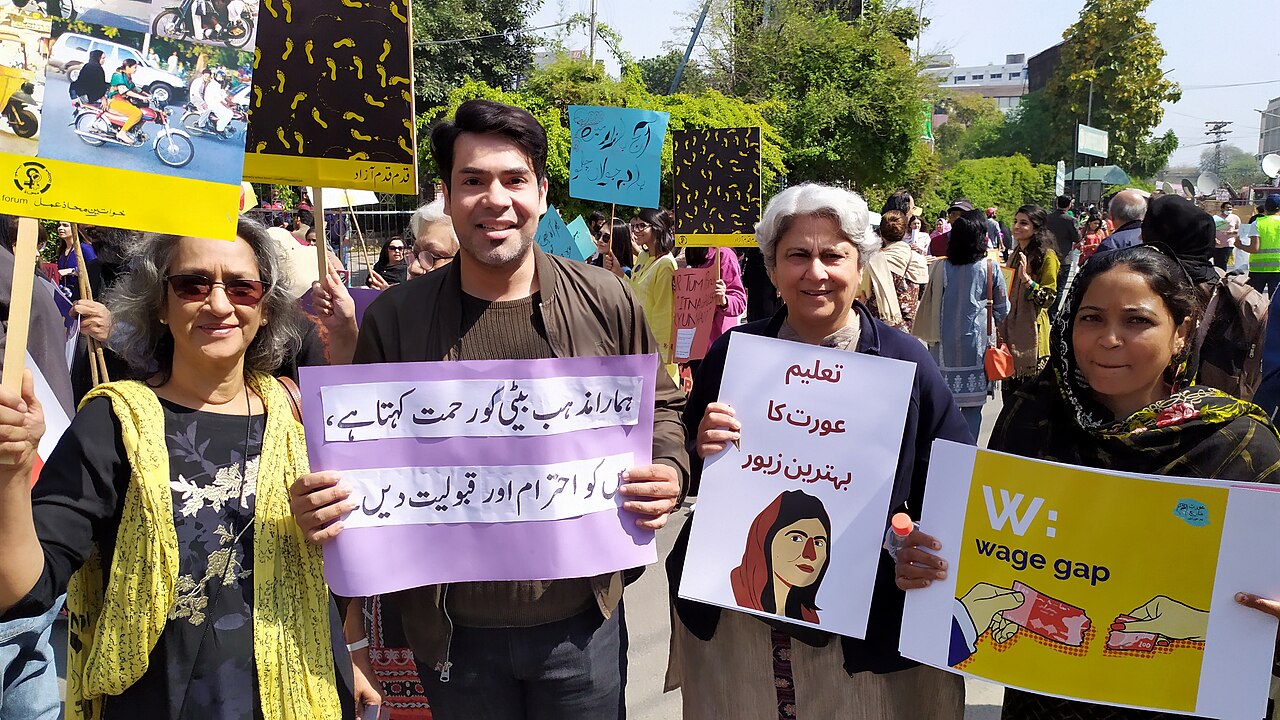
Sania experienced depression as a teenager in Pakistan. Years later, she brought that experience—and conversations with other people who have used mental-health services—into the development of the country’s mental-health policy. Her argument is that distress can be shaped by restricted autonomy, unsafe conditions and lost livelihoods, while care too often concentrates solely on the individual. (WHO’s account of Sania’s advocacy)
Medication and clinical care can help; Sania is asking policymakers to examine what patients return to after an appointment. WHO’s World Mental Health Day campaign this week centres the expertise of people with lived experience. That principle has a practical test: whether their knowledge changes services, budgets and rights, or merely supplies a moving story for a conference stage.
The October watch | 8–18 October
| 8 October — Winter respiratory threats: |
| WHO’s surveillance briefing opens the northern-hemisphere season. |
| 10 October — World Mental Health Day: |
| WHO’s campaign asks whether lived experience has influence over policy, not just a microphone. |
| 11–13 October — World Health Summit: |
| Berlin’s agenda puts financing, resilience and equitable innovation in the same room. |
| 12–15 October — European medicines committee: |
| EMA’s CHMP meeting is the next window for opinions on medicines under review; the meeting itself does not guarantee a specific approval. |
| 12–18 October — IMF and World Bank annual meetings: |
| The Bangkok meetings will put public finances under scrutiny. Watch what that means for health investment. |
Follow the last-mile conversation!
IPM Alliance tracks the decisions, bottlenecks and implementation gaps shaping personalised medicine access. Follow us for briefings, events, policy signals and practical insights from across regions and disease areas.
We want to hear from you
When a patient becomes eligible for personalised care, where does the system most often lose them: identification, testing, referral, reimbursement, delivery capacity or equity?
Know someone who should be reading this?
IPM Brief is built for people working where science, policy and patient access collide. If one colleague would find this useful, forward it to them and help bring them into the conversation.
International Alliance for Personalised Medicine
Avenue de l’Armée / Legerlaan 10, 1041 Brussels, Belgium
