

Dear friends,
Healthcare is having an AC/DC moment – not the music, the current.
This week’s Nobel Prize in Medicine gives us an almost perfect metaphor. Scientists were honoured for discoveries behind optogenetics: the ability to use light to switch selected nerve cells on and off.
Science, quite literally, found another switch.
But outside the laboratory, the current is changing too.
In Britain, the government has just accepted all 44 recommendations of its commission on AI in healthcare. The significant change is not simply more or less regulation. It is recognition that technologies which evolve cannot be governed entirely through regulatory models designed for products that largely stay the same. The proposed direction is more proportionate, lifecycle-based and system-wide — with monitoring continuing as technologies are deployed, updated and used in the real world.
Across the Atlantic, New York is having a different version of the same argument: who should hold the switch? City lawmakers are examining AI safety, testing, liability and accountability, while Mayor Zohran Mamdani has stressed the need for regulation beyond the city level. The debate illustrates something larger: as technology moves faster, political authority itself is having to work out where responsibility sits.
Europe has another current running underneath all of this: growth.
Warnings that prolonged economic stagnation can itself create financial vulnerability should matter to health policy. Europe cannot indefinitely discuss competitiveness, ageing populations, health-system sustainability, research investment and access to innovation as though they were separate problems.
They are increasingly the same problem.
Science moves. Technology moves. Capital moves. Regulation moves.
Patients still move through systems built for a slower world.
An AI model can be updated overnight. Investment can cross continents in seconds. Scientific knowledge can spread immediately. Yet a diagnostic, medicine or clinical trial can still take years to reach the person who needs it.
That leaves a bigger question than simply who has a hand on the switch?
The science is changing the current. Can policy rewire the system quickly enough to carry it?
This week, someone has a hand on the switch
- The brain gets a light switch. The clinic is still waiting: The medicine Nobel honours optogenetics, a powerful research tool whose clinical promise remains under investigation.
- The next immune treatment may arrive by instruction: Novartis makes a $575 million upfront bet on an mRNA programme developed by a Chinese biotech.
- The scan has a 110-minute deadline: GE HealthCare moves to buy the production network that gets short-lived PET tracers to patients.
- The WHO leadership race has a missing voter: An Indonesian candidate says the United States should return to the agency it left.
- Your medical bill may finally need a readable file: New US rules aim to make insurers’ published prices more usable and accountable.
- Measles forced the emergency button: New York expands testing and vaccination powers as cases rise across rural communities.
- The energy-drink label is going to court: Reliance challenges an Indian food regulator’s restrictions on how its beverages are marketed.
- The psychedelic trial begins with a safety question: The FDA seeks input on how ibogaine should be studied for opioid use disorder and PTSD.
- The antibiotic plan has no bank account: A 28-country assessment finds stronger resistance strategies but major financing gaps.
- The HIV clinic is open. The test kit is missing: A survey of service providers exposes stockouts across a fragile supply chain.
| This is not another health news digest. It’s a twice-weekly readout of where evidence meets power and where power must turn into action. |
The brain gets a light switch. The clinic is still waiting
Karl Deisseroth, Peter Hegemann and Georg Nagel have won the 2026 Nobel Prize in Physiology or Medicine for discoveries behind optogenetics. Light-sensitive proteins allow researchers to control the activity of selected cells, giving neuroscience a way to test which circuits drive a behaviour rather than merely observe them. Work that began with how algae respond to light has become a tool for investigating the living brain. (European Research Council)
The prize is a vote for patient, curiosity-driven science—and a reminder to resist the temptation to announce a cure at the awards ceremony. Optogenetics has transformed laboratory research and is being explored for clinical uses, including attempts to restore sight. It has not solved the routine treatment of complex brain disease. Discovery can illuminate the circuit; turning that knowledge into accessible care requires a much longer chain of trials, regulation and investment.
The next immune treatment may arrive by instruction
On Friday, Swiss drugmaker Novartis agreed to pay China’s Abogen Biosciences $575 million upfront for worldwide rights to ABO2203, an experimental mRNA-encoded T-cell engager, with options over further programmes. Abogen could receive up to approximately $7.2 billion more if options are exercised and development, regulatory and commercial milestones are met. The proposed therapy uses mRNA to instruct the body to produce a molecule intended to bring T cells into contact with B cells implicated in autoimmune disease. (Abogen Biosciences; Reuters)
The headline ceiling is not money already paid, and the candidate is not an approved treatment. But the upfront cheque is real. It shows a global pharmaceutical company buying access to an idea developed outside its traditional research centres—and betting that mRNA’s usefulness will extend well beyond vaccines. The politics of innovation are changing: the question is increasingly who owns the next mechanism, who can test it and who will control its eventual price.
The scan has a 110-minute deadline
GE HealthCare has agreed to acquire SOFIE Biosciences for $945 million in cash, subject to regulatory approval and other closing conditions. SOFIE operates a US network of 15 manufacturing sites and 21 cyclotrons supplying PET radiopharmaceuticals. The agreement would also give GE HealthCare US rights to FAPI-74, a cancer imaging tracer currently in Phase III development. The companies expect the transaction to close in the first half of 2027. (GE HealthCare)
Here, the crucial infrastructure is a clock. Fluorine-18 tracers have a half-life of roughly 110 minutes: manufacturing and delivery are inseparable from the scan a patient can actually receive. Owning the “final mile” could give GE a stronger position across imaging equipment, diagnostic agents and supply. It could also improve reliability if the promised investment materializes. Precision medicine is sometimes described as an algorithm choosing the right patient. First, someone has to get the tracer to the hospital in time.
The WHO leadership race has a missing voter

Indonesia’s health minister, Budi Gunadi Sadikin, told Reuters that the United States should return to the World Health Organization after its withdrawal in January. He is seeking to succeed Director-General Tedros Adhanom Ghebreyesus and argues that no country can manage a future pandemic alone. Budi also wants the WHO to concentrate on scientific norms and standards while helping countries mobilize financing for their own health plans. (Reuters interview)
His case is also a pitch about power. A health agency short of its former largest donor must decide what it can do itself, what it can persuade members to finance and how much authority should sit in Geneva. Budi is one contender; the WHO has yet to announce the full formal field, and the election is expected next year. But the argument is already live. In a pandemic, sovereignty cannot manufacture the missing international warning.
Your medical bill may finally need a readable file
US regulators finalized changes on Monday to the rules requiring health plans and insurers to disclose negotiated prices. The new requirements seek smaller, better organized machine-readable files, more useful information on out-of-network payments, easier ways to find the data and attestations about its accuracy. A named senior official must appear in the encoded files. Different provisions take effect on different schedules after publication of the rule. (Centers for Medicare & Medicaid Services)
Price transparency has a familiar trick: publish a mountain of data and call the public informed. Regulators say some existing files are enormous, ambiguous or filled with unlikely combinations of providers and services. Cleaning them up could help researchers and developers make comparisons that patients can eventually use. The rule does not itself cut a medical bill. It tests whether disclosure can become accountability once the numbers can actually be found and understood.
Measles forced the emergency button
New York declared a statewide disaster emergency on Monday after recording 108 measles cases this year through 3 October, including 92 since 15 July in under-immunized rural communities across 18 counties. The order, effective until 4 November, widens the group of professionals who can administer measles vaccines and allows nurses to order testing. It follows a much larger outbreak in neighbouring Pennsylvania. (New York executive order; governor’s announcement)
An emergency declaration can make vaccination and testing easier to deliver. It cannot, by itself, rebuild trust or reach every family that missed a routine dose. That work belongs to local health departments and clinicians long before a governor signs an order. Measles is the uncomfortable audit of an immunization system: when its coverage gaps accumulate quietly, the disease supplies the public announcement.
The energy-drink label is going to court
Reliance has sued India’s food regulator over an order that, it says, prevents its Campa beverages from being marketed as “energy drinks.” Reuters reviewed the company’s petition, dated 1 October. PepsiCo and Monster Beverage have also challenged the restriction, while Red Bull obtained temporary court relief. Reliance says authorities have seized stock and told online sellers to remove affected products; the regulator had not responded to Reuters’ request for comment. (Reuters review of the court filing)
The fight is over two words with commercial muscle. Regulators want tighter control of how high-caffeine beverages are presented; companies say the restriction disrupts established businesses. The courts will decide the legal reach of the order. For health policy, the broader question is whether a product category’s marketing language should be set by the people selling it when that language shapes what consumers think they are buying.
The psychedelic trial begins with a safety question
The US Food and Drug Administration has asked the public for evidence and advice on designing early-phase trials of ibogaine drug products. It wants input on dose escalation, patient selection, treatment setting, cardiac and neurological monitoring, consent and stopping rules. Federally supported research is initially prioritizing adults with opioid use disorder or post-traumatic stress disorder. Comments are due 20 November. (US Food and Drug Administration)
This is an invitation to design rigorous research, not an approval or a claim of proven benefit. Ibogaine attracts attention because existing care does not meet every patient’s needs; it also raises serious safety questions, including potentially dangerous heart effects. The political choice is whether urgency becomes an excuse to skip safeguards or a reason to fund good trials faster. Patients need answers that can survive outside a compelling anecdote.
The antibiotic plan has no bank account
A newly published assessment of 28 Asia-Pacific countries found that 27 had endorsed at least one multisectoral plan to tackle antimicrobial resistance. Successive plans were more likely to include costs, targets and monitoring. Yet nearly half of the countries with plans had not costed them at all, and only eight reported funding AMR activities entirely from domestic sources. Fifteen said domestic money covered less than 30% of their AMR funding. (WHO and partners’ release, with the study linked)
Governments have become better at describing the threat. Resistant infections are less impressed by the quality of a strategy document. The same assessment found that only 16 of the 28 countries reported basic water, sanitation and hygiene services in more than three-quarters of health facilities. New antibiotics matter; so do clean facilities, surveillance and sensible prescribing. A plan without a budget is a warning written to its future victims.
The HIV clinic is open. The test kit is missing
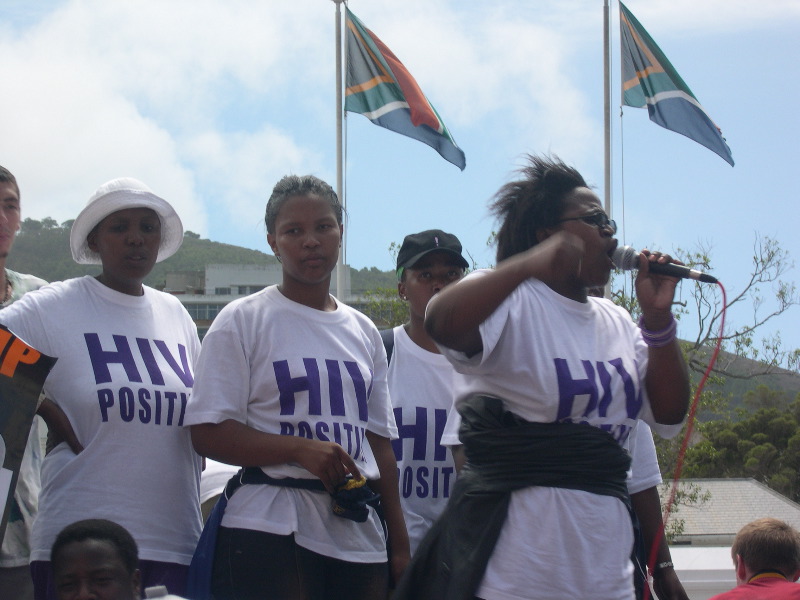
A new International Planned Parenthood Federation assessment surveyed 40 member associations providing HIV-related services across several regions. Twenty-two reported an HIV commodity stockout in the preceding year; 16 had an active stockout when surveyed. HIV rapid tests were particularly affected: 17 associations reported low stock and five had none. The survey was conducted in the second quarter of 2026 and describes these respondents, not every HIV provider worldwide. (IPPF survey brief)
The most revealing figure may be less dramatic: 34 of the 40 respondents relied on government supply for HIV products, while 18 lacked authorization to import them. A clinic can have trained staff, community trust and a patient at its door, yet still be unable to run a test. Funding decisions made far away arrive locally as an empty drawer. The last switch in the health system is often held by whoever controls the supply chain.
The October watch | 6–13 October
| 6 October — Biosimilars and the price of access: |
| The European Observatory’s policy discussion examines pricing, procurement and reimbursement that could turn lower-cost biologics into actual patient access. |
| 7 October — A new obesity-care standard for children: |
| WHO launches two guidelines on integrated care for children and adolescents. Watch what they ask health systems to provide. |
| 8 October — Winter respiratory surveillance: |
| WHO’s EPI-WIN briefing turns to influenza, COVID-19 and RSV as the northern winter approaches. |
| 10 October — World Mental Health Day: |
| WHO’s campaign asks whether people with lived experience have a real role in designing services and policy. |
| 13 October — Health taxes meet political resistance: |
| A WHO Western Pacific session examines tobacco, alcohol and sugary-drink taxes, including the recurring argument over illicit trade. |
Follow the last-mile conversation!
IPM Alliance tracks the decisions, bottlenecks and implementation gaps shaping personalised medicine access. Follow us for briefings, events, policy signals and practical insights from across regions and disease areas.
We want to hear from you
When a patient becomes eligible for personalised care, where does the system most often lose them: identification, testing, referral, reimbursement, delivery capacity or equity?
Know someone who should be reading this?
IPM Brief is built for people working where science, policy and patient access collide. If one colleague would find this useful, forward it to them and help bring them into the conversation.
International Alliance for Personalised Medicine
Avenue de l’Armée / Legerlaan 10, 1041 Brussels, Belgium
