
Dear friends,
Europe spent the week arguing about how much future it can afford. Canada spent it discovering that sovereignty can become very expensive when the institutions meant to defend it are still catching up.
In Berlin, Friedrich Merz is rallying governments behind major cuts to the EU’s next seven-year budget, while António Costa tours capitals searching for a compromise. Defence wants more. Competitiveness wants more. Agriculture is not volunteering for cuts. Strategic autonomy, resilience and digital infrastructure all come with substantial price tags.
Health is in the same queue, expected to deliver earlier diagnosis, better medicines, stronger preparedness, secure supply chains and equitable access, preferably while costing less.
There is a problem with that arithmetic.
Canada offers a useful warning. Mark Carney called on middle powers to stand together against economic coercion. Seven months later, faced with a new U.S. trade war, Ottawa is largely fighting alone. The political alignment may exist, but the mechanisms needed to turn solidarity into collective action are not yet fully there.
Healthcare should take note.
Because medicine refused to stay in its lane this week.
It became a $2.25 billion takeover target, a wake-up drug, a wearable early-warning system, a question of health sovereignty, a cybersecurity problem and — because August apparently needed one final plot twist — an experiment moving mitochondria from a patient’s leg into her eye.
These stories look very different. The underlying lesson is not.
Innovation does not implement itself, and resilience cannot be improvised after the shock arrives.
Scientific progress needs diagnostics, data, laboratories, regulators, trained professionals, supply chains and financing. Health sovereignty requires much the same.
That is the thread running through this week’s Brief. Companies are moving deeper into clinical research and biomarker infrastructure. Wearables are shifting medicine from reaction towards prediction. Rare diseases are gaining therapies designed around their biology. Regulators are being asked both to accelerate innovation and to know when the evidence is no longer enough.
And in Africa, 47 health ministries are placing financing, workforce, regulation and data at the centre of a much bigger question: who ultimately has the capacity to deliver healthcare on their own terms?
So the real argument is no longer simply about what science can do.
It is about what governments are prepared to fund, build and protect so that science actually reaches patients.
In this issue
- The wholesaler wants the whole medicine: McKesson is spending $2.25 billion to move deeper into clinical research, biomarkers and commercialisation.
- Narcolepsy gets more than a louder alarm clock: A first-in-class medicine targets the biological deficiency behind type 1 narcolepsy.
- A patch learns to see ketoacidosis coming: The first wearable to continuously track glucose and ketones together has been authorised.
- A rare anaemia finally gets a drug of its own: A new indication gives patients with warm autoimmune haemolytic anaemia their first specifically approved option.
- Depression may be stalling the brain’s nursery: A vast hippocampus map suggests that new neurons begin developing but struggle to finish the journey.
- A leg lent its batteries to an eye: Scientists tested whether mitochondria extracted from muscle could help restore a patient’s visual response.
- Health sovereignty leaves the speech and enters the agenda: Forty-seven health ministries are negotiating financing, workforce, regulation and data as instruments of political control.
- The regulator proved “conditional” is a real word: A gene therapy’s conditional registration has been cancelled after the evidence failed to catch up with the promise.
- A cyberattack hit the medical-device loading dock: Disrupted order processing exposed how quickly a digital breach can become a physical healthcare problem.
- The heatwave sent insurers a medical bill: Tens of thousands of excess deaths are turning climate adaptation into a health-system and financial necessity.
| This is not another health news digest. It’s a twice-weekly readout of where evidence meets power and where power must turn into action. |
The wholesaler wants the whole medicine
McKesson has agreed to acquire Precision Medicine Group for approximately $2.25 billion, adding clinical research, biomarker intelligence, laboratory services, market-access expertise and commercialisation support to its expanding oncology business. Subject to regulatory clearance, Precision Medicine Group will sit inside McKesson’s Oncology & Multispecialty segment. (Reuters and McKesson)
The deal is not merely another healthcare acquisition with an impressive number attached. It shows how companies traditionally associated with distribution are moving upstream into the machinery that decides which medicines are studied, how evidence is generated and how products reach the market. The drug may remain the star, but the infrastructure surrounding it is becoming the real commercial prize.
Narcolepsy gets more than a louder alarm clock
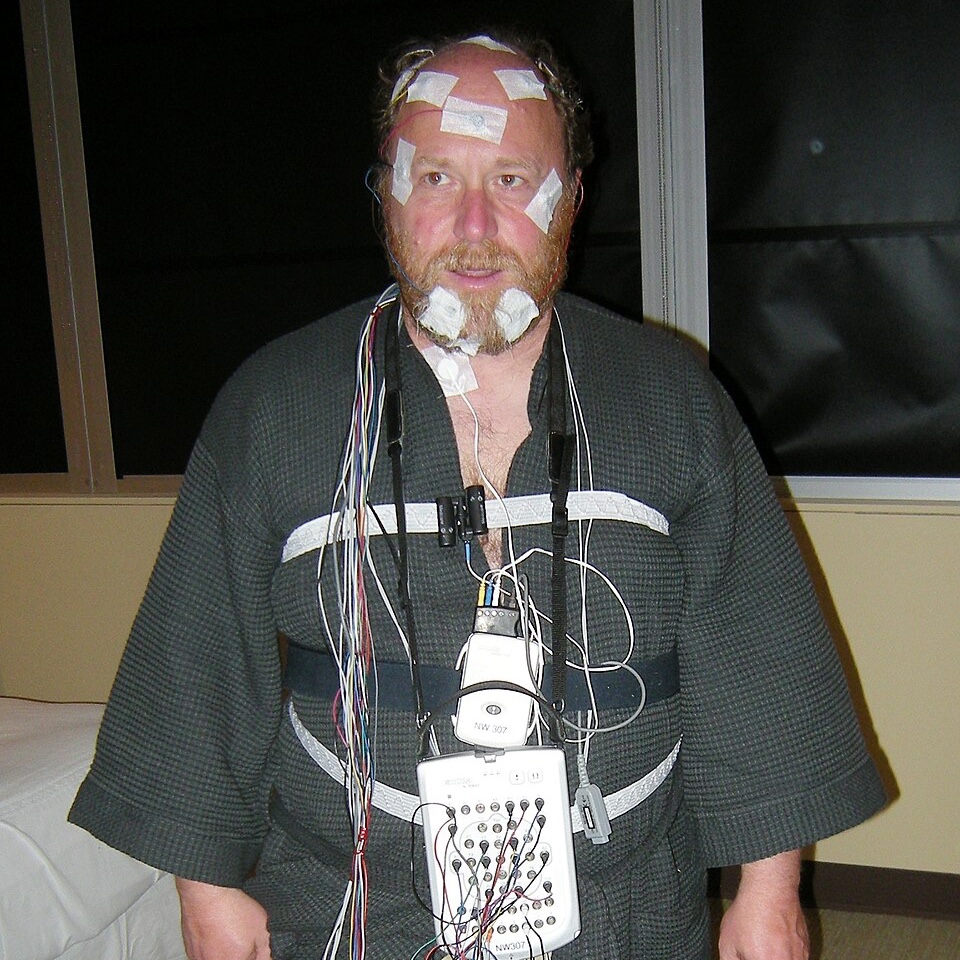
Japan has approved Orzeyful, or oveporexton, for adults with type 1 narcolepsy. The first-in-class oral therapy activates the orexin receptor 2, targeting the orexin deficiency underlying the condition rather than treating excessive sleepiness and cataplexy as disconnected symptoms. The decision follows Phase III studies reporting improvements across several major symptoms. (Takeda)
This is precision medicine at its most persuasive: identify the missing biological signal and design a therapy capable of restoring it. It is not a cure, and adverse events included insomnia, urinary symptoms and excessive saliva. But for a condition that can take more than a decade to diagnose, moving from symptom control towards mechanism-based treatment is more than a pharmaceutical milestone. It is a change in how the disease is understood.
A patch learns to see ketoacidosis coming
The FDA has authorised the Libre Duo 10 Day, the first wearable device to continuously monitor both glucose and ketones in one system. Intended for people with diabetes aged two and older, it takes measurements every minute and can send smartphone alerts when ketones reach concerning levels. The authorisation was supported by six studies involving more than 600 participants. (US Food and Drug Administration)
The innovation sounds modest until one remembers what it is trying to prevent. Diabetic ketoacidosis can develop rapidly and become life-threatening, while conventional ketone tests provide only isolated readings. Continuous monitoring turns a biochemical snapshot into a moving warning system. That makes this less about adding another number to a smartphone and more about shifting emergency medicine several hours upstream.
A rare anaemia finally gets a drug of its own
Brazil has become the first country to approve nipocalimab for warm autoimmune haemolytic anaemia in adults and adolescents aged 12 and older. The rare disorder causes antibodies to attack red blood cells, producing anaemia, fatigue, breathlessness, transfusion dependence and potentially serious complications. The medicine blocks the neonatal Fc receptor, reducing circulating IgG antibodies, including those driving the destruction. (Anvisa)
The indication received priority review because the disease is serious, debilitating and previously had no specifically approved treatment in the country. Rare-disease policy often becomes trapped between tiny populations and large development costs. This decision offers a more useful model: unmet need should make regulatory attention sharper, not smaller. For patients who have spent years borrowing treatments from other conditions, finally having a medicine with their own disease on the label matters.
Depression may be stalling the brain’s nursery

Researchers analysing 495,037 cell nuclei have produced the largest multimodal atlas yet of the adult human hippocampus. Comparing tissue from 11 people with major depressive disorder and 19 controls, they found evidence of a disrupted developmental trajectory: more cells remained in a stem-like state while fewer progressed into neuroblasts, suggesting that neuron formation may be starting but stalling. (Nature and Nature Medicine)
That does not mean depression has been reduced to one defective cellular conveyor belt. The study used postmortem tissue and cannot establish whether impaired neurogenesis causes depression, results from it or develops alongside other biological changes. But it gives researchers a far richer map of the hippocampus—and potential therapeutic targets extending beyond the familiar language of serotonin. Mental health may finally be getting the biological resolution it deserves.
A leg lent its batteries to an eye
Scientists extracted mitochondria from a woman’s leg muscles and injected them into the vitreous fluid of her eyes in an attempt to treat severe blindness. The procedure reportedly produced no inflammation or serious side effects and briefly improved the eyes’ response to light, but it did not restore functional vision. (Nature and Research Square preprint)
This is exactly the kind of experiment that should provoke excitement and restraint in equal measure. Mitochondria supply energy to cells, and transferring healthy ones could eventually offer a route into diseases driven by mitochondrial failure. But this was one patient, the effect was temporary and the research has not yet been peer reviewed. Frontier medicine needs permission to be strange. It does not need permission to skip the evidence.
Health sovereignty leaves the speech and enters the agenda
Health ministers representing the 47 members of the WHO African Region have convened in Addis Ababa to shape the continent’s next health agenda. The programme includes sustainable financing, a workforce strategy for 2026–2035, stronger medical-product regulation, emergency preparedness, early-childhood investment and a Regional Health Data Hub. (WHO Regional Office for Africa)
The political language matters because dependency has too often been presented as partnership with better branding. The proposed Vision 2035 framework places country ownership, domestic capacity, primary care and digital infrastructure at the centre of reform. The test will be implementation: budgets, laboratories, retained professionals and accountable institutions. Sovereignty is not declared at a summit. It is built into the system that remains after the summit leaves town.
The regulator proved “conditional” is a real word
Anvisa has cancelled the conditional registration of Elevidys, Roche’s gene therapy for Duchenne muscular dystrophy, at the company’s request. The agency concluded that the complete body of available data was insufficient to satisfy the regulatory requirements for maintaining the authorisation. Commercialisation had already been suspended in July 2025 while additional safety information was examined. (Anvisa)
This is not regulation defeating innovation. It is regulation doing the unpleasant work that gives innovation credibility. Conditional approval is a bargain: earlier access in exchange for evidence that must continue arriving. When the evidence fails to arrive convincingly, the condition must have consequences. Roche still has monitoring obligations for previously treated patients and may return with stronger data. Hope remains possible. Entitlement does not.
A cyberattack hit the medical-device loading dock

Boston Scientific disclosed that a cybersecurity incident detected on 25 August disrupted parts of its global operations, including systems used to process and ship customer orders. The company activated its incident-response procedures and brought in external cybersecurity specialists to investigate and contain the breach. Its shares fell by roughly four per cent after the disclosure. (Reuters)
The immediate danger is not necessarily a stolen medical record or a hacked implant. It is something more ordinary and therefore easier to underestimate: devices failing to move from warehouses to hospitals. Healthcare cybersecurity is supply security. When digital systems control orders, inventories and deliveries, an attack on software can become a delay in treatment without ever entering a clinical network. The loading dock is now part of the critical health infrastructure.
The heatwave sent insurers a medical bill
At least 35,000 excess deaths have been recorded during four consecutive record-breaking heatwaves across Europe this summer, based on incomplete information covering only part of the continent. The final toll is expected to be higher. Older people carried much of the burden, with around 9,000 of the 10,650 excess deaths recorded during one late-June heatwave occurring among those aged 65 or older. (The Guardian and S&P analysis reported by The Guardian)
Now the actuarial tables are beginning to notice what public health has been shouting. S&P has warned that intensifying heat could pressure health and life insurers through higher treatment costs, hospitalisation, mortality claims and premiums. Climate adaptation can no longer be filed under environmental policy and revisited after the next election. It belongs in hospital planning, elderly care, housing standards, workforce protection and health budgets. The weather has become a clinical variable—and it is billing by the body.
The August Watch
Registrations also remain open for upcoming IPM Alliance events in Stockholm on 12 September, New York on 24 September and Dublin on 2 October. Visit the IPM Alliance website for programme updates.
| 1 September | Worldwide |
| World Sexual and Reproductive Health Month begins, focusing on evidence, rights and access to essential services. (WHO) |
| 1–3 September | Geneva |
| Global Digital Collaboration Conference, covering trusted digital health wallets, interoperability and secure cross-border health information. (WHO) |
| 1–4 September | Milan |
| VPH 2026, focused on digital twins, in-silico trials, trusted AI and their clinical adoption. (VPH 2026) |
| 2 September | Online |
| WHO launches new filovirus clinical-management guidance covering Ebola, Marburg and other filovirus diseases. (WHO) |
| 2 September | Online |
| Evidence to Impact, examining advances and implementation gaps in sexual and reproductive health and rights. (WHO) |
| 3–5 September | Singapore |
| BISHAC 2026, bringing implementation science into health policy, practice and system reform. (BISHAC 2026) |
| 4 September | Geneva |
| WHO eye-care advisory meeting, shaping the forthcoming global status report on eye care and vision impairment. (WHO) |
| 4–7 September | Lisbon |
| 9th World One Health Congress, covering antimicrobial resistance, biosecurity, financing and One Health implementation. (WHO) |
| 7 September | Worldwide |
| International Day of Clean Air for blue skies, highlighting the health and economic case for clean-air action. (UNEP) |
| 7 September | Dili |
| WHO South-East Asia Regional Committee opens, with workforce capacity, specialised-care equity and regional health policy on the agenda. (WHO) |
Follow the last-mile conversation!
IPM Alliance tracks the decisions, bottlenecks and implementation gaps shaping personalised medicine access. Follow us for briefings, events, policy signals and practical insights from across regions and disease areas.
We want to hear from you
When a patient becomes eligible for personalised care, where does the system most often lose them: identification, testing, referral, reimbursement, delivery capacity or equity?
Know someone who should be reading this?
IPM Brief is built for people working where science, policy and patient access collide. If one colleague would find this useful, forward it to them and help bring them into the conversation.
International Alliance for Personalised Medicine
Avenue de l’Armée / Legerlaan 10, 1041 Brussels, Belgium
