

Greetings, all!
It is still August. Summer is hanging on in some places; elsewhere, the first leaves are already changing and autumn is rehearsing in the background. Politics, regulation and healthcare appear to have started the new season early.
This weekend, I acted as if I were a patient and ended up needing a passport, a trade lawyer and, somewhere between Berlin, Beijing and Dublin, a working knowledge of constitutional law.
Dublin provided perhaps the best illustration of the week.
Europe has created a twenty-first-century right to collective redress. Yet in Ireland — European home to many of the technology companies those rules are intended to hold accountable — campaigners trying to exercise that right can find themselves constrained by legal concepts embedded in Irish law since 1634. Under the rules on maintenance and champerty, outside financing of litigation remains heavily restricted.
It is a wonderfully European contradiction: a modern right, a seventeenth-century obstacle and twenty-first-century technology sitting in the middle.
The consequence is not theoretical. Europe has given citizens a route to challenge Big Tech while, in one of the jurisdictions where such challenges matter most, the system can help determine whether they can afford to use it.
The technology may be new. The systems governing it often are not.
And there is a wider lesson here: creating a right, approving an innovation or passing a regulation is not the same thing as making it usable.
Medicine is running into exactly the same problem.
The biggest health story of the past few days was not one drug, one company or one regulator. It was the speed at which medicine is being pulled into the machinery of national power.
Japan approved the world’s first functional cure for chronic hepatitis B. China put a five-year medical-security plan around 1.3 billion people. South Korea prepared to move prescriptions from the clinic to the doorstep. India launched a cancer test built around Indian tumour biology. Germany defended its ability to set medicine prices while pharmaceutical companies warned that investment could move elsewhere. Australia tried to replace a withdrawn medicine and walked into a culture war. Chile proposed making access to non-urgent healthcare part of the punishment for organised crime. In the Democratic Republic of the Congo, Ebola crossed 5,200 cases while the world’s emergency machinery struggled to catch it.
Above all of this, an individualised cancer vaccine finally crossed the scientific threshold that has defeated generations of promising ideas: Phase III.
These stories look unrelated.
They are not.
The dividing line is no longer simply between innovation and access. It is increasingly between countries that are deliberately building the regulatory, financial and technological machinery to shape their health future and those that discover, usually under pressure, that somebody else has already shaped it for them.
Countries are deciding whose data count, which medicines move first, what constitutes a fair price, who can challenge powerful institutions, who remains entitled to care and whether an old statute, a national border or a broken generator determines what modern medicine can actually deliver.
The white coat now has a passport.
Medicine has become foreign policy. It is also increasingly industrial policy, trade policy, digital policy and national security policy.
And perhaps that is the real message as August begins to hand the stage to autumn:
Science may move quickly, but patients still live at the speed of systems.
In this issue
- The personalised cancer vaccine clears Phase III: The first late-stage success for an individualised mRNA cancer vaccine moves the field from promise to infrastructure.
- Japan gets the cure first: Hibsago becomes the world’s first approved functional cure for chronic hepatitis B.
- China puts 1.3 billion people on a five-year clock: Beijing links insurance, ageing, platform work and long-term care inside one state plan.
- Berlin doubles the rebate. Pharma reaches for the exit: Germany’s drug-pricing reset turns reimbursement into industrial and trade policy.
- Ebola outruns the institutions built to stop it: The DRC outbreak crosses 5,200 cases at the 100-day mark.
- India refuses to be the missing genome: A 2,206-gene cancer test puts population-specific biology at the centre of precision oncology.
- South Korea puts the pharmacy in the phone: Telemedicine is becoming permanent, and medicine delivery may follow it.
- Australia solves one shortage and starts another war: A replacement medicine for breast cancer and endometriosis becomes a battle over gender policy.
- Chile turns healthcare into part of the sentence: A security reform would restrict non-urgent public care for people convicted of organised crime or terrorism.
| This is not another health news digest. It’s a twice-weekly readout of where evidence meets power and where power must turn into action. |
The personalised cancer vaccine clears Phase III
Merck and Moderna have reported that intismeran autogene, their individualised mRNA neoantigen therapy, met the primary endpoint of recurrence-free survival and the key secondary endpoint of distant-metastasis-free survival when combined with Keytruda in a Phase III melanoma trial. The study enrolled 1,137 people with completely resected, high-risk stage IIB to IV melanoma. No new safety signals were identified, although the companies have not yet released the full numerical results and plan to present them at a medical meeting. (Source: Merck and Moderna; independent analysis: Nature)
For years, cancer vaccines lived in the most forgiving territory in medicine: scientifically exciting, clinically plausible and never quite decisive. Phase III changes the argument. If the full data hold, regulators will not merely be assessing another product. They will be assessing an operating model that sequences one tumour, selects one set of neoantigens and manufactures one therapy for one person. Personalisation has finally produced the result. Now manufacturing, regulation and health systems must prove they can produce the medicine.
Japan gets the cure first
Japan’s Ministry of Health, Labour and Welfare has approved GSK’s Hibsago, or bepirovirsen, for eligible adults with chronic hepatitis B who have received at least six months of nucleos(t)ide analogue therapy. It is the drug’s first approval anywhere and the first treatment approved in Japan as a functional cure for chronic hepatitis B. In pooled Phase III data, six months of treatment produced a functional-cure response in 19% of the overall eligible population, compared with none in the placebo group. Nearly one million people in Japan live with chronic hepatitis B. (Source: GSK approval announcement; independent report: Reuters)
Japan was once discussed mainly through the language of drug lag. This time, it moved first. The country used its SENKU pathway, national screening infrastructure and a clear unmet need to define a new treatment category before the United States or Europe. That is more than a regulatory win for GSK. It is a message from Tokyo that the first launch of a globally important medicine does not have to happen where industry has traditionally expected it.
China puts 1.3 billion people on a five-year clock

China has issued a 2026 to 2030 medical-security plan containing 26 measures across eight areas, covering basic insurance, critical illness, maternity, commercial insurance and long-term care. Basic medical insurance covered 1.33 billion people, or 95% of the population, at the end of 2025. The plan targets coverage for residence-permit holders and platform workers, wider cross-regional settlement and expanded long-term care. Lawmakers are also preparing a third review of draft medical-security legislation that would place long-term care insurance more firmly in law. (Source: Chinese government; legislative update)
This is not insurance housekeeping. It is social and industrial policy for a country with 323 million people aged 60 or over and a workforce increasingly shaped by platforms and flexible employment. Western systems often separate ageing, reimbursement, digital care and labour rights into different committees. Beijing is putting them inside one planning machine. Scale is China’s political advantage. Execution, local financing and meaningful protection will determine whether scale becomes security or merely a larger spreadsheet.
Berlin doubles the rebate. Pharma reaches for the exit
Germany’s approved health-insurance reform will increase the mandatory manufacturer rebate on branded medicines from 7% to 15.5%, impose higher vaccine rebates and freeze prices for patented vaccines from 2027 to 2030. Berlin argues that the measures are necessary to stabilise statutory health-insurance finances. Pharmaceutical companies argue that they will weaken investment and innovation. Eli Lilly has reduced a planned German investment, Boehringer Ingelheim has abandoned a €900 million expansion plan, and Pfizer has said it is reviewing the scope and timing of future commitments. (Current analysis: Financial Times; reform report: Reuters)
Industry calls this an innovation exodus. Government calls it arithmetic. The real confrontation is over whether a wealthy democracy can still determine what it will pay for medicines without being punished through cancelled factories, delayed launches or trade pressure. A percentage written into German reimbursement law can now redirect clinical trials, manufacturing capacity and international capital. HTA has become geopolitics with decimal points.
Ebola outruns the institutions built to stop it
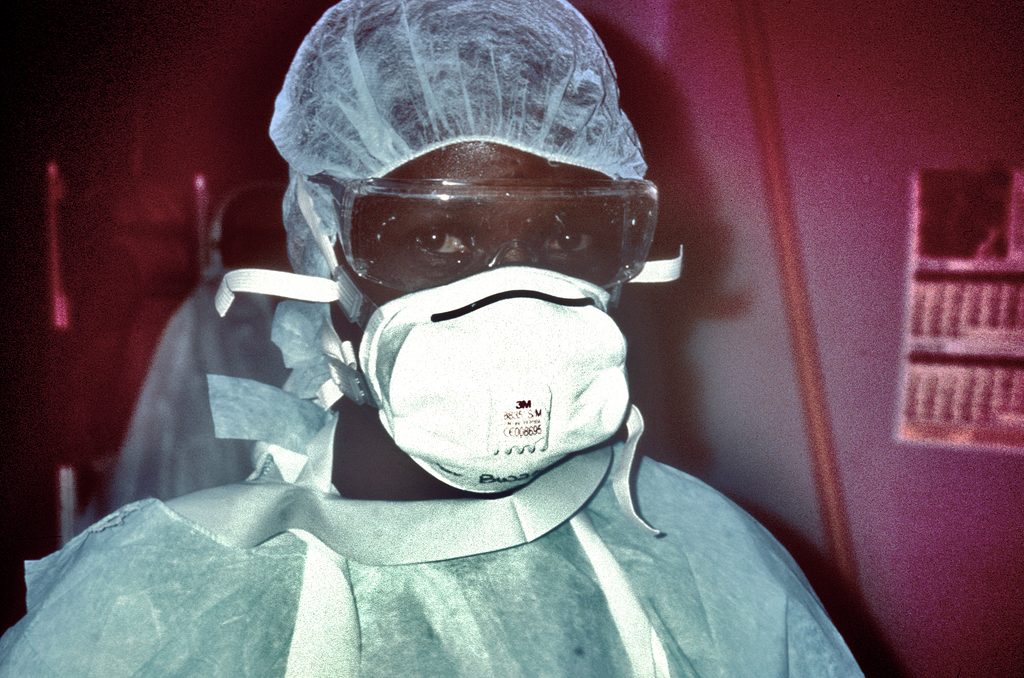
The Democratic Republic of the Congo has passed 5,200 confirmed Ebola cases 100 days after declaring the outbreak. WHO says transmission is averaging roughly 90 confirmed cases a day, has expanded into a sixth province and is still outpacing control efforts. Ituri accounts for about 85% of cases and 79% of deaths. The Bundibugyo strain has no specifically licensed vaccine or medicine, although candidate trials are under way and 70,000 doses of the Ervebo vaccine are being deployed on the basis that it may provide cross-protection. (Source: WHO Regional Office for Africa; vaccine deployment: Reuters)
After COVID-19, the world promised diagnostics, therapeutics and vaccines within 100 days of a serious new threat. On day 100 in the DRC, the response has expanded laboratories from one to 19 and treatment capacity from fewer than 10 beds to more than 1,300, yet it remains behind the virus. This is not an African failure. It is a global preparedness audit conducted in lives, conflict zones and unpaid bills. Preparedness is still celebrated in Geneva and financed in arrears.
India refuses to be the missing genome
Indian precision-oncology company 4baseCare has launched TARGT Indiegene V2, a comprehensive genomic-profiling test covering 2,206 genes, 299 clinically relevant gene fusions, homologous-recombination deficiency and immunotherapy biomarkers. The company says the test was developed through five years of clinical experience and insights from Indian tumour genomics, with coverage organised around the biological processes described by the Hallmarks of Cancer. (Source: Express Healthcare; technical overview)
A larger panel is not automatically a better clinical test, and a product launch is not evidence that more patients will receive effective targeted treatment. The political importance lies elsewhere. Populations underrepresented in global genomic datasets are too often asked to accept precision medicine built from somebody else’s biology. India is attempting to turn representation into infrastructure and infrastructure into an export. The next proof must be clinical utility, not another impressive gene count.
South Korea puts the pharmacy in the phone

South Korea is considering expanding prescription-drug delivery to everyone receiving telemedicine as amendments formally legalising remote care prepare to take effect on 24 December. The current framework limits delivery to specified groups, including people in remote areas, long-term care recipients, people with disabilities and some patients with infectious or rare diseases. The legislation also sets boundaries around prescribing, platform influence, patient data and professional responsibility. (Source: Korea JoongAng Daily; South Korean Medical Service Act)
The technology is the easy part. The fight is over control of the route from screen to prescription to doorstep. Doctors want clinical discretion, pharmacists want dispensing safeguards, platforms want scale and government wants convenience without a digital free-for-all. Korea’s answer is becoming a regulated market rather than an emergency workaround. The clinic may remain the legal centre of care, but the phone is becoming its front door.
Australia solves one shortage and starts another war
Australia’s Pharmaceutical Benefits Advisory Committee has recommended expanding public funding for triptorelin after AstraZeneca decided to withdraw the monthly formulation of Zoladex from the Australian market. The proposed listing could protect treatment continuity for more than 7,500 women with breast cancer, as well as people using ovarian suppression for endometriosis and fertility preservation. Because the recommendation is unrestricted, it could also subsidise some gender-affirming treatment, potentially marking the first federal PBS funding of this kind and triggering a national political dispute. (Source: ABC News; policy implications: The Guardian)
One technical substitution is now carrying breast cancer continuity, women’s health, fertility, transgender care and a fight over the evidentiary standard for puberty blockers. That is what happens when a commercial withdrawal creates a policy vacuum and the state must fill it quickly. Australia may solve the medicine shortage. It cannot prevent every political actor from trying to prescribe the meaning of the decision.
Chile turns healthcare into part of the sentence
Chilean President José Antonio Kast has submitted a security-focused constitutional reform package that would restrict public benefits for people convicted of organised crime or terrorism. The health provision would limit them to urgent medical care during their sentences and potentially for up to 15 years afterwards. The government presents the proposal as a deterrent and a signal of state resolve. Health Minister May Chomali has warned that a complete exclusion from non-urgent care may conflict with existing legal and ethical obligations. (Source: Government of Chile; health provision: El País)
This would turn the health system into an extension of the penal system. Delaying non-urgent care does not make disease disappear; it allows manageable conditions to become emergencies inside prisons and communities. The larger precedent is even more serious. Once a constitutional entitlement becomes conditional on the political category of the person requesting it, healthcare stops being only a public service and begins enforcing a sentence that extends beyond the courtroom.
The August Watch
Registrations also remain open for upcoming IPM Alliance events in Stockholm on 12 September, New York on 24 September and Dublin on 2 October. Visit the IPM Alliance website for programme updates.
| 25-28 August | Beijing: |
| China’s legislature will conduct a third review of the draft medical-security law, including long-term care and cross-regional reimbursement. |
| 25 August | Silver Spring and online: |
| The FDA meeting on nonhealing chronic wounds will test whether lived experience changes endpoints and trial design. |
| 27 August | Online: |
| The FDA will examine model-integrated evidence in generic-drug development, where simulation is beginning to influence bioequivalence. |
| 28-31 August | Munich and online: |
| ESC Congress 2026 will bring late-breaking cardiovascular trials, new guidelines and artificial intelligence into the same political arena. |
Follow the last-mile conversation!
IPM Alliance tracks the decisions, bottlenecks and implementation gaps shaping personalised medicine access. Follow us for briefings, events, policy signals and practical insights from across regions and disease areas.
We want to hear from you
When a patient becomes eligible for personalised care, where does the system most often lose them: identification, testing, referral, reimbursement, delivery capacity or equity?
Know someone who should be reading this?
IPM Brief is built for people working where science, policy and patient access collide. If one colleague would find this useful, forward it to them and help bring them into the conversation.

International Alliance for Personalised Medicine
Avenue de l’Armée / Legerlaan 10, 1041 Brussels, Belgium
