Dear powers-that-can,
The patient had a busy week.
They simply were not invited to the meetings.
An algorithm decided how much care an older person deserved. Artificial intelligence received a laboratory badge. Trade diplomacy changed access to a breast-cancer medicine. Different stories, perhaps — but all pointing to the same question:
where does power in healthcare now sit?
Increasingly, not only in the consultation room, laboratory or hospital. It sits in algorithms, reimbursement rules, regulatory frameworks, licensing agreements, trade negotiations and international alliances.
Which brings us, unexpectedly perhaps, to Machiavelli.
He understood a problem that feels remarkably contemporary: what does a power do when it is strong enough to matter, but not strong enough to dominate?
Five centuries later, the middle powers are back in the room.
Canada offers a striking example. This week, Ursula von der Leyen opened the door to the idea of Canada becoming the EU’s first “associate member”. The precise legal form remains unclear, but the political direction is significant: deeper cooperation between actors with substantial economic, scientific and political capacity, but without the ability — or perhaps the desire — to dominate the international system.
This is not only geopolitics.
It is increasingly health policy.
The strategic assets of the coming decade will include not only energy, defence and critical minerals, but also health data, genomics, AI, clinical-trial networks, diagnostics, manufacturing resilience, regulatory standards and access to medicines.
This is where middle powers may have particular influence.
They may not be able to dictate the system, but they can convene it, connect it and shape it — through coalitions, trusted institutions, regulatory cooperation and shared scientific infrastructure.
Artificial intelligence is an immediate test.
The challenge can be captured in one phrase: Unleash the potential of AI in healthcare – but with caution and care. AI can help detect disease earlier, accelerate discovery and support overstretched health systems. But caution and care mean more than keeping a human somewhere near the machine.
This week’s aged-care story showed why. The problem was not simply that an algorithm made a recommendation. The problem arose when the professional could no longer override it.
At that point, the algorithm had acquired authority.
That distinction will matter increasingly as AI moves deeper into diagnostics, clinical decisions and scientific reasoning.
And perhaps this is precisely where the powers-that-can have a role.
They do not need to become Rome.
All roads may lead there – and by all means take one — but influence does not require an empire.
Which brings us to New York next week.
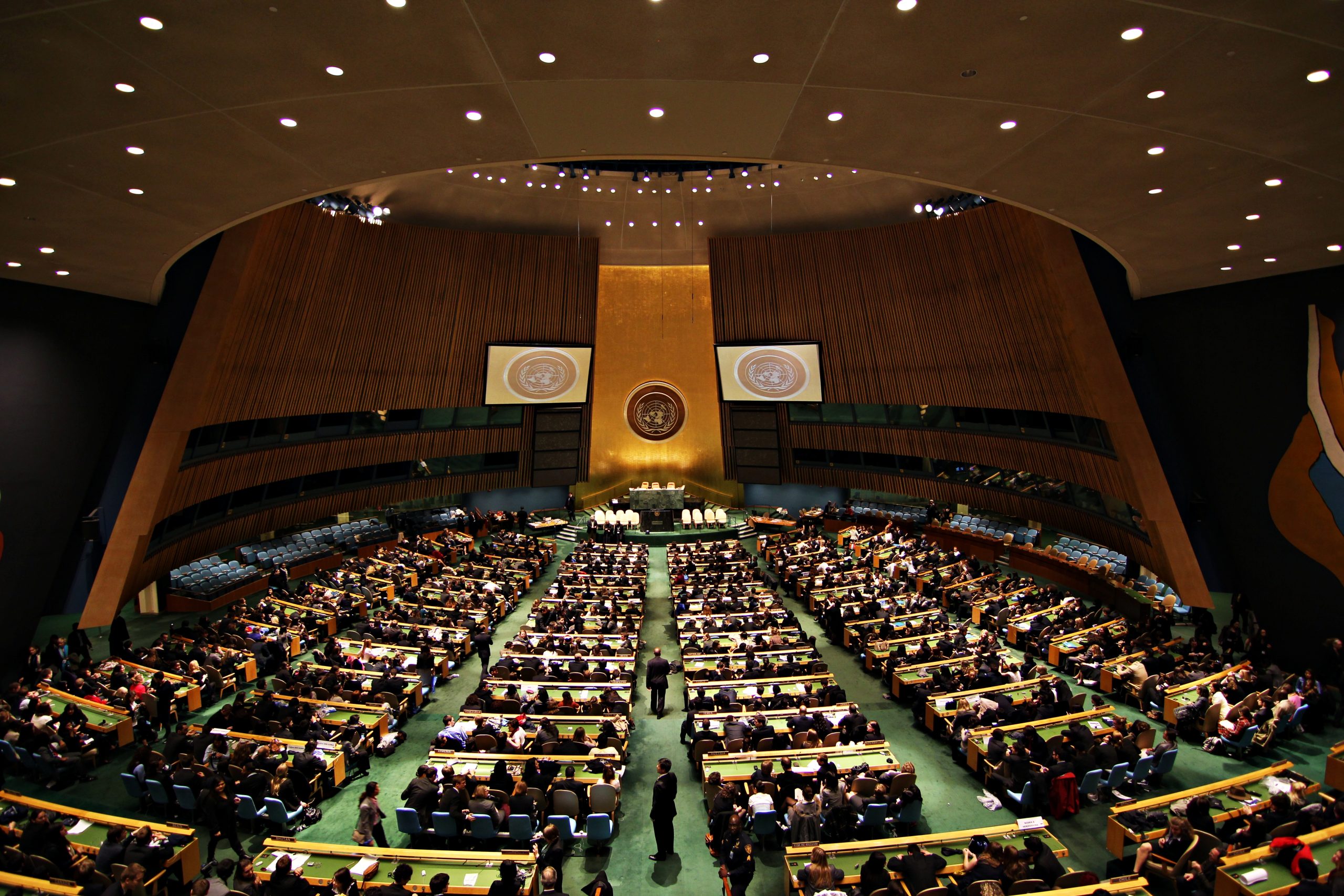
During UN General Assembly High-Level Week, IAPM will convene two meetings that apply this middle-power approach to healthcare.
On 23 September, we examine MFN pricing, trade and tariffs. On 24 September, we turn to AI, diagnostics and innovation, and the journey from promising science to routine care.
The subjects are different.
The method is the same: coordination where no single actor can dictate the answer.
That may be the real middle-power proposition for health.
Because there is always a meeting.
Next week, our job is to make sure the patient finally has a seat.
In this issue
- The algorithm fired the assessor: Older people’s care packages were placed beyond the reach of human clinical judgement.
- The medicine came in a man’s dose. Women got arithmetic: Testosterone prescribing is rising, but women still lack a product designed and approved for them.
- The law entered the operating room wearing no scrubs: Pregnancy specialists say abortion restrictions can make evidence-based care impossible.
- The stem-cell miracle received a legal notice: Clinics selling unproven interventions now face professional discipline and possible closure.
- The clinical trial joined the arms race: A new FDA pilot treats first-in-human research as an instrument of geopolitical competition.
- Claude got a laboratory badge: Novo wants artificial intelligence embedded inside pharmaceutical discovery and scientific reasoning.
- HIV prevention booked the factory before approval: Licensing and procurement plans are being built before the next long-acting injection finishes development.
- The breast-cancer drug crossed the border after the tariff threat: A trade agreement changed the economics of access to a life-extending medicine.
- Fiji stopped calling HIV a trend: One of the world’s fastest-growing HIV epidemics has become a national crisis.
| This is not another health news digest. It’s a twice-weekly readout of where evidence meets power and where power must turn into action. |
The algorithm fired the assessor
Newly released freedom-of-information emails show that Australian health officials discovered, three days before the rollout of a new aged-care assessment system, that the governing rules gave assessors no legal discretion to override its algorithm. The tool determines the support and funding packages available to older people receiving care at home, even when a professional believes the resulting classification does not reflect the person’s needs. (The Guardian)
This was not simply an algorithm making a questionable recommendation. The state converted that recommendation into an instruction and then removed the human escape route. Complaints subsequently described vulnerable people being under-assessed, while professionals were expected to approve outcomes they considered clinically wrong. Software can support judgement. Once the law makes its output final, the software has stopped assisting the decision-maker and started replacing one.
IPM News
IPM puts the patient back in the meeting
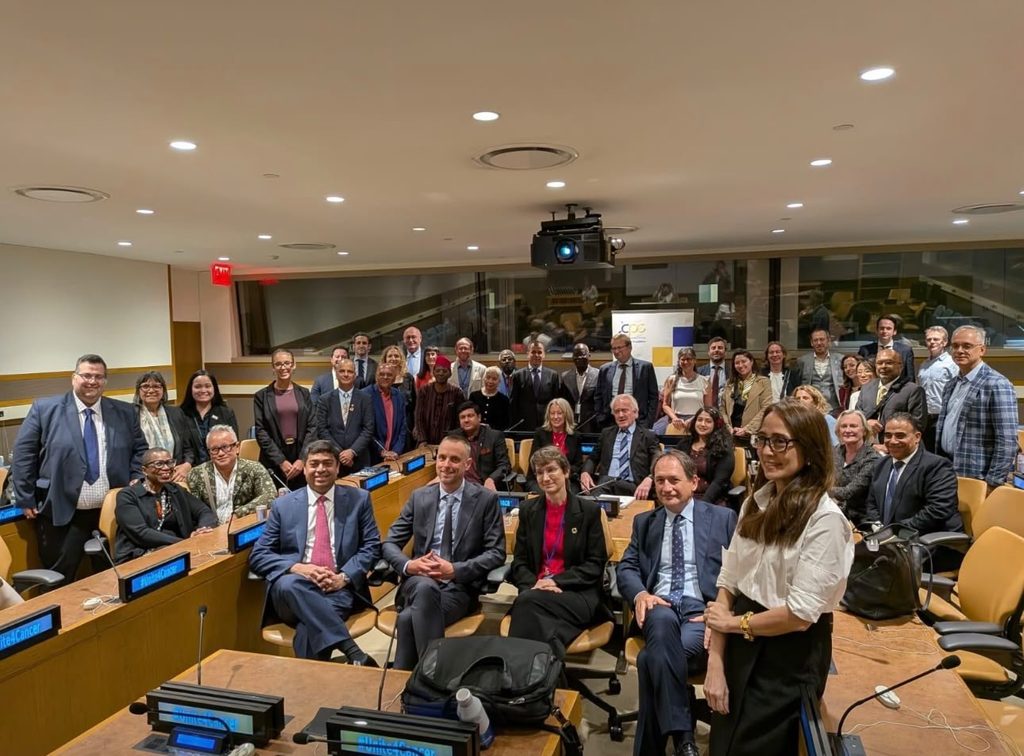
During United Nations General Assembly High-Level Week, the International Alliance for Personalised Medicine will convene two high-level meetings in New York. On 23 September, from 14:00 to 18:15 at 777 United Nations Plaza, policymakers and health leaders will examine how MFN pricing, tariffs and trade realignment could reshape innovation, diagnostics, clinical research, manufacturing and equitable access. On 24 September, from 09:00 to 13:00 at the Italian Cultural Institute, 686 Park Avenue, the focus will turn to artificial intelligence and the difficult journey from promising science to routine patient benefit. [Registration link]
The meetings will bring together senior figures from WHO and PAHO, international organisations, health systems, clinical research, HTA, patient advocacy, academia, biotechnology, diagnostics and industry. This is not another innovation showcase. The first meeting will work towards the New York Principles on MFN, Trade and Personalised Medicine. The second will develop a practical New York Framework for Innovation-to-Care, connecting patient need with evidence, regulation, HTA, reimbursement, procurement, financing and implementation. If policy is already practising medicine, the people shaping it should at least be in the same room.
The medicine came in a man’s dose. Women got arithmetic
Testosterone prescriptions for women in the United States increased by 146% between January 2023 and July 2026, yet the FDA has never approved a testosterone product specifically formulated for women. Patients may encounter insurance denials, pharmacy delays or instructions to divide products designed for male doses, while compounded alternatives can be expensive and inconsistently covered. (Reuters)
The regulatory gap is a familiar piece of women’s health architecture: demand exists, some evidence exists, clinicians are prescribing, but the product-development system never properly arrived. Testosterone is not a universal cure for menopause, fatigue or sexual difficulties, and careless prescribing carries risks. But forcing women to improvise with male formulations is not regulatory caution. It is a research and product-design failure being handed to the patient as homework.
The law entered the operating room wearing no scrubs
The Society for Maternal-Fetal Medicine says abortion restrictions in many US states can make it difficult or impossible for clinicians to provide standard-of-care, evidence-based medicine. Its new special statement describes abortion care as a core component of maternal-fetal medicine and calls on clinicians and hospitals to build systems that preserve informed decision-making for patients with high-risk pregnancies. (Society for Maternal-Fetal Medicine)
Pregnancy complications do not read statutes before deteriorating. They arrive as haemorrhage, infection, hypertension, fetal anomalies and rapidly changing probabilities. Laws prefer bright lines; medicine lives in gradients of risk. When clinicians must telephone lawyers before treating an emergency, the legal department has quietly joined the clinical team. It has authority, no medical licence and no responsibility for the consequences at the bedside.
The stem-cell miracle received a legal notice
India’s Health Ministry has instructed authorities to act against unauthorised stem-cell treatments, following a Supreme Court judgment on unproven interventions. Stem-cell therapy may be offered as standard care only for approved indications, while its use for autism must remain within authorised clinical trials. Violations may be treated as professional misconduct and can lead to penalties or cancellation of a clinic’s registration. (Press Information Bureau, Government of India)
The target is not legitimate regenerative medicine. It is the commercial conversion of scientific possibility into guaranteed hope. Experimental treatments are especially easy to sell when conventional medicine has little to offer and families are willing to travel, borrow and believe. Regulation therefore has two patients to protect: the person exposed to an unproven intervention and the future science whose credibility is damaged every time speculation is sold as therapy.
The clinical trial joined the arms race
The FDA has launched an Expedited Investigational New Drug pilot intended to shorten the journey from drug identification to a first-in-human trial. It will select eight to ten partnerships between sponsors and qualified research institutions, allowing parts of an application to be assessed on a rolling basis. The agency explicitly framed the initiative around competition with faster research systems in China and Australia. (US Food and Drug Administration)
The clinical trial has become industrial policy. Countries no longer compete only over where medicines are manufactured; they compete over where the first patient is enrolled, where the evidence is generated and where investment decides to remain. Faster coordination is welcome, particularly when duplication delays useful research. But regulatory speed is not a medal table. The first country to inject a human being is not necessarily the country that protected them best.
Claude got a laboratory badge
Novo Nordisk and Anthropic will collaborate on using Claude and Claude Science in selected research and development workflows. The companies plan to build targeted tools for biological reasoning, drug discovery and scientific software development. Novo says the collaboration will include data governance, compliance controls and human oversight. (Novo Nordisk)
Artificial intelligence has moved from writing the meeting notes to participating in the scientific argument. That could accelerate literature analysis, identify biological patterns and help researchers test ideas more efficiently. It could also make an opaque commercial model part of the evidentiary machinery behind a medicine. If AI contributes to deciding which hypothesis survives, reproducibility will require more than knowing the model’s brand name. A laboratory badge should come with an audit trail.
HIV prevention booked the factory before approval

A new regional agreement will use PAHO’s Revolving Funds to build an access pathway for twice-yearly lenacapavir across Latin America and the Caribbean. Separately, Gilead has expanded six royalty-free voluntary licences to cover an investigational once-yearly formulation in 120 high-incidence, resource-limited countries, while its Phase III trial is still underway. The annual formulation has not been approved, and its safety and efficacy have not yet been established. (PAHO; Gilead Sciences)
This is what access planning should look like: manufacturing readiness, licensing and procurement negotiations beginning before the regulatory celebration photographs. The caution matters because development can fail, and voluntary licences do not automatically guarantee affordable delivery. But waiting for approval before discussing factories is how breakthrough medicines spend their first years serving the countries that need them least. The access gap often begins before the medicine exists.
The breast-cancer drug crossed the border after the tariff threat
England’s NHS will provide Enhertu to around 1,000 women a year with previously treated, HER2-low metastatic breast cancer. NICE had rejected the medicine in 2024 because its price did not meet the agency’s cost-effectiveness requirements. The reversal follows a change in assessment thresholds connected to the UK–US pharmaceutical agreement, as well as renewed negotiations involving the NHS, NICE, AstraZeneca and Daiichi Sankyo. (Financial Times; The Guardian)
For patients, the outcome is uncomplicatedly good: a life-extending treatment is finally available. The route by which it arrived is less comfortable. A medicine that failed one value test crossed the threshold after pharmaceutical pricing became part of trade diplomacy with Washington. The patient benefited, but the precedent remains. Access should be determined by evidence, price and public value. It should not require a tariff threat to make the spreadsheet blink.
Fiji stopped calling HIV a trend
Fiji has declared HIV a national crisis after new infections increased twelvefold between 2010 and 2025. UNAIDS estimates that 9,100 people were living with HIV in the country last year, but only 39% knew their status and just 22%were receiving antiretroviral treatment. Sexual transmission accounts for more than half of cases with a known route, while injecting drug use accounts for more than 42%. (UNAIDS)
The emergency is biological, but its accelerants are political: stigma, limited testing, weak treatment coverage, drug use and the absence of adequate harm-reduction infrastructure. Fiji is expanding testing, PrEP and treatment while preparing a needle-and-syringe programme. Declaring a crisis can mobilise the state; it can also frighten the public and deepen discrimination if the language is mishandled. The declaration must therefore produce services, not suspects.
September Watch
Registrations also remain open for upcoming IPM Alliance events in New York on 24 September and Dublin on 2 October. Visit the IPM Alliance website for programme updates.
| 18–28 September |
| WHO at the United Nations General Assembly: Pandemic preparedness, health financing, artificial intelligence, universal coverage and system resilience move into the diplomatic arena. |
| 19 September |
| International Snakebite Awareness Day: This year’s focus is the underreported burden of physical, neurological and psychological disability among survivors. |
| 21–24 September |
| WHO influenza-vaccine composition consultation: Experts will decide which strains manufacturers should target for the 2027 Southern Hemisphere season and assess emerging zoonotic influenza threats. |
| 22–25 September |
| Global coordination meetings for neglected-tropical-disease supply chains: Ministries, pharmaceutical donors and logistics partners will confront funding constraints, forecasting failures and the delivery of essential medicines. |
Follow the last-mile conversation!
IPM Alliance tracks the decisions, bottlenecks and implementation gaps shaping personalised medicine access. Follow us for briefings, events, policy signals and practical insights from across regions and disease areas.
We want to hear from you
When a patient becomes eligible for personalised care, where does the system most often lose them: identification, testing, referral, reimbursement, delivery capacity or equity?
Know someone who should be reading this?
IPM Brief is built for people working where science, policy and patient access collide. If one colleague would find this useful, forward it to them and help bring them into the conversation.
International Alliance for Personalised Medicine
Avenue de l’Armée / Legerlaan 10, 1041 Brussels, Belgium
