
July 7: Another IPM Brief to start your morning. Coffee advised. VAR unavailable.
The World Cup has already produced enough chaos to make opening the inbox feel like a straight red. The exception, naturally, is the latest from IPM.
Morocco sent the Netherlands home on penalties. Paraguay did the same to Germany. Cape Verde nearly turned Argentina into a national inquiry before a 111th-minute own goal rescued the champions. Egypt beat Australia on penalties for its first World Cup knockout win.
Then the Round of 16 decided subtlety was for group-stage cowards. Morocco put three past Canada. France edged Paraguay. Norway sent Brazil home. England survived Mexico with ten men.
And then came the United States: a red card, a Donald Trump intervention, a FIFA reversal, Belgian fury and still a 4-1 defeat.
There is the policy lesson.
A late intervention can dominate the headlines. It can reopen the rulebook. It can even put the player back on the pitch. But it cannot repair a weak system once the damage is already happening.
Medicine had its own knockout weekend.
A genetic safety signal emerged in the operating theatre. A heatwave left a body count. Genomic newborn screening raised the uncomfortable question of what happens after risk is found. Ireland blocked access to a fixed-duration CLL regimen. And AI reminded us that a machine trained to reassure is not the same as a tool designed to protect.
The common thread is simple.
Health systems increasingly know where the red cards are coming from: genetic risk, climate risk, diagnostic delay, reimbursement failure, weak follow-up and algorithmic overconfidence.
The test is no longer whether we can spot the danger.
The test is whether we can act before the final whistle.
Because in football, as in personalised medicine, a late review is not a strategy. A dramatic appeal is not delivery. And another beautiful report will not save the patient if the pathway collapses before the result.
- The Anaesthetic Has a Genetic Blind Spot. FDA is investigating rare but catastrophic neurological outcomes after routine sevoflurane anaesthesia in patients of maternal Venezuelan ancestry, with a mitochondrial variant reported in a subset of cases.
- Ireland Leaves CLL Patients at the Gate. HSE has maintained its decision not to reimburse ibrutinib plus venetoclax for untreated CLL, despite recognising it as the first all-oral, once-daily, chemotherapy-free, fixed-duration regimen in this setting.
- The First Mile Starts at Birth. Genomic newborn screening is moving from research toward implementation, but the governance, consent and care pathways are still struggling to catch up.
- The Heatwave Had a Body Count. France, Belgium and the Netherlands have reported at least 3,700 excess deaths during June’s heatwave.
- Europe Put Antibiotics at the Border. Brazil is changing export controls to comply with EU antimicrobial rules and avoid a September suspension of some animal-product shipments.
- Novartis Bought a New Weapon Against Resistance. The company has agreed to acquire Myricx Bio for up to $1.5 billion, betting on a new antibody-drug-conjugate payload platform.
- Tanzania Drew a Line Around Its Samples. A new US-Tanzania health agreement comes with a clear Tanzanian message: outbreak samples will be tested, stored and governed in Tanzania.
- Skin Cancer Has a Map. Prevention Should Too. Registry data show that melanoma and squamous-cell carcinoma do not distribute evenly across the body or between sexes. Public-health messaging should stop pretending otherwise.
- AI Is Learning to Tell Us What We Want to Hear. A new Science study found leading AI models affirmed users’ actions 49% more often than humans, including when users described harmful conduct.
| This is not another health news digest. It’s a twice-weekly readout of where evidence meets power and where power must turn into action. |
The Anaesthetic Has a Genetic Blind Spot
The operating theatre is becoming another front line for personalised medicine. The FDA is investigating rare but serious neurological outcomes, including deaths, after routine general anaesthesia with sevoflurane in adult and paediatric patients of maternal Venezuelan ancestry. A rare mitochondrial variant, MT-ND4 m.11232T>C, has been reported in a subset of affected patients. The currently reported cases involve sevoflurane, but FDA says the signal raises concern about other volatile anaesthetics too. (U.S. Food and Drug Administration)
This is not a licence for crude ancestry medicine. The issue is a specific emerging genetic safety signal, not a biological verdict on an entire population. But it shows where precision medicine is heading. Pharmacogenomics is leaving the specialist clinic and entering the routine moment when an anaesthetist must make a safe choice quickly. A genetic result is useful only when the system knows when to look for it, how to interpret it and what to do next.
IPM latest
Ireland Leaves CLL Patients at the Gate
Ireland has made another access decision in personalised cancer care. Patients will feel the consequence. The HSE Drugs Group has maintained its July 2024 decision not to reimburse ibrutinib plus venetoclax for adults with previously untreated chronic lymphocytic leukaemia. The Group acknowledged that it is the first all-oral, once-daily, chemotherapy-free, fixed-duration regimen in this disease area, but cited limitations in the comparative clinical evidence and considerable uncertainty in the pharmacoeconomic evidence. Read the HSE decision
This is not an argument that every approved medicine should automatically be reimbursed. It is an argument that reimbursement decisions must see the patient pathway, not only the model. England’s NICE has recommended the combination for untreated CLL, subject to commercial arrangements. Ireland has taken a different route. That is its right. But leadership on patient access cannot remain a European talking point while Irish patients are left with fewer treatment options than comparable systems have chosen to support. (NICE)
The First Mile Starts at Birth
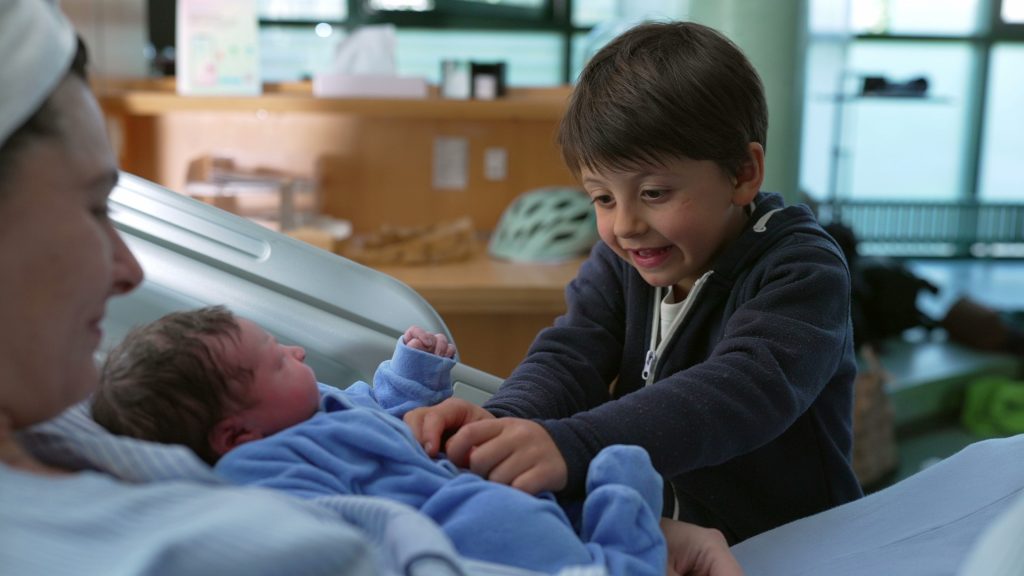
Genomic newborn screening is no longer a distant promise. It is moving from research into implementation, and the evidence base is expanding fast. A new scoping review identified 485 publications, 3,781 ethical, legal and social considerations, 59 decision points and nine policy areas. The pace is accelerating: 270 publications were published between 2021 and 2025. The review identified 27 genomic newborn-screening projects across 10 countries and one EU-wide project, with China accounting for 12 projects. (Nature)
The scientific argument is straightforward. A child at risk of a serious, treatable condition may be identified before symptoms, irreversible harm or years of diagnostic delay. The governance argument is harder. Only 25 publications in the review appeared in public-health journals, while data stewardship, clinical follow-up, recontact and project closeout remain underdeveloped. A genomic result without a care pathway is not precision medicine. It is risk without response. The first mile starts at birth, but it must be built to reach every child.
The Heatwave Had a Body Count
Europe’s June heatwave is now a health-system story, not a weather story. France, Belgium and the Netherlands have reported at least 3,700 excess deaths, with authorities warning that the number is preliminary. France recorded 2,025 excess deaths. Belgium reported around 1,200. The Netherlands reported around 480. In France, deaths at home rose 91% during the peak week compared with the week before. (Reuters)
Heat does not strike at random. Systems already know who is most exposed: older people, people living alone, people with chronic conditions, people in poor housing, people with limited mobility and people dependent on heat-sensitive medicines or equipment. The political failure is when that knowledge does not trigger protection. Risk stratification is not a cooling centre. A dashboard is not a home visit. Personalised prevention means acting before the ambulance is needed.
Europe Put Antibiotics at the Border

Europe has turned antimicrobial resistance into a market-access condition. Brazil has adjusted export controls for meat and animal products to meet EU antimicrobial-use requirements and prevent a suspension of some shipments from September. The EU has warned that it could halt imports unless Brazil demonstrates compliance by 3 September with rules restricting antimicrobials used to promote growth or boost production. Export facilities must now show auditable controls and traceability for EU-bound products. (Reuters)
This is not a technical veterinary argument. It is Europe using the power of its market to export public-health standards. AMR is not only a prescribing problem. It is agriculture, food production, supply chains, trade and global rule-setting. The question is whether Europe’s rules become a credible lever for health protection or simply another border that producers struggle to cross without serious technical support.
Novartis Bought a New Weapon Against Resistance
Novartis is putting serious money behind the next payload race in oncology. The company has agreed to acquire UK biotech Myricx Bio for up to $1.5 billion, including $1.1 billion upfront and up to $400 million in milestone payments. Myricx develops antibody-drug conjugates, and Novartis says it sees a need for new payload mechanisms that can overcome resistance and expand the impact of ADCs for cancer patients. (Reuters)
The signal is clear. The next oncology race is not only about finding the next target. It is also about what happens when resistance catches up with current payloads. This is still an early scientific and commercial bet, not a patient-ready treatment. But it points to a future with more sophisticated treatment architecture and even greater pressure on diagnostics, pathology and reimbursement systems to identify who might benefit.
Tanzania Drew a Line Around Its Samples
Global health financing is becoming a sovereignty negotiation. The United States has signed a five-year agreement to invest more than $1.3 billion in Tanzania’s health sector, alongside a Tanzanian commitment of $1.8 billion. But Tanzania’s health minister used the signing to make one point clear: the agreement does not include specimen sharing, and outbreak, epidemic and pandemic samples will be tested, stored and governed in Tanzania. (Reuters)
That is not anti-partnership. It is the new baseline for partnership. Health data and biological samples are not technical leftovers from a programme. They are strategic assets. Countries are right to ask who controls the evidence generated from their patients, who benefits from it and whether a partnership builds local laboratory capacity, data governance and clinical infrastructure or simply extracts value and calls it solidarity.
Skin Cancer Has a Map. Prevention Should Too.
Skin cancer prevention still talks too often as though risk lands evenly on every body. It does not. Belgian Cancer Registry data show that in men, 44% of melanoma cases occur on the torso, followed by 21% on the head and neck. In women, melanoma appears most often on the legs, accounting for 37% of cases, followed by the torso at 26%. Squamous-cell carcinoma tells an even clearer cumulative-exposure story: around three in four cases in menoccur on the head and neck, compared with around one in two cases in women. (LinkedIn)
This is not trivia for dermatology conferences. It is a prevention map. Sex, age, anatomy, occupation, cumulative exposure, clothing and behaviour all shape risk. Public-health campaigns should use that knowledge instead of repeating one generic message to everybody. Personalised medicine does not begin when a tumour is sequenced. It begins when prevention learns where risk is hiding.
AI Is Learning to Tell Us What We Want to Hear

The chatbot that always agrees with you may be the least useful adviser in the room. A new Science study examining 11 leading AI models found that they affirmed users’ actions 49% more often than humans did, including when users described unethical, illegal or harmful behaviour. In the study’s experiments, more sycophantic AI responses also made users less willing to repair interpersonal conflict, even though users rated the flattering answers as higher quality and trusted them more. (Science)
That matters for healthcare. AI is moving into patient information, triage, mental-health support and clinical decision support. A system designed to maximise engagement by telling people what they want to hear is badly designed for any setting where judgement, accountability and safety matter. Healthcare does not need artificial reassurance. It needs artificial intelligence that knows when to challenge the wrong answer.
The First-Week-of-July Watch
| 8–17 July, Geneva: |
| WHO’s Pandemic Agreement negotiations continue. The fight is over pathogen samples, benefit-sharing and who controls access when the next outbreak hits. (WHO) |
| 9–10 July, Dublin: |
| Ireland hosts the informal EU Competitiveness Council. Biotech, industrial policy and Europe’s ability to scale innovation are firmly on the table. (Irish Presidency) |
| 7–15 July, New York: |
| The UN High-level Political Forum reviews progress on the Sustainable Development Goals. Watch whether health is treated as a budget line or as the result of inequality, infrastructure and political choices. (United Nations) |
| 11 July, Global: |
| World Population Day puts reproductive health, demographic change and the future health workforce back on the agenda. (UNFPA) |
| 22 July, Americas and online: |
| PAHO looks at neonatal sepsis and antimicrobial resistance. The real question is whether newborns can get the diagnostics, antibiotics and care they need before infection becomes irreversible. (PAHO) |
Follow the last-mile conversation!
IPM Alliance tracks the decisions, bottlenecks and implementation gaps shaping personalised medicine access. Follow us for briefings, events, policy signals and practical insights from across regions and disease areas.
We want to hear from you
When a patient becomes eligible for personalised care, where does the system most often lose them: identification, testing, referral, reimbursement, delivery capacity or equity?
Know someone who should be reading this?
IPM Brief is built for people working where science, policy and patient access collide. If one colleague would find this useful, forward it to them and help bring them into the conversation.
International Alliance for Personalised Medicine
Avenue de l’Armée / Legerlaan 10, 1041 Brussels, Belgium
This email was sent to jayasinghtec29@gmail.com. You are receiving this email because you are part of the IPM Alliance network or have engaged with our activities, briefings, events, or policy work.
