

Happy Thursday. We know it is not Friday yet, but hey it could be worse.
You could be running the WHO, defending Germany’s drug-pricing model from Washington, deciding whether AI should triage heart disease, or explaining why vaccine policy has ended up in court.
Instead, you can spend a few minutes with this week’s IPM Brief: drug prices, global health leadership, AI triage, vaccine policy and trial speed, because the rules of modern medicine are being rewritten in real time.
- Washington wants a say in Germany’s drug prices. A U.S. trade investigation is turning Europe’s right to assess value and negotiate reimbursement into a sovereignty fight.
- WHO’s next chief inherits a world on fire. The 2027 leadership contest will decide more than a name. It will test whether global health can still deliver amid geopolitical pressure, supply-chain risk and shrinking trust.
- DNA opened the door. Proteins want the keys. A major Nature atlas maps more than 13,000 proteins across healthy and cancer tissues, pushing personalised medicine beyond the genome.
- The ECG saw what the system missed. An AI-enabled ECG flagged hidden structural heart disease early enough to trigger a pathway that ultimately led to transplantation.
- America’s vaccine referee is stuck in court. The fight over CDC vaccine governance is becoming a fight over who gets to define evidence in public life.
- Washington puts clinical trials in the fast lane. Operation TrialBlazer aims to cut development time, but speed means little if patients still cannot enter the trial.
- China is moving faster. Europe is still deciding. Pfizer’s warning is blunt: Europe must stop treating affordability and innovation as competing choices.
| This is not another health news digest. It’s a twice-weekly readout of where evidence meets power and where power must turn into action. |
Washington wants a say in Germany’s drug prices
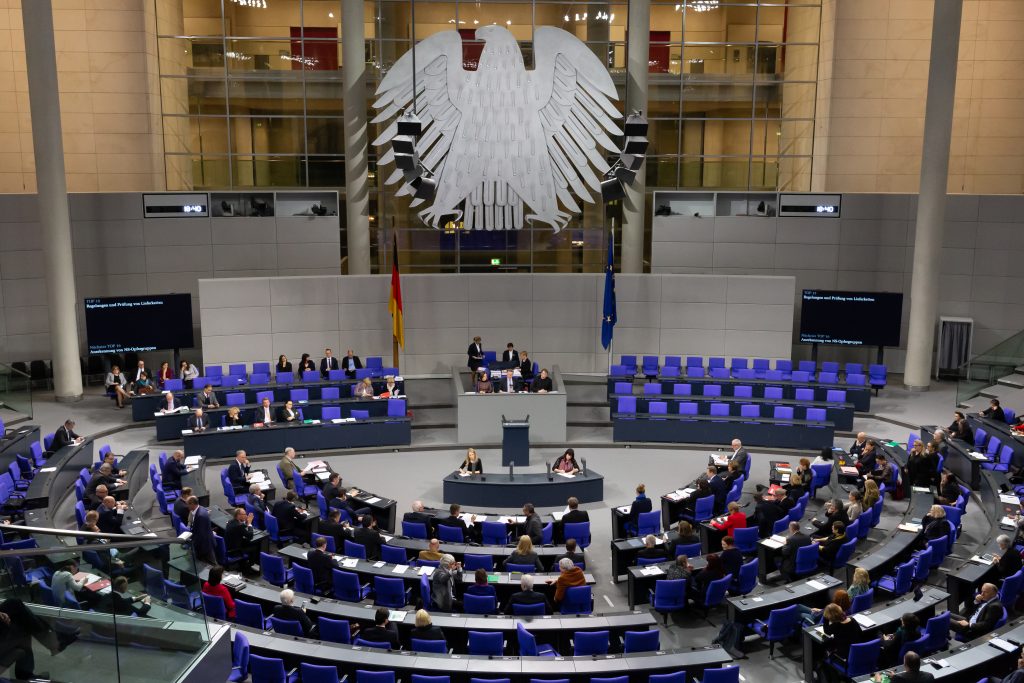
Washington is no longer merely arguing that Germany pays too little for medicines. It is asking whether Germany’s way of deciding what a medicine is worth can be treated as a trade offence. On 18 June, the U.S. Trade Representative opened a Section 301 investigation into what it calls Germany’s “persistent underpayment” for innovative pharmaceuticals, arguing that the country’s pricing policies may be unreasonable or discriminatory and may burden U.S. commerce. (USTR)
Germany’s AMNOG framework was built on a different premise: medicines with new active ingredients undergo an early benefit assessment, and reimbursement is negotiated around the evidence of added benefit. That is not anti-innovation. It is value-based reimbursement. Germany does need reform. Its sickness funds are under pressure, its population is ageing and its life-sciences ambitions cannot rest on cost containment alone. But turning statutory health insurance into a release valve for American pricing politics is not reform either. Europe should be ready to pay better where value is clear, faster access where evidence is strong and more for strategic manufacturing and resilience. Better, however, cannot simply mean higher. Public health systems must retain the right to decide what value means.(G-BA)
WHO’s next chief inherits a world on fire

The next WHO Director-General will be appointed in May 2027. That sounds procedural. It is not. Member States have until 24 September 2026 to submit candidates, after which the Executive Board will narrow the field before the World Health Assembly makes the final appointment. The next leader will inherit an institution operating in a world shaped by geopolitical fragmentation, supply-chain insecurity, antimicrobial resistance, climate stress, contested vaccine policy and mounting pressure to deliver more with tighter resources. (WHO)
The Gulf dimension matters because the region is no longer merely a source of funding, philanthropy or diplomatic visibility in global health. It is increasingly central to logistics, digital infrastructure, health security, investment, migration, food and water resilience, and regional disease surveillance. This is not a moment for prestige politics. It is a test of whether emerging global-health powers can strengthen scientific independence, transparent financing, country delivery, equitable access and resilient supply chains. The question is not simply who follows Tedros. It is whether WHO is being designed for the world that has already arrived.
DNA opened the door. Proteins want the keys.
Personalised medicine has spent years reading the genome. A major new Nature study pushes the field closer to reading the machinery that actually carries out disease. Researchers mapped more than 13,000 proteins across 2,856 samples, covering 58 major tissue types, 251 tissue subtypes and 25 carcinomas. The result is a spatially resolved atlas that could help researchers identify drug targets, understand organ-specific toxicity, prioritise repurposing opportunities and explain why the same treatment behaves differently across tissues and tumour types. (Nature)
This is a serious scientific advance, but it is not yet a bedside test. Proteomics still depends on specialised infrastructure, robust sample handling, interoperable data, trained workforce and reimbursement systems that can absorb a new generation of diagnostics. Too many patients still lack basic biomarker testing, molecular pathology or access to tumour boards. The danger is obvious: proteomics could become another technology that proves what is possible for a few while exposing what remains unavailable for many. The policy response is not to slow the science. It is to build diagnostics, data governance and regional access into the model before the gap becomes permanent.
An ECG saw what the system missed
A routine ECG is one of medicine’s oldest tools. A new Nature Medicine case report suggests it may also become one of its most useful early-warning systems. The report describes AI-enhanced ECG analysis in an emergency department that identified previously unrecognised structural heart disease, triggering further investigation and ultimately leading to heart transplantation. Structural heart disease remains underdiagnosed in part because echocardiography, the standard diagnostic test, is costly, time-consuming and not uniformly accessible. (Nature Medicine)
This is one case report, not proof that every emergency department should deploy AI-ECG tomorrow. That distinction matters, especially because two authors are inventors of the EchoNext algorithm used in the report. But the implementation signal is still powerful. If AI can help a routine ECG identify which patients need faster echocardiography, it could become a practical triage tool for systems with long waiting lists, limited specialist capacity or large rural populations. That is personalised medicine at its most useful: a frontline signal that moves the right patient toward the right test before the window closes.
Public fights, private stakes
America’s vaccine referee is stuck in court
Vaccine policy in the United States is no longer only a public-health debate. It is also a legal fight over who gets to define evidence. The Trump administration is asking an appeals court to overturn a ruling that blocked most of Health Secretary Robert F. Kennedy Jr.’s appointees from serving on the CDC’s vaccine advisory committee. The Justice Department argues that the committee cannot make annual influenza recommendations without a quorum, while the court order keeping changes to the routine childhood vaccine schedule on hold remains in force. (Reuters)
The result is not simply institutional confusion. Vaccines depend on trusted recommendations, clinician confidence, reimbursement, supply, public understanding and delivery systems that work. When one of those pillars weakens, access weakens with it. Professional bodies are continuing to publish evidence-based guidance, including the American College of Obstetricians and Gynecologists’ 2026 maternal immunisation recommendations for influenza, COVID-19, Tdap and RSV vaccination. (ACOG) This matters far beyond vaccines. Once evidence-based standards become politically optional, every part of modern medicine becomes more exposed, from screening and genomics to AI tools and therapeutic innovation.
Washington puts clinical trials in the fast lane
The United States has launched Operation TrialBlazer, a federal roadmap intended to accelerate and modernise clinical development. The programme includes an expedited pathway for some first-in-human studies, more risk-based non-clinical requirements, expanded use of new approach methodologies, clearer guidance for sponsors, streamlined protocol handling and measures intended to reduce barriers to trial participation. The stated ambition is not subtle: retain U.S. leadership in early clinical research while China and other competitors move faster. (HHS roadmap)
The HHS roadmap estimates that a more phase-appropriate approach could save sponsors six to twelve months in development time. Industry will care about that number. Patients should care about another question: who still cannot get into the trial? Geography, transport, restrictive eligibility criteria, clinical workload, missing referral pathways and fragmented data systems still keep too many people outside research. Speed matters, but speed without access simply makes the race more exclusive. The real innovation is not a faster protocol. It is a trial system that allows more patients to enter the future while it is still being tested. (FDA)
China is moving faster. Europe is still deciding.
Europe has spent years comparing itself with the United States. It may now be competing on two fronts. At an EFPIA event this week, Pfizer’s Chief International Commercial Officer said China had pulled ahead of Europe in pharmaceutical innovation and development, citing China’s growing clinical-trial activity, faster development timelines and expanding biotech output. He said China accounted for 40% of global oncology studies and that the company now believes clinical development can be conducted faster and at lower cost there than in Europe. These are Pfizer’s assessments, not an independent verdict, but they should still make European policymakers uncomfortable. (Reuters)
Germany’s pricing dispute, Washington’s trial-speed push and China’s development momentum all point to the same strategic problem. Europe cannot sustain a serious life-sciences economy by choosing between affordability and innovation. It has to design for both: faster evidence generation, predictable regulation, intelligent reimbursement, manufacturing capacity, clinical-research infrastructure and equitable access when products reach the market. The competition is not only about who discovers the next molecule. It is about who can build a system capable of turning science into care.
The End-of-June Watchlist
June is nearly done. The last few days still bring decisions and meetings that could shape the next fights over medicines, trials, supply chains and prevention.
| 25 June, Amsterdam: |
| EMA’s June CHMP meeting closes. Watch for new medicine recommendations and safety decisions. |
| 29 June, Brussels: |
| The EU trade chief meets China’s commerce minister. Watch the EU-China talks for signals on critical supplies and strategic dependence. |
| 29–30 June, Zurich: |
| The Precision in Clinical Trials Summit puts biomarkers, AI, rare disease and trial access on the table. |
| 30 June, Geneva and online: |
| WHO’s air pollution and health webinar turns country data into a prevention test. |
Follow the last-mile conversation!
IPM Alliance tracks the decisions, bottlenecks and implementation gaps shaping personalised medicine access. Follow us for briefings, events, policy signals and practical insights from across regions and disease areas.
We want to hear from you
When a patient becomes eligible for personalised care, where does the system most often lose them: identification, testing, referral, reimbursement, delivery capacity or equity?
Know someone who should be reading this?
IPM Brief is built for people working where science, policy and patient access collide. If one colleague would find this useful, forward it to them and help bring them into the conversation.
International Alliance for Personalised Medicine
Avenue de l’Armée / Legerlaan 10, 1041 Brussels, Belgium
This email was sent to jayasinghtec29@gmail.com. You are receiving this email because you are part of the IPM Alliance network or have engaged with our activities, briefings, events, or policy work.
