
Happy Tuesday. Friday is still a distant concept, but at least we’re not the person who hit “reply all” by accident this morning.
This week, Roche takes aim at Illumina, biomarkers return to the centre of cancer care, Brussels puts a flu-vaccine campaign under the microscope, China starts pricing GLP-1s for scale, and regulators remind everyone that approval is not the same as trust.
- Roche comes for Illumina’s crown. Its new AXELIOS 1 sequencing platform is built for faster genomic research, but the clinical race has not begun yet.
- No biomarkers, no precision oncology. IPM Alliance is in Athens this week, where quality, reimbursement and diagnostic readiness are back on the cancer-policy agenda.
- Ipsen bets big on a blood-cancer breakthrough. Its Kartos acquisition brings a late-stage myelofibrosis programme into the company’s oncology pipeline.
- A rare-disease drug just lost the evidence fight. EMA has recommended withdrawing Tavneos after finding that the pivotal study data could no longer support its effectiveness.
- Sanofi’s flu shot has a Brussels problem. The European Commission is investigating whether the promotion of Efluelda crossed the line into anti-competitive conduct.
- China’s state payer puts GLP-1s on a diet. Wider access may be coming for Pfizer and Innovent products, but public reimbursement comes with price discipline.
- Rett syndrome gets a second shot at treatment. EMA has reversed its earlier position and recommended authorisation for Daybu after re-examination.
| This is not another health news digest. It’s a twice-weekly readout of where evidence meets power and where power must turn into action. |
Roche Comes for Illumina’s Crown

Every precision-medicine pathway begins with a gate. Increasingly, that gate is a sequencing machine. Roche has announced AXELIOS 1, a next-generation sequencing platform based on its sequencing-by-expansion technology. The company is positioning it as a faster, more flexible and scalable research platform, entering a market where Illumina remains the dominant name. Roche says AXELIOS 1 is designed to address bottlenecks in genomic research and clinical-research workflows, with integrated analysis and high-throughput capacity. (Roche | Reuters)
The caveat is also the point: AXELIOS 1 is for research use only and is not approved for diagnostic procedures. But that is how clinical infrastructure is built. First, the platform enters research. Then it shapes workflows, standards, evidence and eventually patient pathways. The company that controls the sequencing infrastructure can influence the cost, speed and geography of the precision-medicine ecosystem built on top of it. This is not just a machine launch. It is a fight over who controls the genomic front door.
IPM latest
No Biomarkers, No Precision Oncology
Greece has had a reminder this week that when a threat spreads through an ecosystem, delay becomes expensive. The government has started paying fishers to remove invasive, toxic silver-cheeked toadfish that are damaging nets and catches around Greek islands. It is an environmental story, but the policy lesson travels: early detection, coordinated response and targeted intervention are cheaper than waiting for systems to fail. (Associated Press)
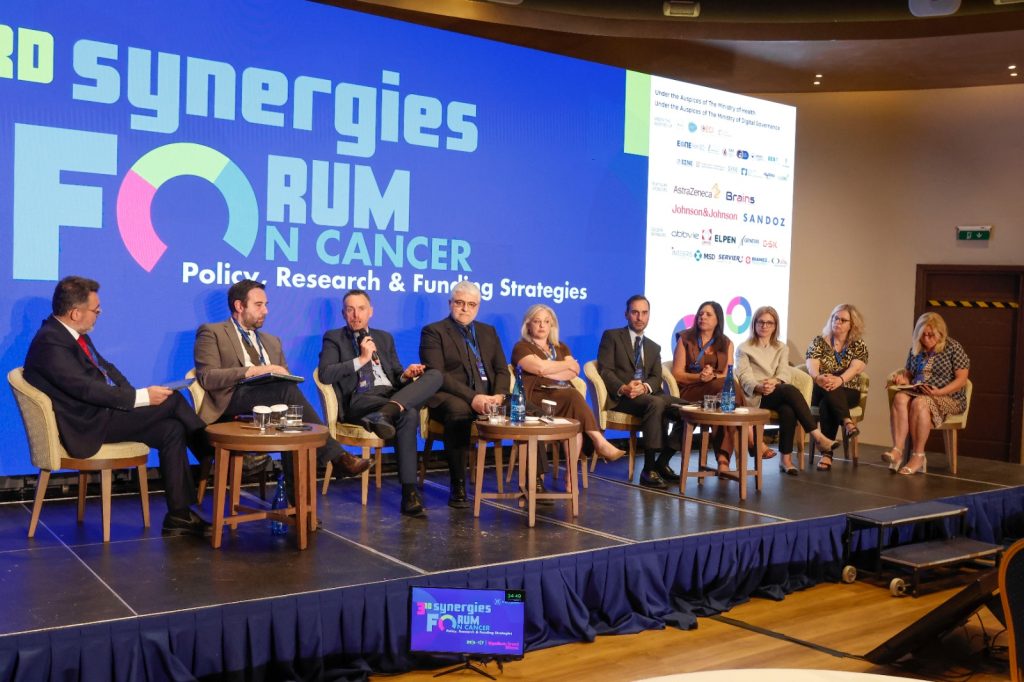
That is the backdrop to the 3rd ELLOK Synergies Forum on Cancer, taking place in Athens from 29 June to 1 July. IPM Alliance Executive Director Denis Horgan joined the Biomarker Forum on aligning quality, reimbursement and value in precision oncology. The point is not technical. Biomarkers are the entry point to modern cancer care. Without timely, high-quality and reimbursed testing, the right patient cannot reach the right treatment in time.
Europe still has hospitals with world-class pathology and genomics, and others where the diagnostic pathway is slow, fragmented or simply unavailable. A health system that pays for targeted treatment but underfunds the test is paying for precision while blocking the route to it.
Ipsen Bets Big on a Blood-Cancer Breakthrough

Ipsen has agreed to acquire Kartos Therapeutics for $450 million upfront, with up to $1.3 billion in additional regulatory and sales milestones. The deal brings navtemadlin, an investigational oral MDM2 inhibitor, into Ipsen’s late-stage haemato-oncology pipeline. The therapy is being developed for myelofibrosis, a rare blood cancer in which patients can face substantial symptom burden and limited options when standard treatment stops doing enough. (Ipsen)
Navtemadlin is being studied in the Phase III POIESIS trial as an add-on to ruxolitinib in patients with TP53 wild-type myelofibrosis who have an inadequate response to standard care. Top-line data are expected in 2027. This is not the purchase of an approved medicine. It is a bet on whether a new approach can move the pathway for patients who are running out of good options. Big pharma is not only buying assets. It is buying the next unanswered clinical question.
A Rare-Disease Drug Just Lost the Evidence Fight
A medicine can win approval. It still has to keep earning trust.
EMA has recommended revoking the EU marketing authorisation for Tavneos, or avacopan, used in two rare forms of ANCA-associated vasculitis. The agency concluded that the pivotal ADVOCATE study breached good clinical practice principles and that the data supplied at the time of authorisation were incorrect and misleading enough that they could no longer be relied upon to demonstrate effectiveness. EMA says the medicine’s benefits are no longer proven to outweigh its risks. (EMA)
The decision now goes to the European Commission. In the meantime, EMA recommends that no new patients start Tavneos and that current patients are moved to suitable alternatives. Approval is not a lifetime certificate. When the evidence behind a medicine breaks, the clinical pathway has to be rebuilt around the patient, not defended around the product. Evidence is not a launch event. It is a continuing obligation.
Public fights, private stakes
Sanofi’s Flu Shot Has a Brussels Problem
The European Commission has opened a formal antitrust investigation into Sanofi over concerns that it may have used misleading information while promoting Efluelda, its high-dose influenza vaccine for vulnerable patients. The Commission is examining whether Sanofi may have unfairly portrayed CSL Seqirus’ competing Fluad vaccine as inferior, particularly in France and Germany. The investigation is not a finding of wrongdoing, and Sanofi says it is cooperating with the Commission. (European Commission | Reuters)
This is bigger than a corporate dispute. Vaccines depend on trusted comparisons, credible clinical guidance and confidence that scientific claims are not simply market strategy in a lab coat. When commercial communication blurs that line, clinicians are left to untangle the evidence and patients inherit the confusion.
China’s State Payer Puts GLP-1s on a Diet
Pfizer’s ecnoglutide and Innovent’s mazdutide have passed a preliminary review for possible inclusion in China’s national medical-insurance drug catalogue. That could widen access in the world’s second-largest pharmaceutical market, but it also begins a familiar public-payer bargain: more volume in exchange for lower prices. (Reuters)
The development matters because China’s state payer can scale access at extraordinary speed while also resetting commercial assumptions around one of the world’s hottest drug classes. Innovent has said that any insurance coverage under discussion would apply to diabetes treatment, not weight management, and final price negotiations are expected before the end of the year.
Rett Syndrome Gets a Second Shot at Treatment
Rare-disease regulation needs to be flexible enough to hear patients, but rigorous enough to survive a second look. In February, EMA’s human medicines committee recommended refusing marketing authorisation for Daybu, or trofinetide, for Rett syndrome. After a re-examination, the committee has now adopted a positive opinion recommending authorisation for the treatment of neurobehavioural symptoms in adults and children aged five and older. The European Commission still needs to make the final legally binding decision. (EMA)
For families affected by Rett syndrome, the change is meaningful. For regulators, it is a reminder that an initial “no” is not always the end of the story. But re-examination is not a shortcut. Its value lies in forcing the evidence, unmet need and proposed indication to be tested again, properly and transparently.
The First-Week-of-July Watch
| 1 July, EU: |
| Ireland takes over the Council of the EU Presidency, with biotechnology, medical devices and competitiveness now firmly on the political agenda. |
| 1–2 July, Amsterdam and online: |
| EMA’s cardiovascular innovation workshop brings medicines, devices, AI and real-world data into the same conversation. |
| 2 July, Amsterdam: |
| EMA hosts its industry platform on research and development support. Watch the regulatory tools before they become routine. |
| 6–9 July, Amsterdam: |
| EMA’s PRAC safety committee meets. The gate does not close after approval. |
Follow the last-mile conversation!
IPM Alliance tracks the decisions, bottlenecks and implementation gaps shaping personalised medicine access. Follow us for briefings, events, policy signals and practical insights from across regions and disease areas.
We want to hear from you
When a patient becomes eligible for personalised care, where does the system most often lose them: identification, testing, referral, reimbursement, delivery capacity or equity?
Know someone who should be reading this?
IPM Brief is built for people working where science, policy and patient access collide. If one colleague would find this useful, forward it to them and help bring them into the conversation.
International Alliance for Personalised Medicine
Avenue de l’Armée / Legerlaan 10, 1041 Brussels, Belgium
This email was sent to jayasinghtec29@gmail.com. You are receiving this email because you are part of the IPM Alliance network or have engaged with our activities, briefings, events, or policy work.
