
Dear friends,
For those travelling to Madrid this week, the familiar ritual has begun: passport, boarding pass, security queue and the inevitable debate about whether toothpaste constitutes a threat to aviation security. The clocks have not yet changed, but October seems determined to run ahead of itself. Healthcare, meanwhile, has invented a set of border controls that make airport security look positively efficient.
First, get the diagnosis right. Then identify the biomarker, secure regulatory approval, find a clinical trial that is actually recruiting, locate a pharmacy with the medicine in stock and persuade someone to pay for it. And if all that fails, apparently, send your son to Shanghai to bring the cancer drug home in his suitcase. This really happened. The medicine was already approved in China and subsequently approved in the United States, but still unavailable on the American market. So much for the seamless international exchange of medical innovation.
The scientific news this week has nevertheless been remarkable. In the United States, an accelerated approval offers selected patients with rectal cancer the possibility of avoiding life-changing surgery. A new hepatitis B treatment may allow some patients to stop years of antiviral medication. Yet, almost simultaneously, researchers are warning that delaying hepatitis B vaccination in newborns could lead to more preventable infections. In Guinea-Bissau, a disputed vaccine study involving newborns has brought research ethics, government authority and public trust into uncomfortable collision. We are becoming extraordinarily sophisticated at treating diseases while still debating how best to prevent them.
And then there is Christina Applegate, who described being told that the multiple sclerosis diagnosis she had lived with for years was no longer considered correct. Her symptoms, unfortunately, had not received the same message. It is a poignant reminder that diagnostic uncertainty can be as devastating as the disease itself. Precision medicine begins with precision in diagnosis, something we occasionally overlook in our enthusiasm for the latest biomarker, algorithm or therapeutic breakthrough.
Another deeply moving account described a family spending enormous sums on largely unproven cancer treatments, drawn not simply by promises of a cure but by something conventional medicine sometimes fails to provide: time, empathy and the feeling of being heard. There is an uncomfortable lesson here. When healthcare systems fail to offer credible hope with compassion, someone else will happily sell patients certainty without evidence.
The market for false hope rarely suffers from a reimbursement problem.
Meanwhile, the more familiar implementation failures continue. New British figures show that clinical trials can receive regulatory approval on time while recruitment sites remain unopened. WHO’s latest examination of health inequalities reminds us that geography, income and education still determine who gets screened, diagnosed and treated. From China and the United States to Africa and Europe, the scientific possibilities are expanding faster than the systems intended to deliver them.
This brings us rather neatly to Brussels today and Madrid tomorrow. As we discuss cross-border clinical trials, evidence generation and new approaches to financing innovation, perhaps we should spend less time congratulating ourselves on what has been approved and more time asking what patients can actually obtain.
After all, regulatory approval is not availability. A biomarker result is not treatment. An authorised clinical trial is not an appointment. And personalised medicine is hardly personalised if access depends on nationality, postcode, personal wealth or whether someone in the family has enough frequent-flyer miles to reach Shanghai.
Science is increasingly capable of opening extraordinary doors. The question for policymakers, clinicians, industry and health systems is whether we intend to leave patients standing outside them.
This week, the stamp meets reality
- The knife has met a biomarker: A targeted rectal cancer approval opens a route to avoiding surgery for some patients.
- A cancer drug crossed the border in her son’s suitcase: A family’s journey to China exposes the distance between approval and availability.
- The lifelong pill has an exit interview: A new hepatitis B treatment lets a minority of eligible patients stop therapy, with serious monitoring obligations.
- The regulator said yes. The trial site was still closed: Fresh UK figures show approvals moving faster than patient recruitment.
- A proposed infant trial meets the police: Vaccine doses were seized amid a dispute over who can authorise research involving newborns.
- The hotel-room operating theatre may get a regulator: England proposes restricting high-risk cosmetic procedures to qualified professionals.
- The influencer peptide wants a government badge: Washington is considering a regulated route for products with thin evidence behind popular claims.
- Your postcode reaches the clinic before you do: WHO documents how inequality shapes prevention, diagnosis and treatment.
- Ebola checked into a private clinic: An imported case in Abuja puts contact tracing and infection control to an immediate test.
| This is not another health news digest. It’s a twice-weekly readout of where evidence meets power and where power must turn into action. |
The knife has met a biomarker
On 19 October, the FDA granted accelerated approval to dostarlimab for adults with stage II or III locally advanced rectal cancer whose tumours are MSI-H or dMMR, as established by an authorised test. In the principal single-arm study, 110 of 154 treated patients received no additional cancer treatment and had no disease progression at the data cutoff. Among the 116 patients evaluable by independent review, 47% had a clinical complete response sustained for 12 months. (FDA)
For a patient facing chemotherapy, radiation and potentially life-changing rectal surgery, this is a consequential new option. It is also a precision medicine test for the system: patients need the right molecular diagnosis, access to immunotherapy and careful surveillance if they avoid an operation. Accelerated approval is not a declaration that every patient can put down the surgical consent form. It is an invitation to build the pathway that makes a remarkable result safe in ordinary care.
A cancer drug crossed the border in her son’s suitcase
When Debbie Doppelt’s lung cancer spread, the relevant clinical trial was closed to her because of lung scarring. Her son travelled to Shanghai in 2025 and brought home sunvozertinib, a medicine already approved in China for the mutation driving her cancer. The FDA approved the drug in July 2025, yet it still had not reached the US market when KFF Health News reported her story on 20 October. Doppelt has benefited from it; another patient interviewed for the report did not. (KFF Health News)
Washington can argue about strategic dependence on Chinese biotechnology. A family confronting metastatic cancer has a more immediate question: where is the medicine? The distinction between regulatory approval and actual supply is painfully practical. So is the inequality beneath this story. An international flight, personal contacts and roughly $10,000 can create an option. Patients without those resources remain at the gate.
The lifelong pill has an exit interview
The FDA has approved bepirovirsen, marketed as Hibsago, for a defined group of adults with chronic hepatitis B who have no cirrhosis and whose infection is already suppressed on antiviral treatment. In two trials, 24% of those receiving the new medicine met the requirements to stop their existing antiviral, compared with none on placebo. Twenty-four weeks after stopping all hepatitis B therapy, 19% of treated patients still had viral control and no detectable hepatitis B surface antigen. (FDA)
That is an opening, not a universal cure. Eligibility depends on an authorised diagnostic test, and the medicine carries boxed warnings for serious liver reactions and low platelet counts. Patients need continued blood tests and follow-up. The politics of hepatitis B now runs in two directions at once: science is finding ways to shorten treatment for some adults, while health systems still have to prevent infection in newborns and identify the millions of people who never reached treatment in the first place.
The regulator said yes. The trial site was still closed
New UK clinical research figures published on 21 October tell two different stories. All 68 studies receiving combined regulatory approval in the September reporting group met the relevant time target. But in the separate March cohort, only 51 of 99 studies that opened to recruitment did so within 60 days of approval—52%, against a 90% target. These are different measures and reporting periods, not consecutive steps for the same 68 studies. (UK Clinical Research Delivery)
The figures cover a defined research portfolio, not every UK study. Even with that limit, the political lesson is hard to miss. A fast regulator cannot enrol a patient at a site still negotiating contracts, staffing and set-up. Governments like to celebrate the speed of the signature. Patients experience the speed of the appointment.
A proposed infant trial meets the police
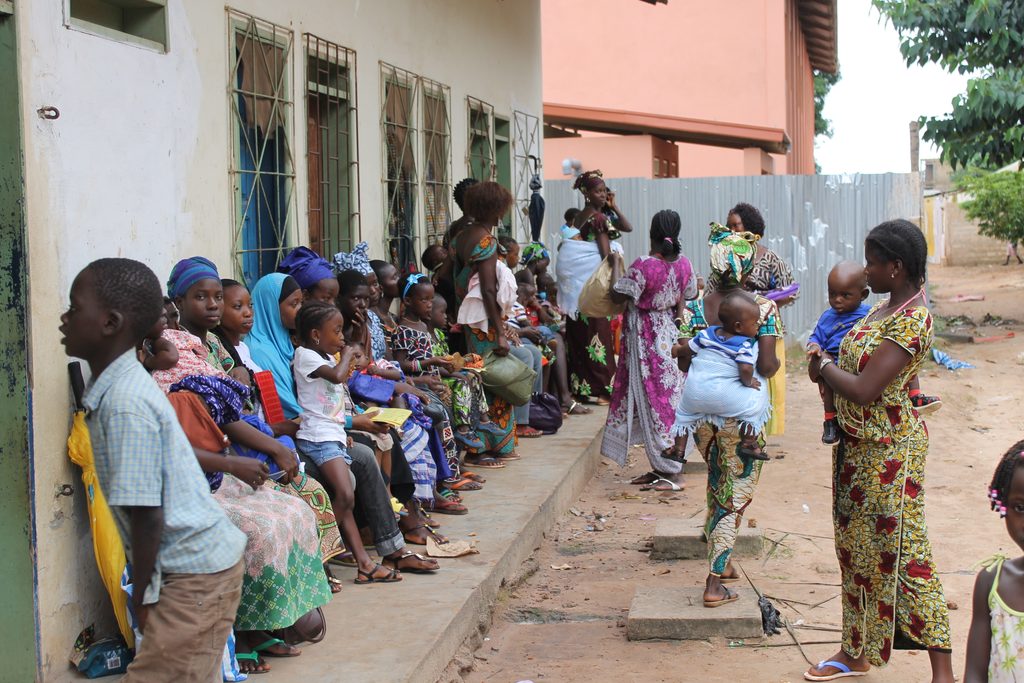
Judicial police searched the Bandim Health Project’s offices in Guinea-Bissau on 19 October and seized hepatitis B vaccine doses as they examined the circumstances surrounding the batch. Authorities explicitly said the seizure did notindicate a problem with the vaccines’ quality, safety or effectiveness. The project is separately at the centre of a dispute over a proposed study that would leave 7,000 newborns without the birth dose for their first six weeks. Ethics approvals have been reported, while the transitional health minister disputes claims that the study may proceed. (The Guardian; WHO)
A police search does not establish wrongdoing, and an ethics committee’s letter does not settle every question of national authority or scientific justification. WHO has raised substantial concerns about withholding an established birth-dose intervention from newborns. The deeper issue is who carries the risk when international funders, researchers, ministers and ethics bodies disagree. In this case, the proposed research subjects cannot yet speak for themselves.
The hotel-room operating theatre may get a regulator
England opened a consultation on 21 October that would restrict high-risk cosmetic and wellbeing procedures to specified qualified healthcare professionals. Under the proposal, cosmetic surgery—including the liquid Brazilian butt lift—would be limited to doctors; other covered procedures could also be performed by dentists and certain independent prescribers. The government also proposes an under-18 restriction, with clinical exceptions, and criminal penalties for breaches. These rules are proposals, not law in force. (UK Department of Health and Social Care)
The vocabulary of “wellbeing” has allowed invasive procedures to be sold as lifestyle purchases. Yet when an injection goes wrong, the consequences arrive at an emergency department, not a beauty counter. The consultation asks a basic political question: how long should the state let a market borrow the authority of medicine without accepting medicine’s obligations?
The influencer peptide wants a government badge

US Health Secretary Robert F. Kennedy Jr. said on 20 October that the administration wants a regulated marketplace for peptides promoted for uses ranging from injury recovery to muscle growth. An FDA proposal on compounding certain peptides is under White House review. The products being considered have not been FDA-approved as safe and effective for those uses, and evidence for many of the claims circulating online remains thin. (Reuters)
There is a sensible public-health argument for confronting a grey market that already exists. But inspected manufacturing and credible marketing are different achievements. A regulated supply chain can help answer what is in a vial. It cannot, by itself, answer whether the vial works. The decision is still pending; the influencers have been selling certainty for some time.
Your postcode reaches the clinic before you do
WHO’s new assessment of inequalities in noncommunicable diseases examines how income, education, gender and place of residence shape exposure to risk and access to care. Across countries, poorer and less-educated women are less likely to receive cervical cancer screening. In many low- and middle-income countries, rural residents have less access than urban residents to hypertension diagnosis and treatment. (WHO)
Personalised medicine promises to identify the right intervention for the right person. That promise sounds rather hollow when the person cannot reach screening, obtain a diagnosis or return for follow-up. A country can buy sophisticated technology and still ration its benefits through geography and poverty. The inequality is part of the care pathway, whether the pathway acknowledges it or not.
Ebola checked into a private clinic
Nigeria confirmed an imported case of Ebola Bundibugyo virus disease on 20 October. The patient, a woman who had recently travelled from Uganda, developed symptoms on 7 October and sought care at a private facility in Abuja on 11 October. She is receiving care in isolation. Officials had identified 44 contacts for monitoring when WHO reported the case and were strengthening infection control at the facility. (WHO Africa)
An imported case is not evidence of sustained transmission in Nigeria. It is a reminder that a health system’s border runs through every reception desk, laboratory and ward where an unfamiliar patient may first appear. The immediate measure of preparedness is not the announcement of an emergency plan. It is whether workers have protection, contacts are found and the next exposure is prevented.
The October watch
| 23–27 October — Oncology’s evidence test. |
| ESMO convenes in Madrid. Watch which trial results alter treatment decisions, and which headlines still need longer follow-up. IFEMA MADRID |
| 27 October — Who pays the markup? |
| India’s Supreme Court returns to medicine pricing, after questioning why action on trade margins has focused on cancer drugs. The next hearing could widen the political fight over prices. barandbench.com |
| 27–29 October — Europe writes its health agenda. |
| WHO Europe’s regional committee will consider strategies on healthy ageing and AI in health. Watch what ministers adopt, and what they fund. who.int |
| 30 October — Childhood myopia faces the evidence panel. |
| An FDA advisory committee reviews low-dose atropine drops intended to slow progression in children. Its discussion could shape the regulatory path; it is not itself an approval. FDA |
Follow the last-mile conversation!
IPM Alliance tracks the decisions, bottlenecks and implementation gaps shaping personalised medicine access. Follow us for briefings, events, policy signals and practical insights from across regions and disease areas.
We want to hear from you
When a patient becomes eligible for personalised care, where does the system most often lose them: identification, testing, referral, reimbursement, delivery capacity or equity?
Know someone who should be reading this?
IPM Brief is built for people working where science, policy and patient access collide. If one colleague would find this useful, forward it to them and help bring them into the conversation.
International Alliance for Personalised Medicine
Avenue de l’Armée / Legerlaan 10, 1041 Brussels, Belgium
