

Dear friends,
It is mid-October. The calendars are full, the flights are booked, and apparently nobody told the human body.
Pope Leo XIV’s public schedule has been cleared while he recovers from surgery for lung cancer at Rome’s Gemelli Hospital. An institution that speaks to millions has been reminded that one person’s diagnosis can rearrange its plans. The doctors can remove a tumour. They cannot yet tell the world everything about what comes next.
Elsewhere, researchers are testing a personalised cancer vaccine, regulators are weighing new routes to treatment, and patients with rare diseases are asking a familiar question: how much evidence must a small population produce before the system agrees to help it? The answer matters. So does the time it takes to arrive.
Time behaves differently during an outbreak. In and around eastern Africa, Ebola response is measured in contacts traced and borders watched. But fear has its own clinical consequences. A woman who avoids a maternity ward because she fears infection does not appear in the Ebola case count. She may still pay for the outbreak.
Meanwhile, a company can acquire a blood-testing business, and a diagnostic pathway acquires a new owner. Medicines enter trade discussions. An insurance database becomes a political argument. None of these developments takes place at a bedside, yet each can decide what happens when somebody reaches one.
Next week brings the international campaign against lead poisoning. Its message is almost embarrassingly straightforward: find the lead and remove it from the products and environments exposing children. We have become very good at measuring harm after it enters the body. Preventing it requires decisions outside the clinic.
These stories do not all point in the same direction. There is promising science here, serious regulatory work and public-health action. There are also patients whose needs do not fit neatly into a trial, a trade agreement or an administrative record.
For the International Alliance for Personalised Medicine, the question remains how to turn advances into care that people can reach. Better evidence matters. So do diagnostics, accountable decisions and health systems capable of acting in time.
Politics can set the agenda. The body can still veto it.
This week, the body interrupts
- The Pope’s Surgery and the Universal Right to Care: Pope Leo XIV is recovering after surgery for lung adenocarcinoma; his audiences have been cancelled through 20 October.
- A cancer vaccine found its target. Now comes the harder test: A ten-patient ovarian-cancer trial produced immune signals, not proof of better survival.
- The regulator let the evidence cross the aisle: A bladder-cancer treatment gained a new indication using evidence from a closely related form of the disease.
- Rare patients are tired of being a statistical problem: The FDA has opened a process to rethink evidence requirements for small patient populations.
- Ebola reached Kenya. Fear reached the maternity ward: A second linked case was isolated while routine care in eastern Congo continued to suffer.
- The blood test has a new landlord: Labcorp plans to buy BioReference assets, including a prostate-cancer risk test, for $722 million plus a possible earnout.
- Medicines have entered the trade talks: Mexico and the EU are putting regulation, supply chains and outbreak surveillance into their health relationship.
- The poison is in the product, not the child: WHO is pushing governments toward stronger controls on lead exposure.
- An insurance database has become a political battleground: US officials are ending subsidies tied to 189,000 records they identify as duplicate or deceased.
| This is not another health news digest. It’s a twice-weekly readout of where evidence meets power and where power must turn into action. |
The Pope’s Surgery and the Universal Right to Care

Pope Leo XIV underwent surgery at Rome’s Gemelli Hospital on 13 October. Doctors removed the lower lobe of his right lung, and tissue examined during the operation confirmed lung adenocarcinoma. The Vatican says the procedure went as planned, his recovery is progressing normally and he had a good second night in hospital. His audiences have been cancelled through 20 October. (Vatican News)
There is a temptation to turn the health of an influential figure into a referendum on institutional continuity. The more honest account is simpler: a routinely discovered lung nodule required an operation, and the public has been given updates on diagnosis and recovery. The Vatican has not announced a cancer stage or a long-term prognosis. Even at the highest levels of power, medicine begins with an individual body and facts that arrive one examination at a time.
A cancer vaccine found its target. Now comes the harder test
Researchers reported a phase 1 trial of personalised neoantigen vaccines in ten patients with platinum-sensitive ovarian cancer. The vaccines were designed around mutations in each patient’s tumour and given alongside delayed anti-PD-1 treatment after chemotherapy. Biomarker analysis suggested vaccine-related biological activity in six patients, with broader tumour-specific immune responses following vaccination. (Nature Medicine)
That is an important technical achievement in a cancer where effective immunotherapy has proved difficult. It is also ten patients, in an early study designed principally to examine feasibility and safety. An immune response is evidence that a vaccine engaged its target; it is not yet evidence of longer survival. The political question waiting behind the science is whether health systems could manufacture an individual treatment for each patient at a scale, speed and price that make the promise usable.
The regulator let the evidence cross the aisle

The FDA expanded approval of Anktiva, used with BCG, to adults with high-grade papillary-only bladder cancer that has not invaded the muscle and has stopped responding to BCG. It is the first treatment specifically approved for that group. The agency drew on results from an earlier study in patients with a related form of bladder cancer, carcinoma in situ, together with clinical and laboratory evidence of similarities between the diseases. (FDA)
This is a consequential judgment about evidence, not a claim that the two patient groups were studied identically. For people whose cancer persists after BCG, waiting for a perfectly separate evidence package has a cost; extending a result beyond the population directly tested carries uncertainty of its own. The FDA has decided the similarities justify this indication. Its reasoning will matter well beyond one drug, because regulators are increasingly being asked where scientific inference should end and another trial must begin.
Rare patients are tired of being a statistical problem
The FDA launched a Rare Disease Framework Initiative on 14 October. It plans to develop an approach that takes account of the disease, the treatment and the evidence realistically obtainable when patient populations are small. Patients, advocates, researchers and companies have been invited to provide feedback, including at a public meeting on 28 October. The agency says only about 5% of rare conditions have an FDA-approved treatment. (FDA)
The initiative has launched; a new approval standard has not been enacted. That distinction matters. Families facing a rapidly progressing disease cannot recruit thousands of patients into a trial that the disease itself makes impossible. They also need treatments whose benefits and risks have been examined honestly. The framework’s real test will be whether it can ask smarter questions of smaller populations without making desperate patients carry the uncertainty alone.
Ebola reached Kenya. Fear reached the maternity ward
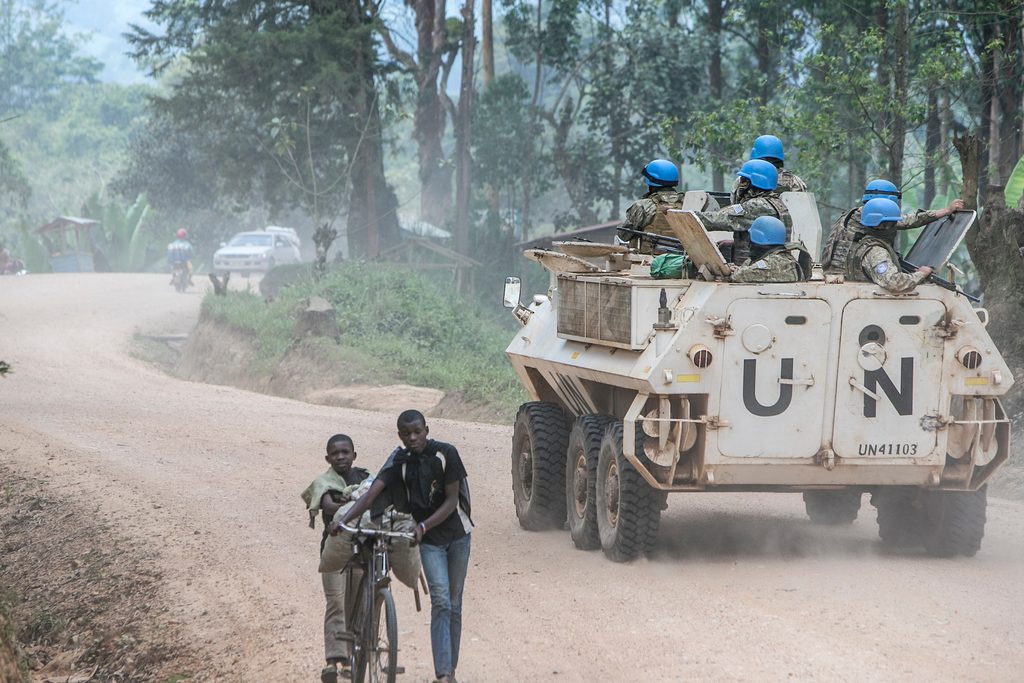
Kenya reported a second Ebola case on 14 October. The patient, a close relative of the first person diagnosed there, was already in quarantine when symptoms appeared; the health ministry said it had found no evidence of wider community spread. Across the border in the Democratic Republic of the Congo, the European Centre for Disease Prevention and Control reported 9,144 confirmed cases and 4,410 related deaths in its 15 October update, using case data through 13 October. (Reuters; ECDC)
A case count misses what an epidemic does to care that has nothing to do with the virus. UN figures cited by Reuters show maternal deaths in Congo’s Ituri province rose nearly 70% from May to July compared with the same period a year earlier; hospital deliveries and treatment for obstetric complications also fell sharply. Fear, misinformation and strained services are pulling families away from maternity wards and childhood vaccinations. An outbreak can kill twice: through infection, and through the healthcare people become too afraid to seek. (Reuters)
The blood test has a new landlord
Labcorp has agreed to acquire selected BioReference Health operations from OPKO Health for $722 million in cash, with up to another $150 million dependent on revenue from the 4Kscore test. The assets include clinical, women’s health, urology and corrections testing, more than 80 patient service centres and the blood test used to assess the likelihood of finding aggressive prostate cancer before a biopsy decision. The transaction still requires regulatory approval. (Labcorp and OPKO)
The companies say Labcorp’s network could broaden access to the test. That is a forecast, not an outcome already delivered. What is certain is where the money is going: into the infrastructure that influences who gets a test, where they get it and what happens before an invasive procedure. Precision medicine has an ownership structure. Patients will experience that structure through availability, price and the decisions made from a result.
Medicines have entered the trade talks
Mexico and the EU held their first High-Level Dialogue on Health in Mexico City on 14 October. They discussed chronic disease, pandemic preparedness, medicine and device regulation, health data and critical supply chains. The two sides welcomed a joint action plan between Europe’s ECDC and Mexico’s health authorities and announced plans for a working arrangement between the European Medicines Agency and Mexico’s regulator, COFEPRIS. (European Commission)
The EMA arrangement is planned, and the proposed work on medicine supplies and production remains exploratory. Still, the direction is unmistakable. Governments increasingly discuss medicines as strategic goods, regulatory decisions as diplomatic bridges and outbreak data as cross-border infrastructure. The promise to patients is more reliable supply and faster cooperation. The risk is that access becomes a line in an economic agreement while affordability stays outside the negotiating room.
The poison is in the product, not the child
WHO called on governments to accelerate prevention of lead exposure, which it estimates contributes to more than 3.5 million deaths globally each year and affects hundreds of millions of children. Exposure can come from paint, cookware, cosmetics, spices and industrial contamination. WHO says its latest published assessment found fewer than half of countries had confirmed legally binding controls on lead paint. (WHO)
Lead can damage a developing brain before anyone recognises a symptom. That makes a blood test useful, but a regulation on hazardous products more powerful. WHO is preparing a global action plan for presentation in 2027; for now, its demand is prevention at the source and enforcement where rules already exist. A child cannot make an informed choice about the paint on a wall or the metal in a cooking pot. That is precisely why the decision belongs to public policy.
An insurance database has become a political battleground

US officials say they identified about 189,000 people receiving subsidised Affordable Care Act marketplace coverage whose records also showed Medicare, Medicaid or children’s public insurance coverage, or indicated that the person had died. The Centers for Medicare & Medicaid Services says affected people are given 30 days to dispute a match before the subsidy and plan are ended, with an appeal route afterward. It projects substantial savings from stopping payments it considers improper. (CMS; Reuters)
Nobody should be billed twice for the same public coverage, and records for deceased people should be corrected. The political test is what happens when a living person’s records are wrong or their other coverage is ending. Officials say the action has not left anyone uninsured; that assurance deserves to be measured against appeals and actual continuity of care. An eligibility match is an administrative finding. For the person receiving the notice, it can feel like a medical decision.
The October watch
| 13–15 October — The regulator’s next move. |
| The EMA’s medicines committee meets. Watch its recommendations; an opinion is a step toward a decision, not an approval. www.ema.europa.eu |
| 13–15 October — Health policy under pressure. |
| The WHO Eastern Mediterranean committee meets in Cairo. Its decisions will matter in a region confronting conflict, outbreaks and strained health systems. applications.emro.who.int |
| 12–16 October — The rulebook behind the medicine. |
| WHO’s pharmaceutical standards committee meets on the specifications that help determine medicine quality worldwide. Quiet work, enormous reach. who.int |
| 23–27 October — Oncology’s evidence test. |
| ESMO convenes in Madrid. Watch which trial results alter treatment decisions, and which headlines still need longer follow-up. IFEMA MADRID |
| 27 October — Who pays the markup? |
| India’s Supreme Court returns to medicine pricing, after questioning why action on trade margins has focused on cancer drugs. The next hearing could widen the political fight over prices. barandbench.com |
| 27–29 October — Europe writes its health agenda. |
| WHO Europe’s regional committee will consider strategies on healthy ageing and AI in health. Watch what ministers adopt, and what they fund. who.int |
| 30 October — Childhood myopia faces the evidence panel. |
| An FDA advisory committee reviews low-dose atropine drops intended to slow progression in children. Its discussion could shape the regulatory path; it is not itself an approval. FDA |
Follow the last-mile conversation!
IPM Alliance tracks the decisions, bottlenecks and implementation gaps shaping personalised medicine access. Follow us for briefings, events, policy signals and practical insights from across regions and disease areas.
We want to hear from you
When a patient becomes eligible for personalised care, where does the system most often lose them: identification, testing, referral, reimbursement, delivery capacity or equity?
Know someone who should be reading this?
IPM Brief is built for people working where science, policy and patient access collide. If one colleague would find this useful, forward it to them and help bring them into the conversation.
International Alliance for Personalised Medicine
Avenue de l’Armée / Legerlaan 10, 1041 Brussels, Belgium
