

Good morning, and welcome to the Thursday, 13 August edition of the IPM Brief.
Yesterday, the sky offered a rather elegant lesson in access.
The eclipse was total across a narrow corridor that included northern Spain and only partial across most of the rest of Europe. The celestial event was the same. What people experienced was not.
That is not a bad way to think about personalised medicine.
A biomarker can exist. A treatment can work. A vaccine can be designed. A regulator can approve a medicine. But whether a patient benefits still depends on geography, timing, testing, clinical pathways and whether the right biological signal is detected early enough to change care.
The science is becoming extraordinarily precise.
In this issue
- When the Biomarker Moves, Did the Disease? A controversial Alzheimer’s operation shows why altered clearance can change a laboratory signal without yet proving durable clinical benefit.
- HIV: Do Not Just Measure Immunity. Steer It. Germline-targeting vaccines are beginning to guide antibody development along a planned molecular route.
- Obesity Has a Kilogram Problem. Genetics, treatment-response variants and body-composition trials are exposing the limits of weight loss as the only endpoint.
- Personalisation Is Not Pick-and-Mix Medicine. The new US vaccine order confuses a larger menu of options with evidence that different biology requires a different choice.
- The Medicine Arrived. The Patient Pathway Did Not. Daraxonrasib has changed the pancreatic-cancer discussion, but testing and timely access still decide who can benefit.
- The New Cancer Race: Approval Is Not Access. China’s regulatory output is rising, while global launch data show how quickly approval can become another unfinished promise.
- And Then Somebody Has to Pay for It. A contested NHS model puts opportunity cost back into the medicines debate, where personalised care can improve allocation but cannot abolish trade-offs.
| This is not another health news digest. It’s a twice-weekly readout of where evidence meets power and where power must turn into action. |
A Biomarker Moved. Do Not Declare Victory.
Deep cervical lymphatic-venous anastomosis, or dcLVA, is a microsurgical procedure designed to divert cervical lymphatic flow into veins and potentially improve waste clearance from the brain. A prospective, single-arm study followed 139 people with severe Alzheimer’s disease for six months and reported modest changes in cognitive and functional measures. It also found lower cerebrospinal-fluid amyloid and phosphorylated tau alongside higher plasma concentrations after surgery. Those shifts are intriguing, but the study had no randomised control group, and the procedure remains investigational as trials expand beyond China.
(Alzheimer’s & Dementia, Nature)
THE IPM TAKE: If an intervention changes how amyloid or tau moves between the brain, cerebrospinal fluid and blood, a moving biomarker does not automatically prove a moving disease. It may partly reflect altered clearance kinetics. The next generation of trials must therefore be biomarker-smart, not biomarker-impressed: randomised, clinically anchored and long enough to show whether molecular movement predicts durable benefit. A biomarker should be a compass, not the destination.
HIV Vaccines Are Learning to Engineer Immunity
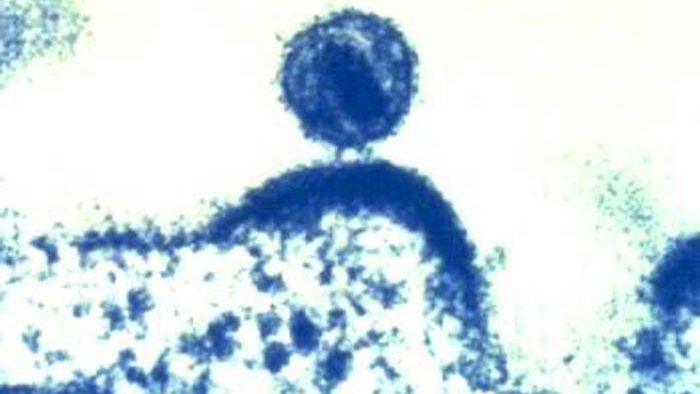
HIV has frustrated conventional vaccine design because its envelope is highly variable and heavily shielded. Germline-targeting vaccination changes the strategy: identify rare B-cell precursors capable of developing into broadly neutralising antibodies, activate them, then guide their maturation through sequential immunisation. In a 2026 non-human-primate study, the approach generated broadly neutralising antibody lineages in at least 50% of animals. Serum activity appeared in 44%, and one lineage reached as much as 67% of the neutralisation breadth of the reference antibody. The result is proof of principle, not yet proof of a protective human vaccine. (Nature)
THE IPM TAKE: This is vaccinology beginning to resemble personalised medicine. B-cell receptor sequence, precursor frequency, clonotype, somatic hypermutation and neutralisation breadth can show not only whether someone responded, but whether the immune system is travelling along the intended molecular route. The challenge now is to translate a highly engineered sequence of immunisations into a human programme that is safe, scalable and deliverable. Do not simply vaccinate and measure afterwards. Map the trajectory, then prove that steering it protects people.
The Obesity Industry Is Still Selling Kilograms
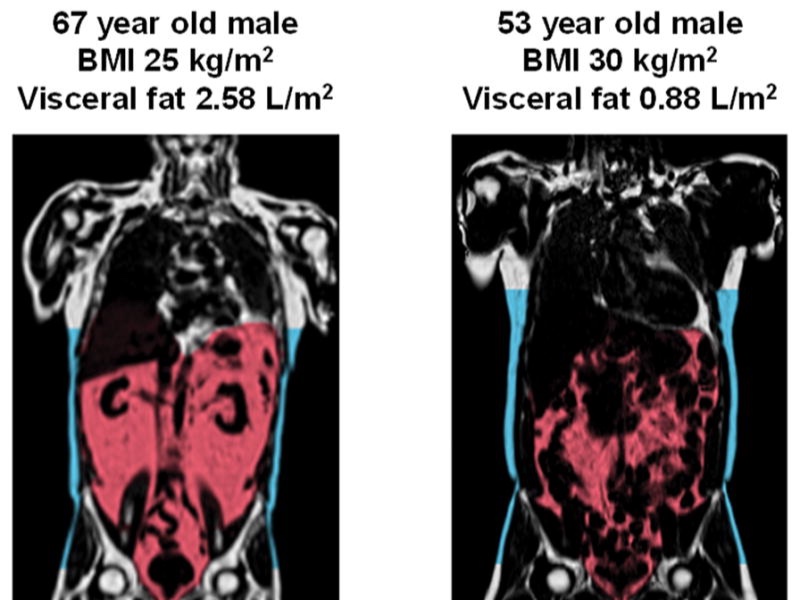
Obesity treatment has spent years competing over one number: kilograms lost. Three recent studies point to a more biological scorecard. An analysis of more than one million people linked ultra-rare loss-of-function variants in FNIP1 to lower liver fat and glycaemia, more favourable fat distribution and about 60% lower odds of cardiometabolic disease. A study of 27,885 GLP-1 users found genetic variation associated with weight-loss efficacy and with nausea or vomiting. In the 507-person BELIEVE trial, bimagrumab plus semaglutide produced greater weight and fat loss than semaglutide alone while preserving more lean mass. (Nature on FNIP1, Nature on GLP-1 response, Nature Medicine)
THE IPM TAKE: Two patients can lose the same number of kilograms and reach very different biological outcomes. Visceral fat matters. Liver fat matters. Lean mass matters. Glycaemic control, tolerability and genotype increasingly matter. None of these studies turns obesity care into a genetic lookup table, and bimagrumab remains investigational. But together they show why the next race should not be for the biggest number on the bathroom scales. It should be for better weight loss, in the right patient, from the right tissue, through the right pathway.
Vaccine “Choice” Is Not Personalised Medicine

President Donald Trump’s 10 August executive order narrows universal US childhood vaccine recommendations to immunisation against 11 diseases, moves others into high-risk or shared-decision categories, and says the combined MMR vaccine should eventually be given as three single-disease products once they become domestically available. It also recommends, as far as feasible, administering childhood immunisations at separate medical visits. The order presents the changes as evidence-based parental choice, but standalone measles, mumps and rubella vaccines are not currently licensed in the United States. Splitting or spacing vaccination adds appointments and opportunities for delayed protection without evidence of a clinical advantage. (White House, Nature)
THE IPM TAKE: Choice and personalisation are not synonyms. Personalised prevention should consider age, immune status, previous infection, comorbidity, exposure risk and, where validated, biomarkers of immune response. That is biological stratification. Offering more options without evidence that different biology requires them is fragmentation. The relevant question is not whether policy creates a larger menu. It is whether the selected option protects the right person at the right time without weakening population protection.
A Breakthrough You Cannot Reach Is Not a Breakthrough
Daraxonrasib has produced one of the year’s most important pancreatic-cancer results. In a phase 3 trial involving previously treated metastatic pancreatic ductal adenocarcinoma, median overall survival was 13.2 months with daraxonrasib and 6.7 months with chemotherapy. The risk of death was reduced by about 60%, and the oral RAS(ON) inhibitor also improved progression-free survival. The result is striking, but it concerns a defined group of people with metastatic disease who were well enough to enter a trial and had already received treatment. Daraxonrasib is still moving through regulatory and access pathways. (New England Journal of Medicine)
THE IPM TAKE: This is the personalised-medicine paradox in one story. We can identify a molecular driver, design an inhibitor and show that it works, yet patients still need timely diagnosis, adequate tissue, molecular testing, specialist interpretation, referral, financing and a route to treatment. A targeted medicine without a testing pathway is not personalised care. A genomic result that arrives after deterioration is not precision. The biomarker without the pathway is information. The medicine without the biomarker is inefficient. Scientific success still needs an implementation system.
The Approval Race Is a Distraction
Oncology innovation is becoming multipolar. From 2020 to 2025, the US FDA approved 87 novel oncology drugs and China’s NMPA approved 94, with China approving more in each year from 2023 to 2025. FDA reviews remained faster, at a median 235 days compared with 417, and FDA was first for 30 of 36 global first-in-class therapies. A separate analysis of 396 FDA-approved novel therapeutics found approval in a median 36 countries but market launch in only 17. In lower- and middle-income countries, those medians fell to two approvals and one launch. (Health Affairs Scholar on US-China approvals, Health Affairs Scholar on global launches)
THE IPM TAKE: The question is no longer simply who approved the medicine first. It is who can identify the right patient, generate locally credible evidence and deliver treatment first. Regulatory speed matters, but it is only one clock. Testing, health-technology assessment, reimbursement, launch strategy, workforce and supply each start another. A targeted therapy approved in 235 days is of little comfort to a patient who waits another 235 days for molecular testing, or is never tested at all. Approval opens the gate. It does not build the road.
The Bill Is Political. So Is Who Pays It.
A contested BMJ analysis of the UK-US pharmaceutical agreement puts opportunity cost back into the medicines debate. It estimates that commitments to raise UK spending on new medicines could add at least £44.7 billion in cumulative NHS costs by the end of 2036. Applying a model of health displaced elsewhere in a fixed budget, the authors estimate roughly 229,000 additional deaths if higher medicines spending replaces more cost-effective care. The result depends heavily on assumptions about the budget, the cost-effectiveness threshold and how displacement occurs, and published responses dispute parts of the framing. The model is not a forecast carved in stone. It is a warning about trade-offs. (BMJ, Responses and methodological debate)
THE IPM TAKE: Personalised medicine changes the economics because the choice is not simply expensive innovation versus cheap conventional care. A molecular diagnostic can identify who is likely to benefit, reduce ineffective treatment and avoid unnecessary toxicity. That does not mean every personalised intervention saves money, nor should saving money be the only test. Some will rightly increase spending because they create benefit where none existed. The objective is rational allocation: better diagnosis, better selection, less futile treatment and more health gain from every euro, pound or dollar.
The August Watch
Registrations are now open for our events in New York (September 24), Stockholm (September 12) and Dublin (October 2).
Visit our Events page to explore what’s coming up and reserve your place.
| 17 AUGUST | ONLINE |
| WHO Noma Control Brief: Watch whether governments turn new guidance into funded action for one of health’s most neglected diseases. WHO |
| 19 AUGUST | GLOBAL |
| World Humanitarian Day: Watch whether governments defend humanitarian health access, or simply praise frontline workers while cutting support. United Nations |
| 24–25 AUGUST | GENEVA AND VIRTUAL |
| WHO Neglected Tropical Diseases Meeting: Watch whether global targets are matched by real diagnostic, surveillance and delivery capacity. WHO |
| 28 AUGUST | ONLINE |
| AI for Health Benchmarking Deadline: Watch whether the emerging standards confront bias, safety and real-world performance. WHO |
| 28 AUGUST | ONLINE |
| ESC Congress 2026: Watch the major cardiology data, new guidelines and whether AI moves from hype to accountable clinical use. ESC |
| 31 AUGUST–3 SEPTEMBER | AMSTERDAM |
| EMA Safety Committee: Watch for new medicine safety signals, restrictions and risk-management decisions. EMA |
Follow the last-mile conversation!
IPM Alliance tracks the decisions, bottlenecks and implementation gaps shaping personalised medicine access. Follow us for briefings, events, policy signals and practical insights from across regions and disease areas.
We want to hear from you
When a patient becomes eligible for personalised care, where does the system most often lose them: identification, testing, referral, reimbursement, delivery capacity or equity?
Know someone who should be reading this?
IPM Brief is built for people working where science, policy and patient access collide. If one colleague would find this useful, forward it to them and help bring them into the conversation.

International Alliance for Personalised Medicine
Avenue de l’Armée / Legerlaan 10, 1041 Brussels, Belgium
This email was sent to jayasinghtec29@gmail.com. You are receiving this email because you are part of the IPM Alliance network or have engaged with our activities, briefings, events, or policy work.
