
Good morning, and welcome to the Tuesday, August 11 edition of the IPM Brief.
Across Europe, offices are emptying, political calendars are narrowing and decisions are drifting towards September.
Patients do not have that luxury.
Cancer does not wait for committees. A biomarker does not pause because a scanner is unavailable. An algorithm does not become useful because it performed well in a pilot. A discovery does not reach patients simply because it was published, patented or placed in a guideline.
Today’s thread is the distance between knowing what should be done and building a system capable of doing it.
Across today’s stories, science is moving faster than delivery. PSMA PET has proved its value, AI could extend scarce expertise, medicines generate returns beyond their budget line and foundational research may take decades to mature. When regulation fails, accountability may arrive only after harm has occurred.
That brings us to the race to lead the World Health Organization. The test is practical: can WHO convert commitments into laboratories, trained workforces, diagnostic pathways and accessible care?
Implementation cannot be postponed indefinitely.
| This is not another health news digest. It’s a twice-weekly readout of where evidence meets power and where power must turn into action. |
The WHO Race Begins, But the Real Contest is Delivery
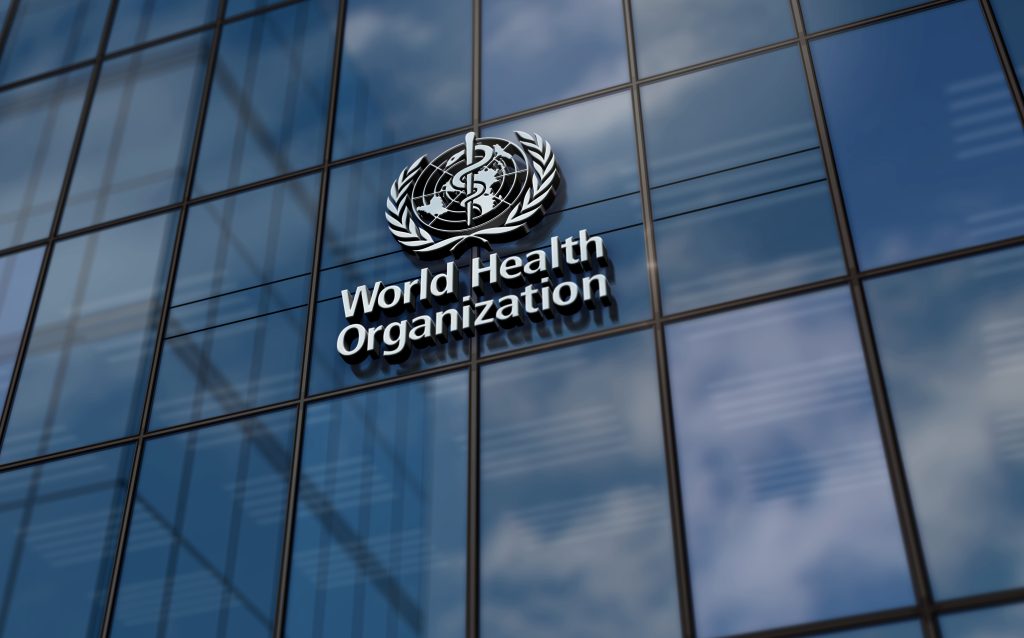
As reported by Devex, Dr Hanan Balkhy, WHO Regional Director for the Eastern Mediterranean, has stepped aside while campaigning to become the organisation’s next Director-General.
A paediatric infectious-disease specialist and former WHO Assistant Director-General for antimicrobial resistance, Balkhy has led a region of 22 countries and around 745 million people since 2024. About 115 million require humanitarian assistance amid conflict, displacement and disease outbreaks.
The next Director-General will inherit an organisation under financial and political strain, with many activities dependent on earmarked voluntary funding. Member States have until 24 September 2026 to nominate candidates, with appointment expected in May 2027.
THE IPM TAKE: The next WHO chief should be judged by implementation. For personalised medicine, that means helping countries build laboratory networks, genomic surveillance, diagnostic capacity, trained workforces, health-data infrastructure and equitable access to biomarkers and targeted treatments.
Global commitments matter only when they become functioning national pathways.
The Invisible Science Behind A Million Patents
Scientific success is counted in citations; commercial success in patents and products. A Nature analysis examines the research papers most frequently cited by patented inventions.
The Lens identified 6.3 million scholarly works cited across 5.6 million patents. At the top are not product launches, but enabling tools on which industries were built.
The 1982 manual Molecular Cloning was referenced by 117,172 unique patents. The original BLAST paper was cited by 39,057, while Köhler and Milstein’s 1975 monoclonal-antibody paper was linked to 34,179.
The 1977 review Pharmaceutical Salts was associated with almost 30,000 patents despite only 472 scholarly citations. The 100 leading works generated about 1.16 million paper-to-patent links; 95 were published before 2000, with a median publication year of 1990. WIPO estimates that the first patent citation arrives around ten years after publication. Impact may simply take time to mature.
THE IPM TAKE: Personalised medicine rests on accumulated sequencing methods, antibody platforms, biomarkers, databases, laboratory protocols, computation and clinical evidence.
Governments and funders need broader measures of impact, including patent citations, data reuse, standards, diagnostic deployment and guideline adoption. They must also address the geography of translation: science may be global, while implementation capacity remains concentrated.
The challenge is not only to fund discovery, but to ensure discoveries travel until they reach patients.
Small AI, Big Divide — The Next Health Gap is Opening
Artificial intelligence could allow developing countries to achieve in a decade what might otherwise take a century. That is the promise explored in the World Bank’s World Development Report 2026: Decoding AI.
But technology does not close inequality by itself. Without computing capacity, connectivity, skills and locally relevant data, it can deepen existing divides.
Only 4.5% of jobs in low- and middle-income countries are considered vulnerable to generative-AI automation, against 14.2% in high-income economies. Yet 16.2% could receive a productivity boost, close to the 18.7% estimated for richer economies.
Health could be a major beneficiary. AI-supported screening and diagnostics may reach patients through basic phones and low-cost systems. Countries need “small AI” adapted to local languages, diseases and clinical pathways, not necessarily billion-dollar frontier models.
But importing an algorithm is not implementation. It requires representative data, electricity, connectivity, trained professionals, referral capacity and treatment. In Sub-Saharan Africa, nearly one-third of rural schools lack reliable electricity and more than two-thirds dependable internet.
THE IPM TAKE: The World Bank proposes a pragmatic sequence: adopt, adapt and advance. Governments should deploy proven tools, customise them locally and scale what works rather than filling health systems with disconnected pilots.
The real divide will be between systems able to translate AI into earlier diagnosis and accessible care, and those left with impressive technology that never reaches patients.
PSMA PET Has Proved its Value. Now Europe Must Deliver Access
A perspective in European Urology Oncology argues that the question around PSMA PET is no longer whether it works, but whether eligible patients can obtain it.
PSMA PET improves initial staging of higher-risk prostate cancer and localisation after biochemical recurrence, influencing surgery, radiotherapy, systemic treatment or surveillance.
Yet access varies with reimbursement, tracer production, scanners, workforce, referrals and waiting times. Some patients enter routine pathways; others face restrictions, delays or no access.
That is a clinical-equity problem. Delayed access can reduce staging accuracy, postpone localisation of recurrent disease and force reliance on less sensitive imaging. Similar patients may receive different care because of geography rather than clinical need.
THE IPM TAKE: Europe should define appropriate use, simplify referrals, expand tracer and imaging capacity, harmonise quality standards and generate real-world evidence. Health systems should measure the proportion of eligible patients scanned, waiting times, regional availability and integration into multidisciplinary pathways.
A guideline recommendation without delivery capacity is only a promise.
The science has arrived. The pathway must catch up.
Greece’s €1-to-€6 Medicines Paradox
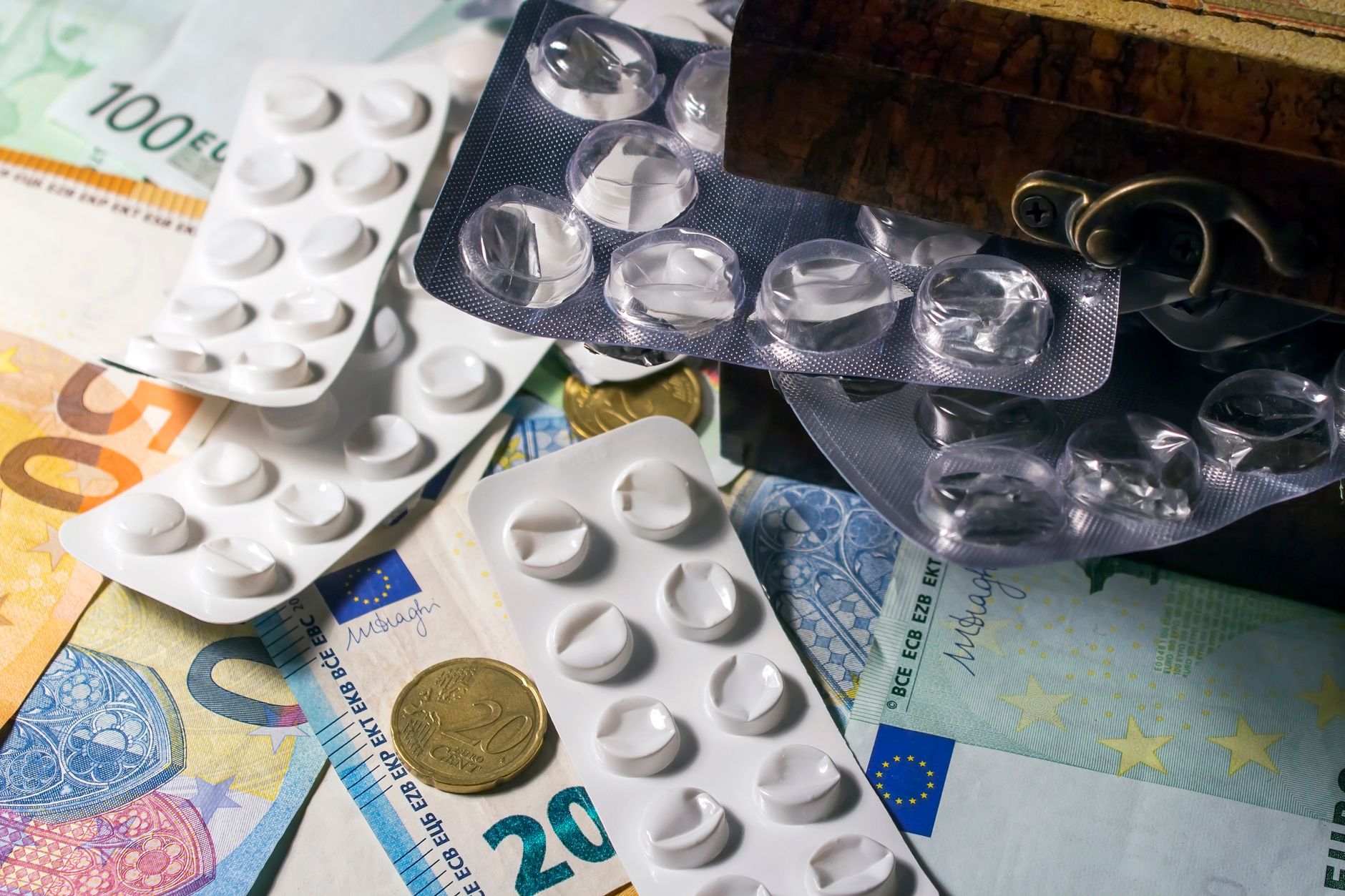
Greece has long treated pharmaceutical innovation mainly as a cost to control. New evidence suggests that this may be an expensive form of saving.
A WifOR Institute analysis reported by Euractiv estimates that €93.11 million in additional Greek pharmaceutical expenditure generated €556.97 million in social and economic value, almost €6 for every €1 invested.
The estimated value included €126.55 million in hospital savings and about €430 million in productivity gains. Newer medicines were associated with 25,600 avoided potential years of life lost and 252,400 fewer hospital bed-days, 691 beds for a year.
Across 29 countries, €11.67 billion in additional spending was associated with €66.18 billion in benefit, 1.83 million fewer years of life lost and 20.9 million avoided hospital days.
There are caveats: the industry-commissioned report uses econometric associations rather than randomised evidence and gross list prices rather than confidential net prices.
THE IPM TAKE: Greece now has a €50 million Innovation Fund offering temporary reimbursement while real-world evidence is collected. Yet access remains restricted.
Medicines budgets capture cost in one column; returns appear across hospitals, workplaces and families. The real policy failure is paying for illness because innovation arrived too late.
When Government Fails, The Courtroom Becomes The Regulator Of Last Resort
Public-health protection should follow a clear sequence: evidence emerges, regulators investigate, legislators act and harmful practices change.
But what happens when that sequence fails?
In a New England Journal of Medicine perspective, Jerry Avorn argues that litigation can provide a final safeguard when regulators and lawmakers ignore credible evidence of harm, linking social-media cases with earlier pharmaceutical and tobacco litigation.
The common thread is the accountability gap: evidence accumulates, institutions hesitate and victims turn to the courts.
Litigation is slow, expensive and retrospective. Establishing causation can be difficult, and courts should not become substitute regulators. But regulatory paralysis should not become a business model.
THE IPM TAKE: AI, genomic testing and digital diagnostics are entering health systems faster than many regulatory structures can adapt. Innovation must be accompanied by transparent evidence, effective surveillance, clear responsibility and meaningful routes to redress.
Litigation must remain the backstop, not the operating model. No technology or company should become too complex, profitable or politically protected to be held accountable.
Innovation without accountability is not progress.
Cancer Is Three-Dimensional, Its Research Models Should Be Too

Personalised oncology depends on finding the molecular weakness that makes a tumour vulnerable to treatment. But a Nature study highlights a problem: the models used to discover those weaknesses may distort the biology.
The Cancer Dependency Map has used more than 1,300 conventional cancer cell lines to identify genes tumours require to survive. These cells are usually grown as flat layers under artificial conditions, where tumour characteristics can disappear and rare subtypes remain poorly represented.
Researchers expanded DepMap with 314 models, 237 organoids and 77 tumour spheroids, and conducted 147 genome-wide CRISPR screens across ten cancer types.
Compared with patient tumours, lineage identification was accurate for 69% of three-dimensional models, versus 35% of traditional cell lines. For central nervous system cancers, the figures were 93% versus 11%; for oesophageal and stomach cancers, 83% versus 24%.
The map uncovered 51 “expression addictions”, 106 dependencies linked to gene loss and 83 genomic connections to potential vulnerabilities. KRAS-amplified oesophageal adenocarcinoma organoids were unusually sensitive to stearoyl-CoA desaturase inhibitors, an effect less visible in conventional cultures.
Organoids are not automatically superior. Some breast cancer models lost ESR1 and ERBB2 expression during culture, masking established dependencies. Model type, growth format and culture medium can alter which targets appear relevant.
THE IPM TAKE: Genomic testing can identify a mutation, but treatment selection requires understanding what it does inside a living tumour. Personalised oncology needs stronger functional models, common quality standards and validation pathways linking organoids, biomarkers and trials.
The biology cannot be personalised if the model has flattened it first.
The August Watch
August is for holidays. September is for new ideas.
While you enjoy a well-deserved break, whether by the sea or in the mountains, you can already plan what’s next. Registrations are now open for our events in New York (September 24), Stockholm (September 12) and Dublin (October 2).
Visit our Events page to explore what’s coming up and reserve your place.
Follow the last-mile conversation!
IPM Alliance tracks the decisions, bottlenecks and implementation gaps shaping personalised medicine access. Follow us for briefings, events, policy signals and practical insights from across regions and disease areas.
We want to hear from you
When a patient becomes eligible for personalised care, where does the system most often lose them: identification, testing, referral, reimbursement, delivery capacity or equity?
Know someone who should be reading this?
IPM Brief is built for people working where science, policy and patient access collide. If one colleague would find this useful, forward it to them and help bring them into the conversation.
International Alliance for Personalised Medicine
Avenue de l’Armée / Legerlaan 10, 1041 Brussels, Belgium
This email was sent to jayasinghtec29@gmail.com. You are receiving this email because you are part of the IPM Alliance network or have engaged with our activities, briefings, events, or policy work.
