
Good morning. Coffee, tea or juice, anyone?
August does not arrive everywhere in the same season, and not every sunrise carries the same light.
In one part of the world, offices empty into the warmth of summer. Elsewhere, winter holds the morning. Across laboratories, hospitals, ministries and homes, there is no common recess. Disease does not consult the calendar, and patients do not become less urgent because political life has slowed.
Science continues to move.
A virus crosses an ocean and leaves its signature in bodies buried for centuries. A tumour changes beneath the pressure of treatment. Fragments of DNA circulating in the blood may mark the distance between detection and silence. Sequencing moves from the research laboratory into routine care. Publicly funded science approaches private markets. Medicines pass through assessment and negotiation, but not always quickly enough to reach the person waiting at the end of the pathway.
These stories span different countries, disciplines and centuries. Yet they return us to one recurring question: when knowledge advances, who acts on it, and who is left behind?
| This is not another health news digest. It’s a twice-weekly readout of where evidence meets power and where power must turn into action. |
Public Risk, Private Reward?

Quantum computing may seem distant from care, but its political question is familiar.
Governments have committed an estimated US$55.7 billion to quantum technologies since 2013; by late 2025, 18 OECD countries and the European Union had formal strategies. Public funding sustained research, skills and infrastructure when commercial returns were uncertain. Now the centre of gravity is shifting: McKinsey estimates that 72% of quantum-computing use is within majority privately owned companies. (OECD)
Industry brings capital, engineering and scale. But movement from laboratory to market should be a compact, not a handover.
Personalised medicine has seen the pattern before: governments fund foundational science and data infrastructure; health systems later buy the resulting platforms back, sometimes at prices that restrict access. Public investment should carry public-interest conditions: transparent evidence, independent research access, interoperable standards and measurable social benefit.
Quantum may strengthen molecular modelling and drug discovery. Its value will also depend on who controls it.
Commercialisation should accelerate translation, not privatise the destination.
NGS Has Crossed the Clinical Majority Line
Next-generation sequencing has crossed a threshold.
Illumina reported first-quarter 2026 revenue of US$1.09 billion, up 4.8%, with US$726 million from sequencing consumables. The company said clinical applications represented more than 65% of sequencing-consumables revenue, while clinical demand outside China grew 20% for a second consecutive quarter. (investor.illumina.com)
NGS is moving from research technology to clinical infrastructure, propelled by prenatal testing, rare-disease diagnosis, tumour profiling, therapy selection, molecular residual disease and early detection.
Guardant Health offers a parallel example. First-quarter revenue rose 48% to US$301.7 million. Screening revenue climbed from US$5.7 million to US$41.6 million, while Shield test volumes increased from roughly 9,000 to 44,000. These are commercial metrics, not proof of population benefit, but they show the speed of adoption. (investors.guardanthealth.com)
The challenge has shifted. Sequencing capacity can expand faster than reimbursement, laboratory networks, quality standards and clinical interpretation.
The genomic wave has arrived. Policy will determine whether it becomes shared infrastructure or another access divide.
Multi-Cancer Early Detection: The Volume Question
The case for multi-cancer early detection rests on one word: early.
Current MCD tests detect later-stage disease better than early cancer. None has shown reduced cancer mortality in a completed randomised trial or been authorised by the US FDA for population screening. (Cancer.gov)
Stage I and II sensitivity is the critical frontier.
Most optimisation occurs downstream: panel design, methylation classifiers, fragmentomics and variant calling. But a simpler question sits upstream: how much plasma enters the assay?
When a workflow uses 4 or 8 millilitres, is that because sensitivity has plateaued, or because the extraction system was built around that volume? Analytical evaluations show that low input can reduce sensitivity, especially at low variant allele fractions. (Nature)
Developers should run a sensitivity ladder: keep the chemistry constant, increase input – perhaps through 8, 12, 16 and 20 millilitres – and establish where early-stage sensitivity stops improving. The result may validate current practice, or reveal that workflow convenience has been setting a clinical parameter.
Volume must be balanced against specificity, reproducibility, patient burden, cost and scalability. Detection must connect to confirmation, referral and treatment.
The assay workflow should serve the clinical objective, not define its limits.
Smallpox’s Route Across the Atlantic
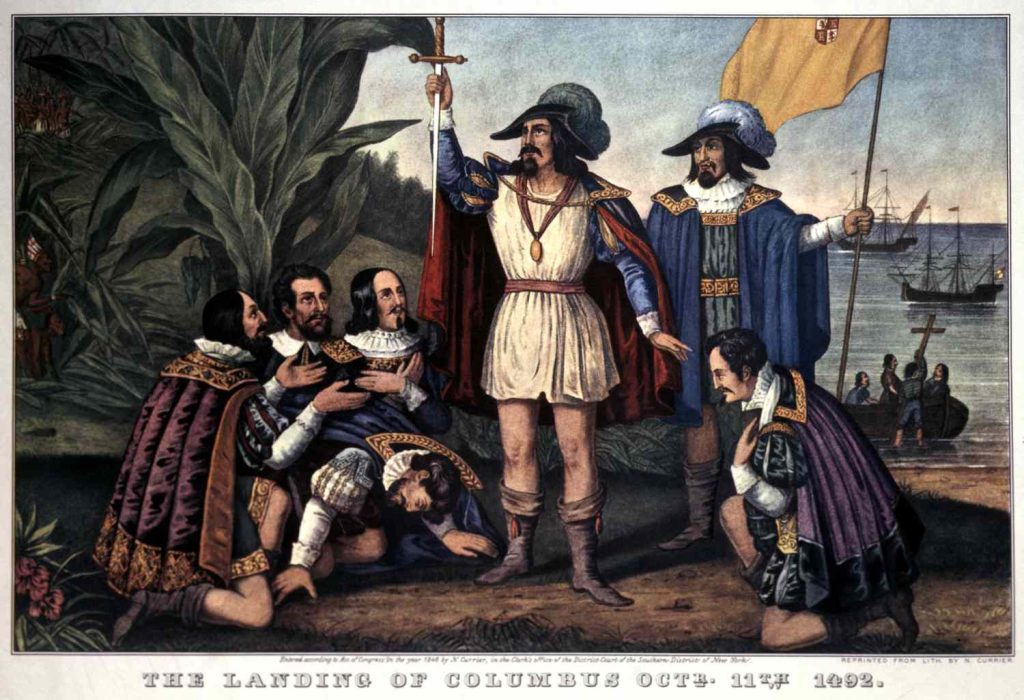
History has long recorded the devastation caused by smallpox after Europeans reached the Americas. Ancient DNA has now supplied direct molecular evidence of the virus’s arrival.
Researchers recovered variola-virus DNA from two naturally mummified people in northern Chile. The genomes belonged to an extinct lineage positioned between medieval European and later smallpox strains, confirming an Old World origin. (Reuters)
The discovery strengthens evidence that variola lost genes as it adapted to humans. Viking-age strains retained immune-modulatory and host-range genes absent from modern smallpox; related processes are now being examined in mpox evolution. (PubMed Central (PMC))
Ancient pathogen genomics is surveillance stretched across centuries, revealing routes that modern pathogens may still travel.
The archive remains small, but the past is no longer silent.
The Treatment Changes the Tumor
Cancer therapy is designed to destroy tumours. It can also help rewrite them.
A Nature study analysed 611 whole-genome-sequenced childhood tumours from 544 patients across Canada, Australia and the United States, with exposure data for 86 therapies. Post-treatment tumours carried roughly twice the somatic-mutation burden and nearly three times as many private mutational signatures as treatment-naive cancers. Chemotherapy and radiotherapy were the only external mutagens detected. (Nature)
Platinum therapies left the deepest scars. Four chemotherapy classes accounted for 15.1% of point mutations in the cohort. Thirty-five percent of platinum-treated tumours displayed a corresponding signature within 12 months; the earliest appeared after 91 days. (Nature)
These medicines save lives. The lesson is not to withhold them, but to stop assuming a relapse is biologically identical to the original disease.
Treatment creates evolutionary pressure: vulnerable cells die; resistant clones survive.
Relapsed cancers should be re-biopsied and re-profiled where feasible, with treatment history integrated into interpretation. Because childhood cancers are rare, the evidence base must cross borders.
Personalised medicine must follow the tumour as it evolves.
The Mutation Is Not the Patient
Following the tumour is essential. Losing sight of the person is unacceptable.
Recent clinical reflections place two realities side by side. A molecularly matched treatment can still be wrong when frailty, toxicity, quality of life and personal priorities are considered. Clinical equipoise also means several options may be evidence-based while none is clearly right for one person.
More choice can mean more uncertainty. Should therapy be used now or reserved?
Evidence defines the boundaries of choice; it cannot always choose within them.
This is a core IAPM focus: keeping the person in personalised healthcare.
Biomarkers, genomic profiling, AI and molecular tumour boards must support – not replace – human judgement. Health systems need time for conversation, multidisciplinary pathways and the patient voice.
Shared decision-making is not a softer addition to precision. It is part of precision.
The genome may reveal what is clinically possible. Personalised healthcare must determine what is personally right.
Personalised Medicine: Growth is Outpacing Delivery
Commercial forecasts vary, but the direction is clear.
Market Data Forecast estimates that Europe’s personalised-medicine market will rise from US$182.49 billion in 2025 to US$348.43 billion by 2033, at 8.42% annual growth. (Market Data Forecast)
KPMG reports that nine of the ten largest biopharma deals by value in 2023 involved precision medicine; its research across 13 markets anticipates greater use of liquid biopsy and IVD-designated NGS. (KPMG)
The momentum is global. Asia’s share of the innovative biopharma pipeline rose from 28% to 43% in five years. Strategy& projects a US$1.2-billion Middle East and Africa genomics market by 2027, with Saudi Arabia and the UAE positioned to capture more than 60%. The US All of Us repository now includes data from more than 747,000 participants and whole-genome sequences from more than 535,000. (McKinsey & Company)
But growth is not delivery. A test can exist without referral; a therapy can be authorised while reimbursement stalls; a dataset can expand while communities remain outside the benefit.
Markets measure activity. Personalised healthcare must measure who receives care, how quickly and with what outcome.
Beneluxa at Ten: Now Prove Patients Benefit
Beneluxa brings the argument back to implementation.
Austria, Belgium, Ireland, Luxembourg and the Netherlands collaborate across horizon scanning, HTA, pricing, reimbursement and policy exchange. In its first decade, Beneluxa completed 15 joint HTAs and four joint negotiations; three produced multi-country agreements.
Its deeper contribution is a connected life-cycle approach: identify disruptive medicines early, prepare payers, assess evidence collaboratively and reduce duplication before market entry.
That matters for gene therapies, oncology medicines and rare-disease treatments, where high prices often accompany uncertain long-term benefit. Beneluxa has not created one reimbursement system or one European price. It has demonstrated something more pragmatic: alignment without full harmonisation.
Yet the decisive question remains unanswered. The review acknowledges that it does not establish whether Beneluxa improved sustainable access at affordable cost. The next step is to assess reimbursement time, patient uptake, administrative burden, budget impact and outcomes.
Cooperation matters only if it shortens the distance between approval and access. Beneluxa has proved countries can work together. Its next decade must prove that patients benefit.
The Distance Still to Travel

These stories share the same last mile.
Science can recover a virus from the dead, detect cancer through blood fragments and map treatment scars. Markets can scale technologies. Countries can build common processes.
But none of these achievements is complete until discovery becomes delivery.
The public must share in the value it helped create. Genomics must become infrastructure for all. Early detection must connect to diagnosis and treatment.
Tumours must be followed as they change. Patients must remain more than their mutations. Cooperation must be measured not by process, but by access and outcomes.
August does not arrive everywhere in the same season.
But everywhere, patients are waiting.
The world does not pause.
Neither should the work of ensuring that innovation reaches the person for whom it was intended.
The August Watch
August is for holidays. September is for new ideas.
While you enjoy a well-deserved break, whether by the sea or in the mountains, you can already plan what’s next. Registrations are now open for our events in New York (September 24), Stockholm (September 12) and Dublin (October 2).
Visit our Events page to explore what’s coming up and reserve your place.
Follow the last-mile conversation!
IPM Alliance tracks the decisions, bottlenecks and implementation gaps shaping personalised medicine access. Follow us for briefings, events, policy signals and practical insights from across regions and disease areas.
We want to hear from you
When a patient becomes eligible for personalised care, where does the system most often lose them: identification, testing, referral, reimbursement, delivery capacity or equity?
Know someone who should be reading this?
IPM Brief is built for people working where science, policy and patient access collide. If one colleague would find this useful, forward it to them and help bring them into the conversation.

International Alliance for Personalised Medicine
Avenue de l’Armée / Legerlaan 10, 1041 Brussels, Belgium
This email was sent to jayasinghtec29@gmail.com. You are receiving this email because you are part of the IPM Alliance network or have engaged with our activities, briefings, events, or policy work.
