Dear friends,
Another day, another sound bite. But when the sound fades, what bite will the policy actually have?
AI is becoming extraordinarily good at answering questions. The people building it—and the governments trying to govern it—are still wrestling with older ones: who writes the rules, who carries the risk, who captures the value—and who pays?
This weekend exposed the tension neatly. Anthropic CEO Dario Amodei called for stronger safeguards around frontier AI, while other industry leaders have also warned that increasingly powerful systems require more serious governance. Donald Trump offered the counterpoint: America cannot afford to regulate itself out of the AI race.
And somewhere between those positions, the maths has to add up.
Industry wants room to innovate. Governments want strategic advantage. Yet AI increasingly depends on public science, energy, infrastructure, skills and investment.
We have seen part of this story before.
Google, Facebook and other platforms created enormous value from the data and activity of billions of people. The public received powerful services; the financial dividend largely accrued elsewhere.
AI risks taking that bargain one step further.
If the public contributes data, supports the science, helps finance the infrastructure and absorbs some of the risk, there should also be a public dividend.
In personalised medicine, that dividend should be visible: earlier diagnosis, better treatment decisions, fewer ineffective interventions and more patients reaching the pathway that is right for them.
Personalisation without access is simply better science describing the same inequality.
Otherwise, we risk a familiar bargain: the public helps create the value—and then buys it back at the end.
And then there was Irish whiskey.
President Trump’s decision to move towards removing the US tariff on Irish whiskey was welcome news for distillers, but also a reminder that after the tariff schedules, negotiating frameworks and economic modelling, political discretion still has considerable bite.
Trade policy itself had suddenly become personalised.
That is why our two meetings during UN General Assembly High-Level Week in New York belong together.
On 23 September, our meeting on MFN, trade and tariffs will examine what happens when governments intervene in medicines pricing, trade and the incentives underpinning innovation. (Register)
On 24 September, our meeting on bringing innovation into healthcare systems will examine the other side of the equation, including AI: how innovation can be supported, governed and translated into public value.
AI and MFN may look like different debates.
They are variations on the same one: Who takes the risk? Who writes the rules? Who captures the value? Who gets access and where is the public dividend?
When the sound fades, those are the questions that give policy its bite.
In this issue
- Muscle finally made it into the treatment plan: The first approved SMA therapy to attack muscle loss directly will work alongside treatments protecting motor neurons.
- BioNTech’s next act has a lung-cancer antibody: A late-stage trial produced a reported survival benefit where immunotherapy and chemotherapy had already failed.
- LSD passed the trial. Now it has to survive healthcare: Another positive anxiety study arrived just as regulators confronted supervision, safety and unequal access.
- The implant learned that speech has hands: A brain–computer interface translated words and gestures into a digital avatar in real time.
- The $40 billion medicine cabinet may need to lose a shelf: Competition concerns are following one of consumer health’s largest proposed mergers.
- The baby-formula bill arrived four years late: Abbott will pay $385 million to resolve contamination-related allegations without admitting wrongdoing.
- Rabies lost because public health refused to get bored: Decades of vaccination, surveillance and post-exposure care have delivered a historic elimination.
- The curve bent. The trust problem did not: Authorities say Ebola infections are falling, but experts want clearer data before the victory speeches begin.
- Aid reached Sudan. The budget stayed home: Humanitarian agencies are rationing food while hunger expands faster than donor funding.
- The carbon rule died. The lungs did not get a vote: A major retreat from power-plant regulation turns an environmental decision into a public-health wager.
| This is not another health news digest. It’s a twice-weekly readout of where evidence meets power and where power must turn into action. |
Muscle finally made it into the treatment plan
The FDA has approved Isembyld, or apitegromab-mstn, for people aged two and older with spinal muscular atrophy who are already receiving an SMN2-targeted treatment. Existing therapies help preserve motor neurons. Isembyld is the first approved SMA medicine designed to address muscle loss directly. In the pivotal trial, 34.2% of children receiving the selected dose achieved a clinically meaningful motor improvement, compared with 13.5% receiving placebo. (FDA)
That word—alongside—is doing important work. This is not one miraculous medicine arriving to replace everything that came before. It is a layered strategy: protect the nerve, then strengthen what the disease has already weakened. Precision medicine often sells itself as the perfect intervention against one target. Patients live in whole bodies. The treatment plan is finally catching up.
BioNTech’s next act has a lung-cancer antibody
BioNTech says its experimental antibody gotistobart produced a clinically meaningful overall-survival benefit in a Phase III trial involving people with squamous non-small-cell lung cancer whose disease had progressed after immunotherapy and chemotherapy. The company reported that survival was nearly doubled compared with docetaxel, although detailed findings still need to be presented and scrutinised. (Reuters)
This is a top-line company result, not yet the final scientific verdict. But it is also a reminder that BioNTech was never merely a COVID-19 company. Its pandemic success gave it money, manufacturing power and political visibility; oncology remained the larger ambition. The interesting question is no longer whether the company can survive beyond vaccines. It is whether pandemic-era capital can produce something durable for patients whose existing options have run out.
LSD passed the trial. Now it has to survive healthcare
Definium Therapeutics reported that a single 100-microgram dose of its LSD-based treatment DT120 reduced anxiety scores in a 245-person Phase III study, its second successful late-stage trial in generalised anxiety disorder. On the same day, patients, clinicians and researchers urged the FDA to establish clear standards for screening, professional supervision, monitoring, aftercare and insurance coverage for psychedelic treatments. (Reuters on the trial; Reuters on the FDA meeting; FDA)
A psychedelic treatment is not simply a tablet with unusual chemistry. It is a care pathway containing preparation, controlled administration, human supervision and follow-up. Approve the molecule without financing the pathway and access will belong to people who can pay privately for the room, the professional and the time. The drug may be psychedelic. The inequality would be painfully conventional.
The implant learned that speech has hands
An NIH-funded team has demonstrated a brain–computer interface that decodes neural activity associated with both speech and physical gestures. The system allowed a participant with paralysis to control a personalised digital avatar capable of producing spoken language and expressive body movements in real time. (NIH; Nature)
This matters because communication was never only vocabulary. It is a raised eyebrow, a shrug, a hand moving before a sentence has finished. Earlier systems could return words while leaving personality stranded behind the interface. Restoring gesture moves neurotechnology closer to restoring presence. The device remains experimental, but its designers have understood something health systems frequently forget: functioning is not the same as living.
The $40 billion medicine cabinet may need to lose a shelf
Kimberly-Clark is reportedly preparing concessions to address European competition concerns over its proposed $40 billion acquisition of Kenvue. The European Commission’s preliminary review is due to conclude on 29 September. Australia has already required divestments involving feminine-care brands before conditionally clearing the deal. (Reuters)
The products involved may look ordinary beside gene therapies and surgical robots: pain relief, skin care, baby products and everyday health goods. That is precisely why market power matters. Consumer health operates where medicine meets routine household spending, often without reimbursement or negotiation. Consolidation can create efficiency. It can also allow one corporate hand to occupy far too much of the bathroom cabinet.
The baby-formula bill arrived four years late
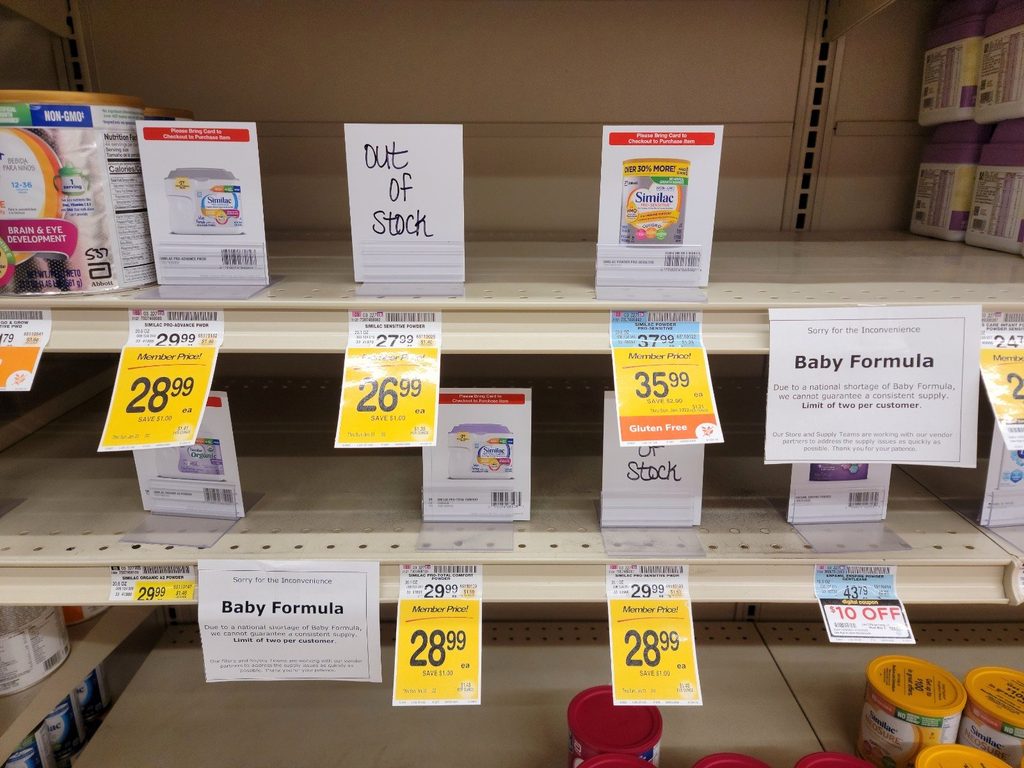
Abbott has agreed to pay $385 million to resolve US government allegations concerning manufacturing conditions at two infant-formula facilities, including the Sturgis plant whose 2022 closure contributed to a nationwide shortage. The settlement contains no finding of liability, and Abbott admits no wrongdoing. The company maintains that unopened formula distributed from its facilities was never shown to be contaminated or definitively linked to the reported illnesses. (Reuters; Abbott)
Legal language can distribute responsibility with surgical precision. Parents remember the episode differently: empty shelves, frantic phone calls and babies who could not switch products because their nutritional needs were specific. When a market for an essential product becomes heavily concentrated, factory hygiene becomes national health security. A settlement can close a case. It cannot retroactively stock a shelf.
Rabies lost because public health refused to get bored
WHO has validated the elimination of dog-transmitted rabies as a public-health problem in Chile—the first such achievement in South America. The country recorded its last human case caused by canine rabies in 1972 and maintained the result through mass animal vaccination, laboratory surveillance, border controls and timely access to post-exposure treatment. (WHO)
There was no single breakthrough moment and no billion-dollar launch. Public health won by vaccinating animals, investigating exposures and repeating the work for more than fifty years. That is why elimination stories are politically useful: they expose the difference between announcing a policy and maintaining one. Rabies did not disappear because attention arrived. It disappeared because attention stayed.
The curve bent. The trust problem did not
Authorities in the Democratic Republic of the Congo say the current Ebola outbreak has passed its peak, with reported daily infections falling from approximately 120 to around 80. The health ministry had recorded more than 7,200 confirmed cases and 3,475 deaths by 14 September. Researchers and legislators are urging caution, asking for stronger surveillance data and clearer evidence before the decline is treated as victory.(The Guardian)
A falling curve is good news. It is not a permission slip for institutional optimism. Outbreak declarations influence behaviour, funding and political scrutiny; getting the message wrong can send frightened communities underground or persuade donors that the emergency has ended. Trust is itself an outbreak-control technology. Unlike a vaccine, it cannot be flown in after the cold chain arrives.
Aid reached Sudan. The budget stayed home
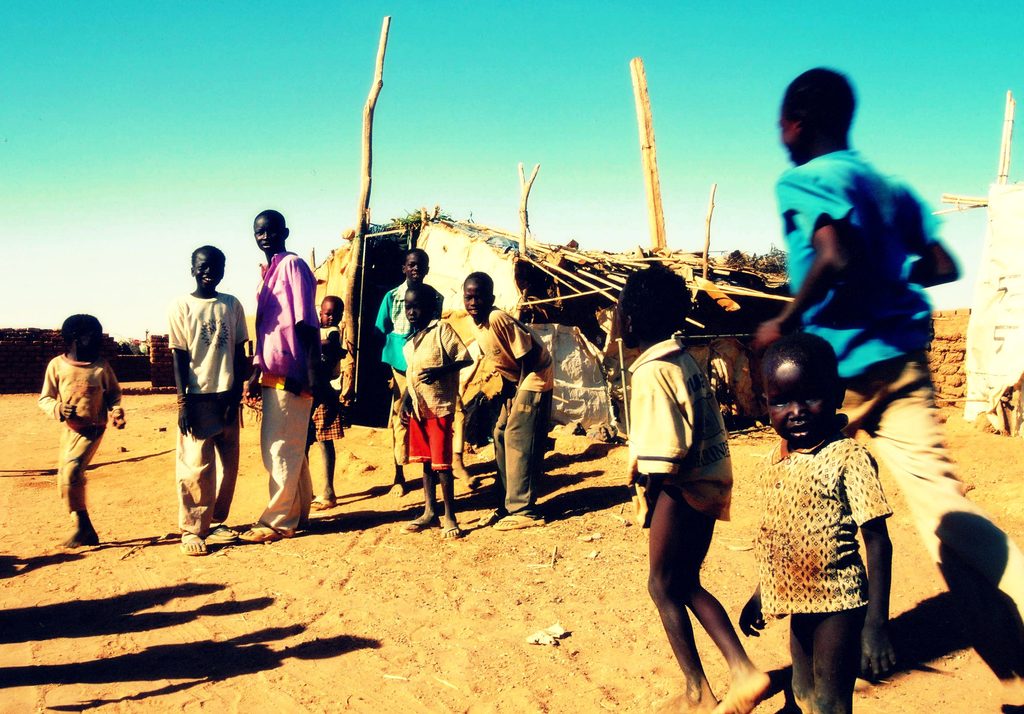
The World Food Programme says its funding for Sudan has fallen to $206 million, from $645 million a year earlier, leaving a gap of nearly $300 million simply to maintain current operations. Almost 20 million people face hunger, yet WFP is concentrating limited assistance on five million people and frequently distributing reduced rations. Other humanitarian agencies warn that essential supplies could begin running out before the end of September. (Reuters)
Humanitarian access is usually described as a problem of checkpoints, armed groups and damaged roads. Here, aid workers have reached communities only to discover that donor financing did not make the journey. Half a ration is not an operational detail. It is a policy decision translated into a smaller meal, a weaker immune system and a child more vulnerable to disease. A budget cut eventually acquires a pulse.
The carbon rule died. The lungs did not get a vote
The US Environmental Protection Agency has announced the repeal of federal carbon-emission limits for power plants and proposed constraining future greenhouse-gas regulation under the Clean Air Act. The administration argues that the change will reduce compliance costs. The previous rule was projected to cut approximately one billion metric tonnes of emissions by 2047 and generate hundreds of billions of dollars in net benefits. (Reuters)
Carbon rules are marketed as environmental policy because that keeps the human consequences comfortably abstract. Power-plant emissions return as heat exposure, cardiovascular stress, respiratory illness, disrupted food systems and larger hospital bills. Regulators can repeal a standard. They cannot negotiate with atmospheric chemistry. The savings appear immediately on one balance sheet; the costs arrive later, distributed across millions of bodies.
September Watch
Registrations also remain open for upcoming IPM Alliance events in New York on 24 September and Dublin on 2 October. Visit the IPM Alliance website for programme updates.
| 15–17 September — Europe’s medicines committee finishes its monthly deliberations: |
| Watch for new approval recommendations, extensions and regulatory refusals from the EMA’s CHMP meeting. |
| 16 September — Biotech meets the regulator before it meets the market: |
| The EMA Biotech Hub workshopwill examine how technology-transfer offices and academic innovators navigate early regulatory development. |
| 16–18 September — Health AI leaves the keynote stage: |
| WHO, ITU and WIPO convene the Global Initiative on AI for Health, focusing on implementation, governance, standards and privacy-preserving evaluation. |
| 17 September — Patient safety looks beyond the hospital incident report: |
| World Patient Safety Day focuses on avoidable harm across the long and fragmented care journeys of people living with noncommunicable diseases. |
| 18 September — Global health moves into UNGA mode: |
| WHO’s UN General Assembly programme begins, with financing, preparedness, AI, climate and resilient health systems competing for political oxygen. |
| 21 September — Dementia trials face the participation question: |
| Alzheimer’s Disease International will release its 2026 World Alzheimer Report, focused on clinical trials, on World Alzheimer’s Day. |
| 21 September — Novo Nordisk explains what comes after the boom: |
| The company’s Capital Markets Daywill put its strategy, pipeline and operations under scrutiny as competition across obesity and metabolic medicine intensifies. |
| 22 September — World leaders take the microphone: |
| The UN General Assembly general debate begins, alongside meetings on health-system investment, pandemic financing and the global campaign to end lead poisoning. |
Follow the last-mile conversation!
IPM Alliance tracks the decisions, bottlenecks and implementation gaps shaping personalised medicine access. Follow us for briefings, events, policy signals and practical insights from across regions and disease areas.
We want to hear from you
When a patient becomes eligible for personalised care, where does the system most often lose them: identification, testing, referral, reimbursement, delivery capacity or equity?
Know someone who should be reading this?
IPM Brief is built for people working where science, policy and patient access collide. If one colleague would find this useful, forward it to them and help bring them into the conversation.
International Alliance for Personalised Medicine
Avenue de l’Armée / Legerlaan 10, 1041 Brussels, Belgium
