
August is calling.
Before it raises its head, here is the second dispatch from the IPM team.
Health policy is having a shortcut moment.
At AIDS 2026 in Rio, the US State Department displayed an AI-generated map of Africa that misplaced every highlighted country. Nigeria drifted into the Sahara. Mozambique moved towards the Horn. Côte d’Ivoire crossed the continent. Officials blamed last-minute changes and accepted responsibility. (Reuters)
The map was polished, instant, and wrong.
A machine produced the appearance of competence without understanding the territory. Increasingly, power works the same way: generate the graphic, announce the reform, impose the condition, and deal with the consequences later.
In Washington, Anthony Fauci repeatedly invoked the Fifth Amendment during a Senate hearing on Covid-19. That proves nothing by itself. But the spectacle exposed a system in which politics demands confession while science demands trust. (AP News)
In football, European associations threatened to boycott FIFA competitions over plans to sell investors a stake in a new commercial entity. Strip away the sport and the issue is familiar: who writes the rules, who profits, and who must comply? (AP News)
The same struggle now runs through global health. Across each story, the temptation is the same: mistake a fast decision for a functioning system, and political control for delivery.
Before August promises quieter days, July leaves a crowded desk: institutional retreat, political theatre, technological overreach, and patients navigating the consequences.
| This is not another health news digest. It’s a twice-weekly readout of where evidence meets power and where power must turn into action. |
Whose Resilience?

President Donald Trump has threatened a phased tariff wall around imported generics: zero for two years, 100 percent after that and 200 percent later, unless manufacturers move production to the United States. (The Indian Express)
The message is crisp. Manufacture at home. Become self-reliant. More than 90 percent of US prescriptions are generics, and Indian manufacturers supply close to half. Factories require investment, approval, skilled workers and time. A tariff can arrive overnight. A resilient manufacturing base cannot. (fda.gov)
The administration’s April pharmaceutical proclamation left generics tariff-free “at this time” and ordered a review. The 100-to-200-percent pathway remains a political threat, not settled law. (whitehouse.gov)
Dismantling a supply route before its replacement exists is not resilience. It is a shortage strategy with patriotic branding.
The same contradiction appears in public health. Patients are becoming global while institutions become national.
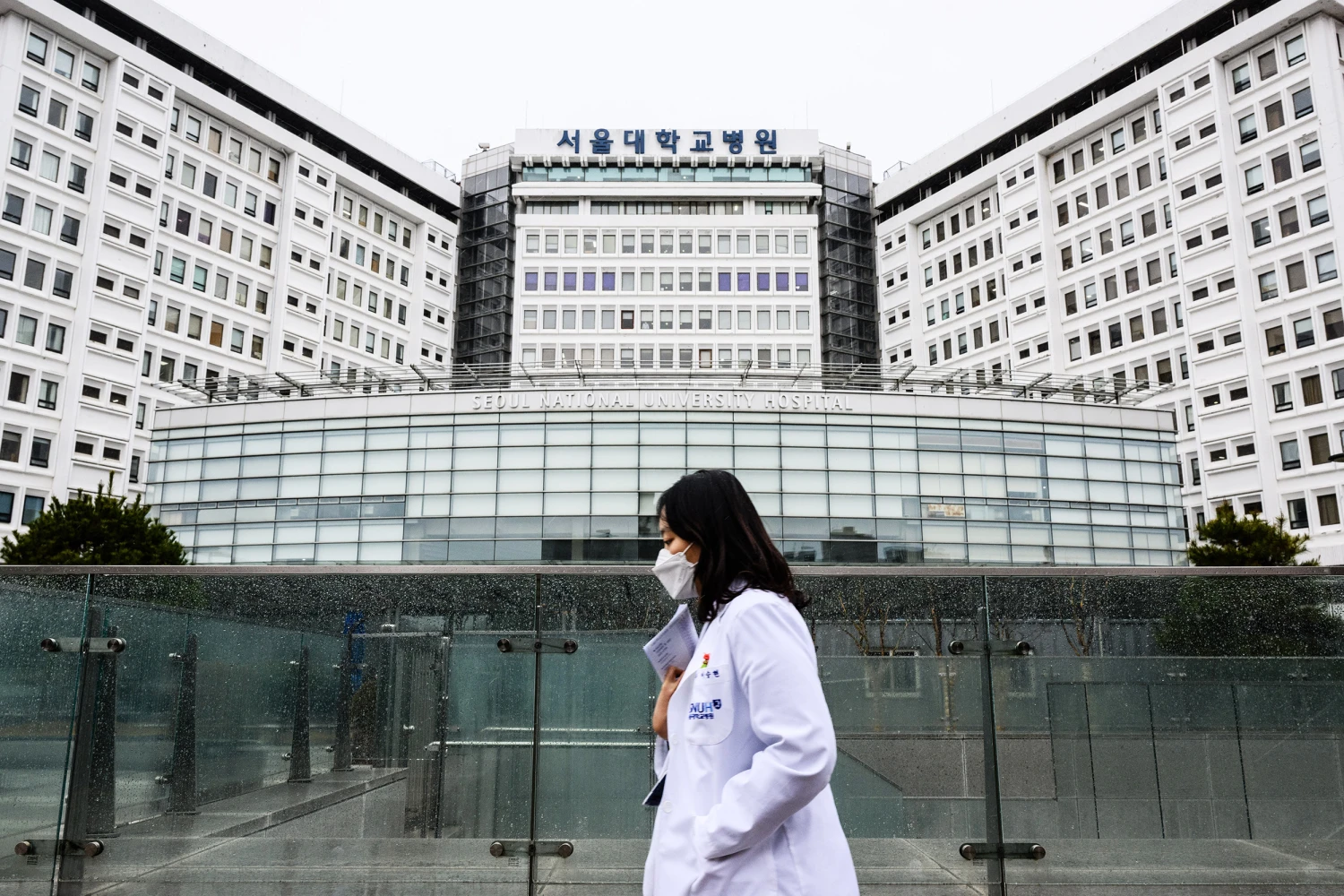
South Korea treated more than two million foreign patients in 2025, up 71.9%. Travellers now book health checks and consultations alongside hotels and flights, sometimes escaping delay, cost or discrimination at home. (Korea.net)
Patients move. Their records, samples, complications and follow-up needs move with them. Infections move too.
Yet, Washington is retreating from the systems managing that mobility. The United States left WHO in January. Its 2027 budget proposes eliminating PAHO funding, while recent reporting points to a wider withdrawal. (AP News)
Founded in 1902, PAHO supports surveillance, emergency coordination, laboratories and access to vaccines and medicines. It is tracking measles and dengue across the Americas. (Paho)
Removing the bridge does not remove interdependence. It makes the crossing less safe. The shortcut says sovereignty. The pathway asks who shares the alert when disease crosses a border, and who ensures that a patient diagnosed abroad is not abandoned at home.
Covered, Until Administration Happens
America’s domestic health reforms follow the same logic: declare efficiency, transfer friction, count the savings.
A temporary Medicare programme stabilising standalone Part D premiums is ending. It costs $3.6 billion in 2026 and affects roughly 25 million beneficiaries. Officials call it an unnecessary insurer payment. Beneficiaries may call it another increase. (AP News)
Enhanced ACA tax credits have also expired. Marketplace enrolment fell from 22.1 million to 19.2 million in a year. The administration cites improper enrolments. Analysts point to rising premiums and lost affordability. (ASPE)
Then come Medicaid work requirements. From January 2027, many adults must document at least 80 hours a month of work, education, training or community service to obtain or retain coverage. (CMS)
Each measure arrives with a respectable noun: discipline, integrity, independence, sustainability. Then come the verbs: verify, document, renew, appeal, lose.
Arkansas already ran the experiment. More than 18,000 people lost coverage, with no significant employment gain. Many already worked or qualified for exemptions. Reporting barriers did much of the policy’s work. (kff.org)
That is not activation policy. It is cost control through paperwork.
A missed form does not cure diabetes. A cancelled policy does not stop a tumour growing. Costs removed from a government spreadsheet migrate, to families, hospitals and patients arriving later and sicker.
Personalised medicine cannot flourish in a system that is molecularly precise and administratively indiscriminate.
Smarter Science, Harder Questions
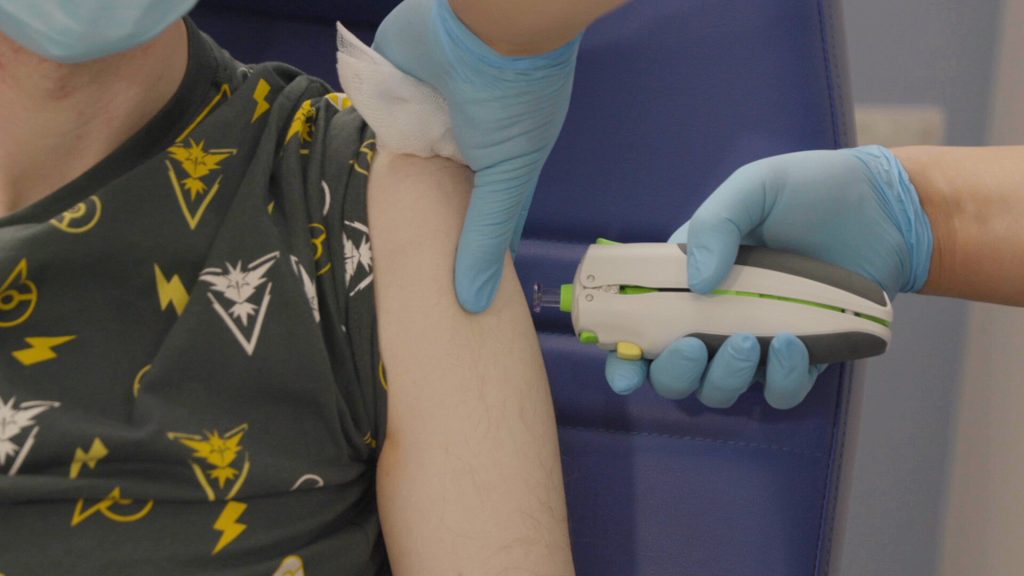
Cambridge researchers have tested an AI-designed vaccine intended to protect against known sarbecoviruses and related viruses that have not yet emerged. Genetic sequence data were used to design a “super-antigen” around features shared across the virus family.
The first study involved 39 healthy volunteers. It found no significant safety concerns but only modest immune responses. A larger trial must test durability and breadth. (Medical News Today)
That is the AI revolution worth debating: not a chatbot shaving seconds off an email, but a tool that could allow pandemic preparedness to begin before the pandemic.
But the achievement creates a governance problem.
From 2 August, the EU AI Office can demand information, evaluate advanced models, require risk mitigation and impose fines or market restrictions. (AI Act Service Desk)
Its challenge cannot stop at deepfakes. When an algorithm helps design something entering the body, regulators must ask: What trained it? Who was missing? Can it be reproduced? Who is accountable?
Predictive science requires predictive regulation.
It also requires personalisation. Age, genetics, previous infection, immune status and vaccination history will shape response. The future is broad biological design combined with sharper decisions about who needs which dose, platform or booster.
AI can accelerate the route. It cannot abolish validation, diversity, monitoring and trust.
Find Early. Act Wisely. Spend Better
Lung cancer screening offers a better model of a real pathway.
Air pollution leaves fingerprints throughout the body. Fine particles damage the lungs, enter the bloodstream and increase the risks of cardiovascular disease, neurological harm and cancer. Low-dose CT can reveal some of that burden before symptoms appear. (World Health Organization)
But a scan may find early cancer alongside calcification, emphysema and other abnormalities. At scale, incidental findings can overwhelm services and trigger testing cascades without improving health.
The Nottingham approach is unglamorous, and useful. Classify findings, standardise pathways, escalate actionable cases to a Screening Review Meeting, and tell clinicians and patients what to do. (PubMed)
More data is not automatically more medicine.
A Catalonian analysis put diagnosis, treatment and follow-up at €10,186 for stage I and €122,343 for stage IV. Five years of screening cost €1,349 per participant, but earlier diagnosis saved €952, offsetting more than 70 percent. (SpringerLink)
That is a pathway: identify risk, detect early, interpret proportionately, act clearly and count the costs avoided as well as the scans purchased.
Cutting screening saves money this year. Preventing advanced cancer saves lives and money over time. One is a budget event. The other is health policy.
When Significance is not Significant
Drug development supplies another warning.
GSK has stopped developing camlipixant for refractory chronic cough after acquiring Bellus Health for $2 billion in 2023. One Phase III trial met its primary endpoint at the higher dose. A second failed to reproduce it. The lower dose missed in both, and key patient-reported outcomes fell short. (gsk.com)
The molecule did something. It did not do enough.
Chronic cough may arise through different neural, inflammatory and sensory pathways. A P2X3 inhibitor could help one subgroup while appearing mediocre overall.
Personalised medicine must enter before Phase III, not after failure. Better phenotyping, biomarkers and response signatures could prevent billions being spent to discover that an average effect concealed different diseases.
Statistical significance is not a patient pathway. A benefit must be reproducible, meaningful and felt.
HIV research offers a counterpoint. VH-499, an oral capsid inhibitor, reduced viral load after two doses in 23 people; the highest dose achieved a 2.2 log10 decline and may support longer-acting regimens. (Wiley Online Library)
But one participant at the lowest dose developed an emergent resistance mutation. Promise and warning arrived together. (catie.ca)
The next breakthrough must suppress HIV, withstand real life, adapt to resistance and comorbidities, and remain affordable beyond wealthy markets.
Reform, or Managed Retreat?
UNAIDS is being reshaped under UN80. Staffing and country presence are shrinking as the UN considers integrating its mission into the wider development system. (UNAIDS)
Efficiency matters. Duplication should be challenged. Mandates should be clearer.
But “streamlining” is one of politics’ favourite euphemisms. It can mean sharper delivery. It can also mean managing decline without admitting it.
AIDS has not ended. UNAIDS coordinates governments, communities and agencies; gathers data; sustains pressure; and keeps marginalised populations visible. The question is not whether every institution must survive unchanged. It is whether reform preserves the authority, independence and convening power required to deliver.
The same test applies to PAHO, Medicare, Medicaid, AI regulation, medicine supply, cancer screening and drug development.
Does the change build a better route from evidence to patient? Or does it merely remove a cost, a rule, an institution or an inconvenient population from the map?
Health policy is full of tools that look decisive: tariffs, mergers, work requirements, algorithms, coverage cuts and statistical thresholds. Used well, they support a pathway. Used as substitutes for one, they create detours, and patients pay the toll.
The map is not the territory. The announcement is not implementation. The saving is not value. The signal is not the outcome.
Healthcare is not delivered by headlines. That is the patient-access test every reform should have to pass for patients everywhere.
And the shortcut is not the pathway.
The PAHO sentence remains deliberately qualified: the proposed elimination of US funding is verifiable, while the broader withdrawal is attributed to the reporting you supplied rather than presented as a completed legal act.
The August Watch
August is for holidays. September is for new ideas.
While you enjoy a well-deserved break, whether by the sea or in the mountains, you can already plan what’s next. Registrations are now open for our events in New York (September 24), Stockholm (September 12) and Dublin (October 2).
Visit our Events page to explore what’s coming up and reserve your place.
Follow the last-mile conversation!
IPM Alliance tracks the decisions, bottlenecks and implementation gaps shaping personalised medicine access. Follow us for briefings, events, policy signals and practical insights from across regions and disease areas.
We want to hear from you
When a patient becomes eligible for personalised care, where does the system most often lose them: identification, testing, referral, reimbursement, delivery capacity or equity?
Know someone who should be reading this?
IPM Brief is built for people working where science, policy and patient access collide. If one colleague would find this useful, forward it to them and help bring them into the conversation.
International Alliance for Personalised Medicine
Avenue de l’Armée / Legerlaan 10, 1041 Brussels, Belgium
This email was sent to jayasinghtec29@gmail.com. You are receiving this email because you are part of the IPM Alliance network or have engaged with our activities, briefings, events, or policy work.
