

Happy Tuesday.
Spain beat Argentina 1-0 after extra time on Sunday to win the World Cup. Ferran Torres scored, the referee eventually blew the whistle, and the argument was over. Football has that luxury: one number on the scoreboard can settle the matter.
Health policy is not so lucky.
A testosterone result can become military doctrine. A pathogen sequence can become geopolitical currency. A cholesterol target can create a new pharmaceutical market. A liver diagnosis can transform an obesity drug into a specialist treatment. A payment from a device manufacturer can sit uncomfortably beside a clinical decision. A medicine can be declared available over the counter while remaining unavailable on the shelf.
We are measuring more than ever. But the test does not make the decision.
Power, money, ideology, manufacturing, insurance and institutional capacity decide what the result means.
This week, the test is becoming the politics.
- Africa Wants a Contract. Europe Wants Flexibility. Pandemic negotiations have reached the raw political question left behind by COVID-19: who shares the pathogen, and who receives the vaccines, diagnostics and treatments created from it?
- The Pentagon Put Masculinity on a Blood Test. The US military will screen personnel aged 30 and over for testosterone deficiency, despite specialists questioning the evidence for universal testing.
- The Needle Became a Pill. FDA approved the first oral PCSK9 inhibitor. A powerful cholesterol target has moved from injection to tablet, but the patients with inherited risk still have to be found.
- India Got the Vaccine. Now Find the Doses. India approved its first dengue vaccine. Manufacturing, procurement, surveillance and targeting will determine whether approval changes the epidemic.
- The Grey Market Forced a Cheaper Ozempic. Novo Nordisk is launching a lower-cost authorised semaglutide copy in South Africa after high prices helped drive demand toward unregulated products.
- Lung Cancer Screening: Who Gets Through the Door? France and Singapore are testing different ways to define eligibility for low-dose CT screening. Broader criteria may detect more cancers, but every threshold also decides which high-risk patients remain invisible until symptoms arrive.
- Insurance Cuts Reached the Operating Room. Intuitive Surgical warned that changes to US health coverage may delay elective procedures. Insurance politics is already shaping when patients reach surgery.
- The Payment Arrived. The Device Followed. A study found that larger industry payments were associated with greater use of corresponding medical devices. It does not prove causation, but it demands scrutiny.
- What Does the NHS Get in Return? Britain’s trade agreement with Switzerland locks in long-term pharmaceutical data and market protection. Industry gets certainty. The unresolved question is whether the NHS gets earlier medicines, more trials, stronger manufacturing or simply a longer obligation to preserve today’s rules.
- Avoiding the Probe Is Not the Finish Line. France and other European governments are negotiating with Washington to avoid investigations into pharmaceutical pricing. Escaping a trade dispute may protect governments, but it does not guarantee earlier launches, faster reimbursement or better patient access.
- Over the Counter. Not Always on the Shelf. Only 61.4% of surveyed US pharmacies offered same-day naloxone without a prescription. Regulatory status changed. Practical access did not change equally.
| This is not another health news digest. It’s a twice-weekly readout of where evidence meets power and where power must turn into action. |
Africa Wants a Contract. Europe Wants Flexibility.
The latest negotiations on the WHO Pandemic Agreement ended with two competing models for pathogen access and benefit-sharing. The Africa Plus Group backed a federated system built around national and regional nodes, end-to-end traceability and binding benefit-sharing commitments when biological materials or pathogen sequence information are used. The European Union and other developed countries supported a hybrid model combining mandatory and voluntary mechanisms, including routes outside the central WHO system. The annex remains unfinished, and substantial gaps will follow negotiators into the next round. (Health Policy Watch)
This is the argument COVID-19 never settled. Countries are being asked to share samples and genomic information rapidly, while the medicines created from those materials may arrive late, arrive in insufficient quantities or never arrive at all. Africa is no longer willing to treat biological sovereignty as a charitable contribution to somebody else’s product pipeline. Precision medicine and pandemic science both depend on data. The political bargain must decide whether those who provide the data become partners in the benefit, or merely suppliers of raw biological material.
The Pentagon Put Masculinity on a Blood Test
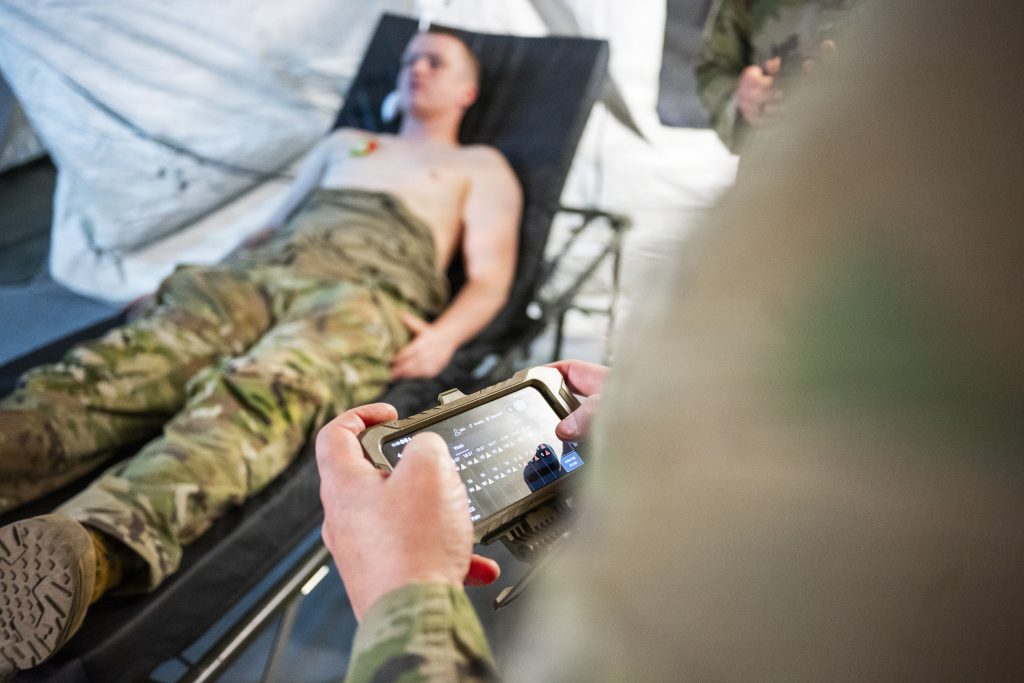
The Pentagon has ordered annual testosterone-deficiency screening for active-duty and reserve personnel aged 30 and over, presenting the policy as part of military readiness and performance. Five of six specialists consulted by Reuters questioned the evidence for universal screening, warning that temporary changes linked to sleep, stress, weight or intense training could be medicalised unnecessarily. Major clinical guidelines generally recommend treatment only when consistently low testosterone is accompanied by relevant symptoms, while testosterone therapy can carry risks including infertility. (Reuters)
A blood test is being recruited into a political story about strength, masculinity and military performance. That is not automatically personalised medicine. Testing everyone without a validated intervention pathway can produce overdiagnosis, overtreatment and a new population of healthy people recast as patients. Precision requires context: symptoms, repeat testing, clinical history and evidence that acting on the result improves outcomes. Without those safeguards, the biomarker becomes theatre in a laboratory coat.
The Needle Became a Pill
FDA has approved Lipfendra, or enlicitide, as the first oral medicine that inhibits PCSK9. The once-daily tablet is authorised for adults with high cholesterol, including heterozygous familial hypercholesterolaemia. Across trials involving 3,207 adults, treatment lowered LDL cholesterol by an average of 56% in patients at high cardiovascular risk and 59% in those with the inherited condition. Until now, PCSK9-targeting medicines had been delivered by injection. (U.S. Food and Drug Administration)
This is a genuine change in the shape of prevention. A tablet may remove some of the cost, hesitation and clinical friction associated with injections. But the pill cannot diagnose the family. Familial hypercholesterolaemia can pass silently across generations while cardiovascular risk accumulates. The personalised-medicine opportunity is not simply to prescribe an easier medicine. It is to identify inherited risk earlier, test relatives and intervene before the first heart attack becomes the screening programme.
India Got the Vaccine. Now Find the Doses.
India has approved Takeda’s QDENGA as the country’s first dengue vaccine. The live tetravalent vaccine targets all four dengue serotypes and does not require evidence of previous infection or pre-vaccination testing. Reported dengue cases in India have increased elevenfold over two decades, while the country carries close to one-third of the global burden. Takeda’s partnership with Biological E is intended to establish capacity for 50 million doses annually in India, contributing to a wider target of 100 million doses per year by the end of the decade. (Reuters)
Approval has opened the programme, not completed it. India must now decide where vaccination should begin, which age groups and communities face the greatest risk, how supply will be purchased and distributed, and how safety and effectiveness will be monitored across different epidemiological settings. Dengue is shaped by serotype, prior exposure, geography, climate and local transmission. A national licence needs a locally intelligent implementation strategy. Otherwise, the vaccine will exist on paper while mosquitoes continue setting the timetable.
The Grey Market Forced a Cheaper Ozempic
Novo Nordisk will launch Extensior, a lower-cost authorised version of its diabetes medicine Ozempic, in South Africa on 27 July. Extensior contains the same active ingredient, uses the same manufacturing process and is delivered through the same type of injection device. It is registered as South Africa’s only authorised semaglutide copy, although the final price has not yet been disclosed. High prices and intense demand for GLP-1 medicines have helped fuel an expanding market for compounded and unauthorised alternatives. (Reuters)
The grey market did not appear because patients suddenly lost respect for regulation. It grew because the authorised market failed to meet demand at a price many people could afford. When safe medicine is out of reach, patients do not stop needing treatment. They look elsewhere. Extensior is therefore more than a new product. It is an admission that access, safety and pricing are inseparable. Regulators can warn against unsafe substitutes, but warnings become hollow when the legitimate option remains financially impossible.
What Does the NHS Get in Return?
The concluded UK–Switzerland trade agreement would commit Britain to maintaining its existing 10-year regulatory data-protection period, including eight years of data exclusivity and ten years of market exclusivity, as well as up to five years of supplementary protection for medicines. The government says the agreement preserves current UK law and maintains the balance between rewarding pharmaceutical innovation and protecting NHS access to lower-cost generic medicines. But Parliament has already flagged the significance of the move, describing it as potentially the first UK free-trade agreement to lock pharmaceutical exclusivity arrangements into an international deal. (UK Government, Hansard, Hansard)
That is not neutral simply because the rules already exist today. Trade agreements are designed to outlast governments, budgets and political priorities. Locking in commercial certainty can narrow the room available to future ministers trying to rebalance exclusivity, biosimilar competition and affordability as technologies and NHS pressures change. Intellectual property has a legitimate role, but certainty for industry should come with public value. What did Britain secure in return: earlier launches, more trials, stronger manufacturing or faster access? The test is not whether the agreement reassures pharmaceutical companies. It is whether the NHS gets something beyond a longer promise to keep paying under the same rules.
Insurance Cuts Reached the Operating Room
Intuitive Surgical warned that changes to Affordable Care Act coverage and premiums could affect when patients seek care and proceed with elective treatment. US growth in procedures using its robotic systems slowed to 12%, while hospital operator HCA had also reported softer surgical demand and more uninsured patients after enhanced insurance subsidies expired. The relationship is not yet fully quantified, but investors reacted sharply, sending Intuitive’s shares down by roughly 13%. (Reuters)
Insurance policy has entered the operating room. A patient who delays surgery because coverage has disappeared does not become less ill. Disease progresses, choices narrow and intervention can become more complex. This matters for personalised medicine because timing is part of treatment selection. The right operation delivered late may no longer be the right operation. Washington can describe coverage reductions as fiscal policy. Hospitals will experience them as deferred diagnoses, cancelled procedures and patients returning sicker.
The Payment Arrived. The Device Followed.
A JAMA Network Open study linked $136.7 million in medical-device industry payments with 518,166 device-associated procedures in a representative sample of Medicare claims from 2015 to 2023. Across 12 device categories, greater payments were associated with higher use of the corresponding manufacturer’s device in 11 of 12 categories. The study was observational and cannot establish that payments caused the additional procedures. Training, technical support, existing procedural volume and manufacturer engagement may explain part of the association. (JAMA Network)
The caveat matters, but so does the pattern. Clinical choice is supposed to begin with patient need, comparative evidence and professional judgment. Financial relationships introduce another variable, one that patients rarely see. Advanced devices often require legitimate collaboration between clinicians and manufacturers. That collaboration must not become a blind spot. Personalised care cannot be credible if the system can identify the right intervention but cannot explain whether commercial incentives influenced which device was placed in the patient’s body.
Avoiding the Probe Is Not the Finish Line
France and other European governments are negotiating with Washington in an effort to avoid further US trade investigations into their pharmaceutical-pricing systems. The talks follow a formal Section 301 investigation into Germany’s plan to reduce medicine spending and wider American pressure on European countries to pay more for innovative drugs. Washington argues that European price controls shift too much of the cost of global pharmaceutical research onto US patients. Europe, meanwhile, faces its own warning signs: delayed medicine launches, weakening investment and growing concern about its ability to compete for research and manufacturing. (POLITICO Pro, Reuters, Reuters)
But avoiding a trade probe is not a medicines strategy. Higher prices do not automatically produce innovation, just as lower prices are not automatically fair or sustainable. Any new settlement should demand something measurable in return: earlier launches, faster reimbursement, wider biomarker testing, stronger trial access and investment in European science and manufacturing. The danger is that governments negotiate separately, pay more and call it diplomacy while patients remain in the same queue. Washington may eventually say yes. For the patient still waiting, that is not the finish line.
Lung Cancer Screening: Who Gets Through the Door?
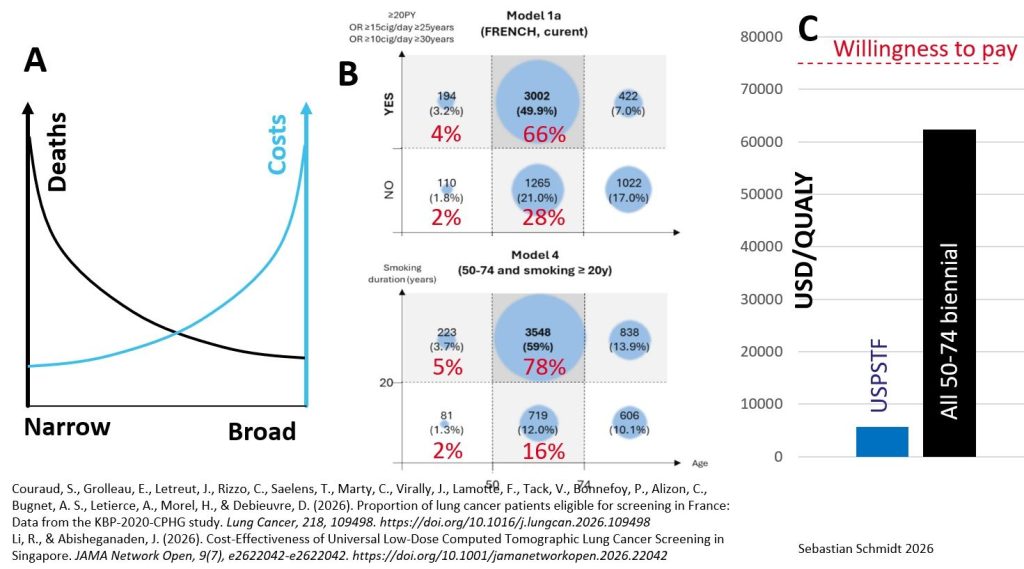
Low-dose CT screening can reduce lung-cancer mortality, but its impact depends on how countries define eligibility. A French analysis found that only about 50% of patients diagnosed with lung cancer would have met the country’s pilot criteria, with low smoking exposure and age over 74 among the main reasons for exclusion. A broader model based on 20 years of smoking history identified more cases, but the interpretation changes once age-based exclusions are separated from risk-based exclusions. Singapore faces a different problem: nearly half of lung cancers occur in people who have never smoked, and a recent economic model found that smoking-based screening was highly cost-effective but left roughly 37% of lung cancers unaddressed. Broader biennial screening could be cost-effective at a higher willingness-to-pay threshold, although it would also increase false positives and system costs. Lung Cancer, JAMA Network Open, French public-service screening programme.
There is no universal threshold because there is no universal lung-cancer population. Smoking history, age, ethnicity, air pollution, inherited risk and competing mortality vary between countries and patients. Broader eligibility may save more lives, but it also demands more scanners, radiologists, follow-up capacity and money. Narrow rules may be efficient while quietly excluding detectable cancers. The answer is not to screen everyone indiscriminately. It is to build criteria around local epidemiology and update them as risk models improve. The wrong threshold does not merely reduce efficiency. It decides whose cancer is allowed through the door.
Over the Counter. Not Always on the Shelf.
A national mystery-shopper study contacted 1,108 US pharmacies after naloxone became available without a prescription. Only 61.4% reported same-day non-prescription availability, and the average price was $52.07. Where naloxone was available, 58.1% of pharmacies kept it at the pharmacy counter, requiring interaction with staff rather than allowing direct self-service. Independent pharmacies had substantially lower availability, while pharmacies in areas with higher proportions of White residents were more likely to have it available. (JAMA Network)
“Over the counter” sounds like access. In practice, it can still mean unavailable today, hidden behind the counter, too expensive or dependent on whether a customer feels able to ask. That matters for a medicine used in emergencies where minutes decide survival. Regulation changed the legal category. It did not guarantee stocking, affordability, visibility or equity. A life-saving intervention is only effective when it is present at the time and place of risk.
The Rest-of-July Watch
| 20–23 July, Amsterdam: |
| EMA’s CHMP meets on human medicines. Watch for which products move from evidence toward approval, and which will later face the tougher fight over launch, pricing and availability. (EMA) |
| 21–24 July, Amsterdam and online: |
| EMA’s Paediatric Committee meets. The question is whether children get evidence early, or remain an afterthought in adult-led medicine. (EMA) |
| 22 July, Americas and online: |
| PAHO looks at neonatal sepsis and antimicrobial resistance. Newborns need diagnostics, antibiotics and care before infection becomes irreversible. (PAHO) |
| 23–24 July, Silver Spring and online: |
| FDA’s compounding advisers review controversial peptides, where wellness culture, grey-market medicine and evidence standards meet in public. (FDA) |
| 29–30 July, FDA online: |
| FDA cell and gene therapy advisers review deramiocel for Duchenne muscular dystrophy cardiomyopathy and vusolimogene oderparepvec with nivolumab for advanced melanoma. Two tests of how regulators handle high-need biology with complex evidence. (FDA) |
Follow the last-mile conversation!
IPM Alliance tracks the decisions, bottlenecks and implementation gaps shaping personalised medicine access. Follow us for briefings, events, policy signals and practical insights from across regions and disease areas.
We want to hear from you
When a patient becomes eligible for personalised care, where does the system most often lose them: identification, testing, referral, reimbursement, delivery capacity or equity?
Know someone who should be reading this?
IPM Brief is built for people working where science, policy and patient access collide. If one colleague would find this useful, forward it to them and help bring them into the conversation.

International Alliance for Personalised Medicine
Avenue de l’Armée / Legerlaan 10, 1041 Brussels, Belgium
This email was sent to jayasinghtec29@gmail.com. You are receiving this email because you are part of the IPM Alliance network or have engaged with our activities, briefings, events, or policy work.
