
IPM Take
Europe has spent years putting automated external defibrillators on walls.
The harder question is whether one is actually reachable when somebody collapses.
New modelling from the Paris region suggests that the answer depends less on the absolute number of AEDs than on where they are, how quickly they can move and how tightly they are integrated with emergency dispatch.
Researchers found that a hybrid model combining fixed AEDs with drone delivery could cut estimated access time by an average of 3.76 minutes. More than 95% of out-of-hospital cardiac arrest cases could theoretically receive an AED within five minutes, compared with only 30% to 40% when relying on road retrieval from existing fixed locations.
That is an important systems signal.
But it is not yet evidence that drones improve survival.
No drones were deployed in the study. The analysis used computer simulation, straight-line flight distances and historical cardiac-arrest data. Weather, airspace restrictions, dispatch delays, technical failure and the time required for a bystander to collect and use the AED could all change the real-world result.
The policy opportunity is therefore not “buy drones.”
It is to rethink AED networks as dynamic emergency infrastructure.
That means integrating geospatial planning, emergency dispatch, public CPR training, fixed devices, drones and ambulance response into one system rather than treating each as a separate intervention.
Executive Summary
Researchers presenting at the 2026 European Emergency Medicine Congress modelled AED access across seven departments of Île-de-France, excluding central Paris.
They compared three approaches:
- adding more fixed AEDs;
- delivering AEDs by drone;
- combining fixed devices and drone delivery.
Current AED access was highly uneven, particularly in rural areas and around the outskirts of Paris.
Expanding only the fixed network would have required an additional 1,712 AEDs on top of 1,893 existing devices.
The hybrid model produced a different result.
Using 200 proposed drone bases together with 871 fixed AED locations, the model estimated coverage of 99.4% of 28,349 recorded out-of-hospital cardiac arrests. Average estimated AED access time fell by 3.76 minutes, and more than 95% of cases could receive an AED within five minutes.
The proposed service radius also increased from around 500 metres for a fixed AED to approximately 3,900 metres when drones were incorporated.
The findings support further testing of drone-supported emergency systems, particularly where distance, congestion or sparse infrastructure delay defibrillation.
They do not establish improved survival, cost-effectiveness or readiness for routine implementation.
Why it matters
- HTA bodies: Drone delivery illustrates a growing category of healthcare interventions in which value depends on the whole service model rather than the device alone. Assessment would need to include deployment infrastructure, dispatch integration, bystander use, maintenance, aviation compliance and clinical outcomes, not simply drone speed.
- Payers: The comparison between installing hundreds of additional fixed AEDs and operating strategically placed drone bases creates a health-economic question. The relevant endpoint is not the cost of a drone versus the cost of a defibrillator, but the cost required to deliver early defibrillation reliably across a population.
- Industry / innovation partners: The opportunity extends beyond drone hardware. Dispatch software, geospatial optimisation, AED packaging, automated flight systems, weather monitoring, communications infrastructure and emergency-service integration could all become parts of a future drone-enabled cardiac-arrest pathway.
A defibrillator can be clinically effective and still be useless.
It may be locked inside a building.
It may be several kilometres away.
It may be on the wrong side of traffic.
Or nobody at the scene may know where it is.
That is the uncomfortable problem behind public-access defibrillation.
For out-of-hospital cardiac arrest, the question is not whether a region owns enough AEDs.
It is whether one can reach the patient quickly enough to matter.
The map matters as much as the number
Researchers led by emergency physician Hillary Minka examined this problem across seven departments surrounding Paris.
Rather than asking simply how many AEDs were available, they divided the region into small census areas and modelled how long it would take a device to reach each area.
The existing network revealed substantial geographic inequality.
Rural communities and peripheral areas around Paris had much poorer access than better-served locations.
One potential response would be straightforward: install more devices.
The researchers estimated that bringing coverage up through fixed AEDs alone would require adding 1,712 devices to an existing network of 1,893.
The alternative was to let some of the devices move.
A hybrid network changes the geography
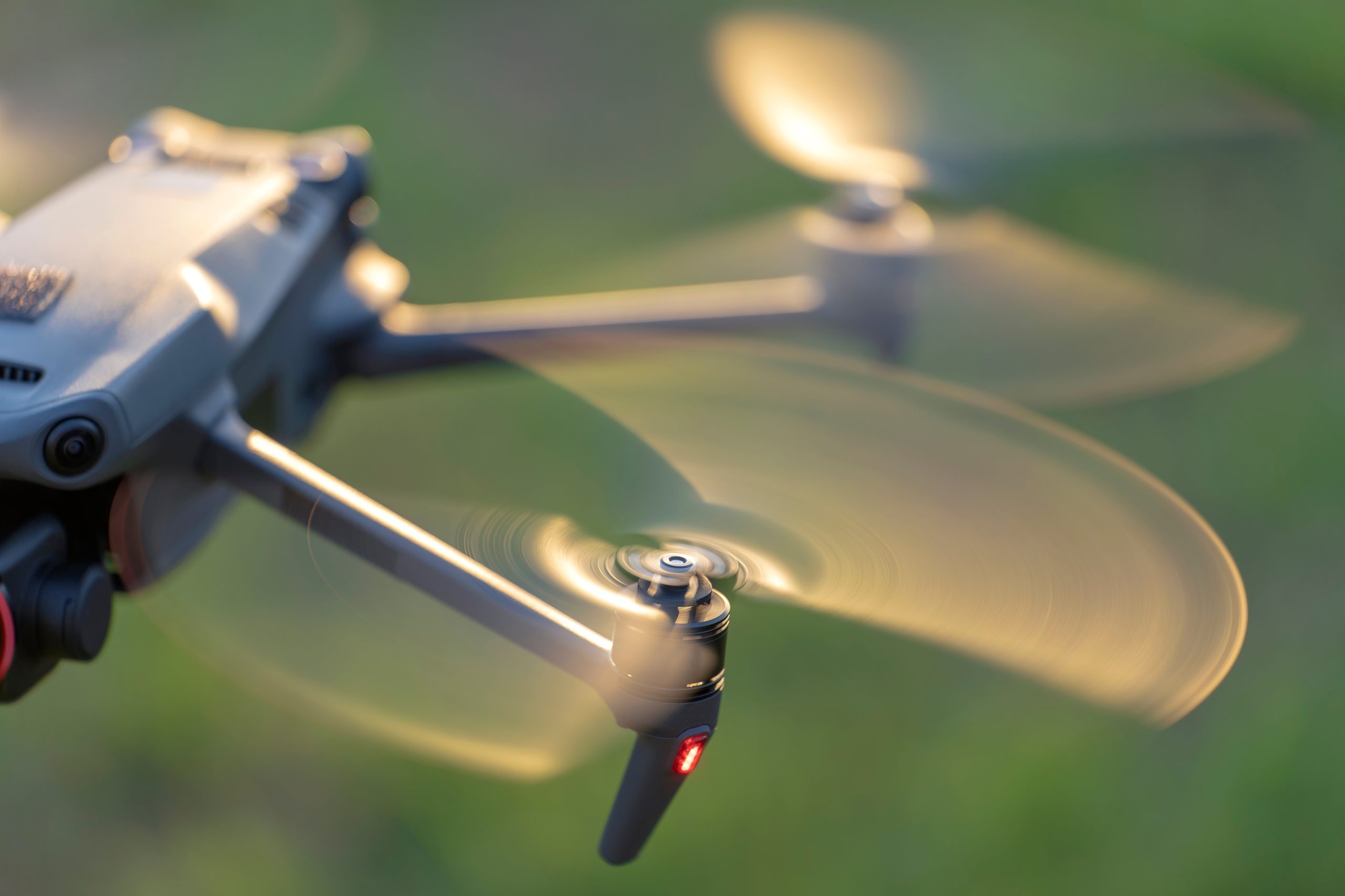
Drone delivery fundamentally changes the catchment area of an AED.
A fixed device depends on somebody being close enough to retrieve it and bring it back.
A drone can move directly toward the emergency.
In the researchers’ model, combining fixed AED sites with strategically placed drone bases reduced average access time by 3.76 minutes across the region.
The proportion of cardiac arrests theoretically reachable by an AED within five minutes increased to more than 95%.
With 200 drone bases and 871 fixed AED sites, estimated coverage reached 99.4% of the cardiac arrests included in the analysis.
The implication is not that drones should replace public AEDs.
It is that a mixed network may allocate emergency resources more efficiently than simply putting more devices on walls.
But the model skips the hardest parts
The headline figures need restraint.
This was a simulation.
No drone took off.
No patient received a drone-delivered AED.
No survival benefit was measured.
The model estimated flight time using straight-line distance. Real-world emergency aviation is more complicated.
Weather can ground a drone.
Airspace can close.
Buildings and other obstacles affect operations.
Aircraft must operate within aviation rules.
Dispatch software has to recognise an eligible cardiac arrest, identify an appropriate drone and launch it quickly.
The drone then needs to reach the right location, release the AED safely and leave a bystander able to retrieve it.
Only then can defibrillation begin.
A three-minute theoretical transport advantage can disappear surprisingly quickly if any part of that chain fails.
Europe already has evidence that drones can fly the mission
The Paris study does not begin from zero.
Real-world trials in Sweden have shown that AED-equipped drones can be incorporated into emergency medical dispatch.
In one prospective Swedish study, drones successfully delivered AEDs in 11 of 12 real-life suspected cardiac-arrest alerts. When the drone arrived before the ambulance, it provided a median advantage of just under two minutes.
Later studies have also demonstrated that the size of that advantage depends heavily on geography and the existing ambulance system.
A Danish feasibility study provides a useful warning.
Drone delivery was technically successful when dispatched, but the ambulance service was already sufficiently fast that the drone did not produce a consistent time advantage. Weather, technical problems and airspace restrictions also prevented deployment in a substantial proportion of potential cases.
The policy lesson is clear.
Drone AEDs are not automatically useful because drones are fast.
They are useful only where the emergency system creates a genuine time gap for them to fill.
Rural and peripheral areas may have the strongest case
That may make rural, remote and geographically fragmented regions particularly relevant.
Simulation and feasibility studies from Canada, Germany, Austria and Scandinavia have repeatedly suggested that drones can produce larger time advantages where road journeys are long, terrain is difficult or emergency resources are widely dispersed.
The new Paris modelling reaches a similar conclusion from a different setting.
The largest gains were found in peripheral and poorly served areas, with some modelled time savings exceeding ten minutes.
That turns drone delivery into an equity issue.
A person experiencing cardiac arrest in a dense city centre may already be surrounded by AEDs, emergency responders and short ambulance routes.
A person living in a rural community may not be.
Technology could potentially narrow that geographic gap.
But only if the infrastructure is designed around where the gap actually exists.
Regulation becomes part of the emergency pathway
Routine drone delivery also moves emergency medicine into aviation policy.
Many medically useful flights would need to operate beyond the visual line of sight of a pilot.
Europe already has a regulatory framework for higher-risk unmanned aircraft operations and U-space services, designed to coordinate increasing numbers of drones safely within European airspace.
For emergency medical deployment, that means clinical implementation cannot be separated from aviation approval.
Emergency services would need protocols for flight authorisation, airspace restrictions, weather thresholds, maintenance, technical redundancy and communication with manned aviation.
These requirements are not administrative details.
They determine whether the drone is available at the moment somebody collapses.
The bystander remains indispensable
There is another piece of infrastructure that cannot be automated.
The person standing next to the patient.
A drone can transport an AED.
It cannot recognise cardiac arrest, start chest compressions or attach the defibrillator pads once it arrives.
Dispatchers therefore remain critical.
A successful drone pathway would need to identify suspected cardiac arrest rapidly, instruct a bystander to begin CPR, explain that an AED is arriving, direct the person to retrieve it and guide its use without interrupting chest compressions unnecessarily.
Previous experimental work has shown that the human-drone interaction matters.
Simply landing an AED nearby does not guarantee that somebody will use it correctly or quickly.
Public CPR education and dispatcher-assisted resuscitation therefore remain as important as the aircraft itself.
The procurement question is bigger than drones versus AEDs
The Paris simulation also creates a potentially important procurement question.
Public authorities traditionally expand defibrillation coverage by purchasing more fixed devices.
But procurement based purely on device numbers may produce impressive inventories without solving access.
A future purchasing model could instead start with an outcome:
How much of the population can receive an AED within a clinically meaningful time?
Geospatial models could then determine the appropriate mix of fixed AEDs, mobile responders, drones and ambulance resources.
That would move procurement from counting equipment toward purchasing coverage and response capability.
It would also make evaluation harder.
Authorities would need evidence on uptime, delivery success, cost per mission, bystander utilisation, time to first shock and eventually survival with good neurological outcome.
The next trial needs patients, not maps
The Paris analysis provides a strong argument for prospective testing.
It does not provide the final answer.
A real-world programme would need to demonstrate that drones can operate reliably across seasons and airspace conditions, integrate with emergency dispatch and actually shorten time to defibrillation.
Most importantly, it would need to show whether faster AED arrival results in greater device use and better patient outcomes.
That distinction matters.
Emergency medicine does not need drones that reach coordinates quickly.
It needs systems that get defibrillation to patients quickly.
If drone technology can do that reliably, its greatest value may not be technological novelty at all.
It may be the ability to make geography less decisive in determining who receives early emergency cardiovascular care.
