
IPM Take
Cardiovascular prevention has traditionally treated risk as a proxy for disease. Age, smoking, cholesterol, blood pressure and other factors are combined into algorithms such as SCORE2, and the resulting probability helps determine who receives more intensive preventive intervention. REACT challenges that logic by showing that the biological disease those algorithms are trying to predict may already be present in people whom conventional assessment does not classify as high risk.
That does not mean Europe should start scanning every healthy adult for plaque. REACT measured prevalence, not whether imaging-guided treatment improves outcomes, and widespread CT screening would introduce cost, radiation exposure, downstream testing and the risk of turning common subclinical abnormalities into diagnoses without proven benefit.
The more interesting policy question is whether precision prevention could eventually sit between those two extremes. Instead of screening everybody or relying exclusively on population risk equations, health systems could identify selected people in whom direct assessment of vascular disease would materially change prevention.
That is the trial REACT now needs to win.
Executive Summary
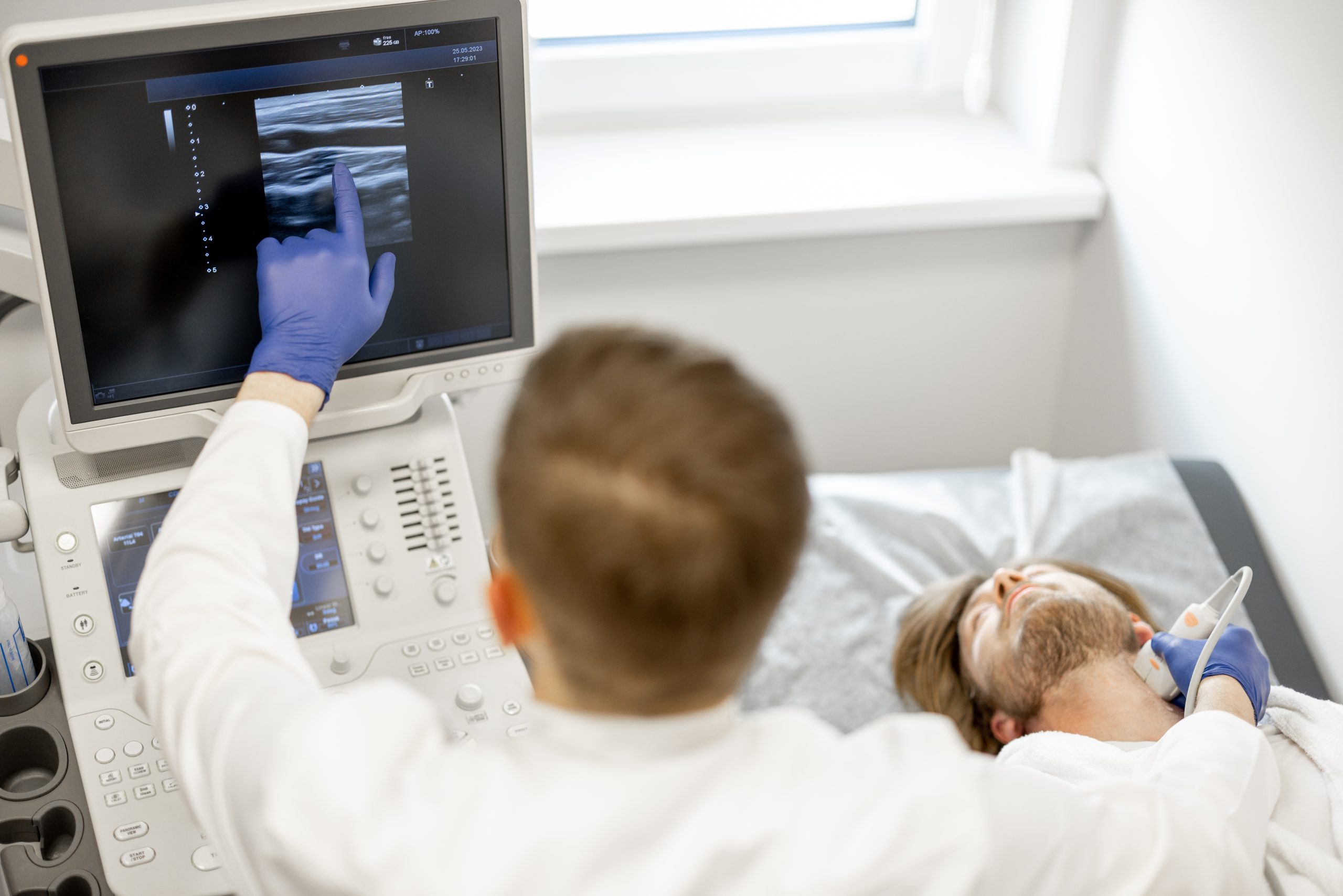
The REACT investigators studied 16,808 adults aged 18 to 70 years in Denmark and Spain who had no known atherosclerotic cardiovascular disease. Participants underwent three-dimensional ultrasound of the carotid and femoral arteries together with coronary CT angiography to measure atherosclerosis across several vascular territories. The mean age was 45 years and 51.4% of participants were women.
Silent atherosclerosis was identified in 57.1% of participants. Disease was already detectable in 8.7% of men and 6.7% of women aged 18 to 29, while prevalence rose to around 90% among those aged 60 to 70. Plaque burden became greater and more widely distributed with age, while men tended to enter the atherosclerotic trajectory approximately five to ten years earlier than women.
Importantly, conventional SCORE2 risk assessment classified only a small minority of participants with silent atherosclerosis as high cardiovascular risk, with the mismatch particularly evident among younger adults.
The findings support the biological premise of imaging-guided precision prevention, but they do not yet establish that detecting and treating silent plaque improves cardiovascular outcomes. A randomized second phase of the REACT initiative is planned to address that question.
Why it matters
- HTA bodies: If vascular imaging is proposed as a prevention tool, assessment cannot stop at diagnostic yield. The relevant question is whether identifying silent plaque changes treatment sufficiently to prevent cardiovascular events at an acceptable cost and without excessive downstream investigation.
- Payers: Imaging could identify patients whom conventional risk scores miss, but screening millions of asymptomatic adults would carry major budget consequences. The likely policy challenge will be determining which patients have enough uncertainty or residual risk to justify imaging rather than expanding testing indiscriminately.
- Industry / innovation partners: REACT strengthens the case for more precise cardiovascular phenotyping using low-cost vascular imaging, portable ultrasound and eventually AI-supported plaque quantification. The winning technology will not simply detect more disease, but identify disease in people for whom detection changes management.
Preventive cardiology usually begins with probability rather than pathology.
A patient enters a clinic without symptoms or diagnosed cardiovascular disease, and clinicians estimate future risk using variables such as age, sex, smoking status, blood pressure and cholesterol. In Europe, SCORE2 is one of the principal tools used to estimate the likelihood of cardiovascular events and guide preventive treatment.
That model is rational because imaging every artery in every healthy person would be impractical, expensive and potentially harmful. Yet it comes with an unavoidable limitation: a risk calculator estimates the chance that atherosclerosis will eventually cause a clinical event, while it does not directly establish how much atherosclerosis the individual already has.
REACT provides an unusually large picture of that gap.
Researchers enrolled 16,808 adults from Denmark and Spain without known atherosclerotic cardiovascular disease and imaged three major vascular territories. Three-dimensional ultrasound examined the carotid and femoral arteries, while coronary CT angiography assessed disease in the coronary circulation. Silent atherosclerosis was found in 57.1% of the population.
The age gradient was striking but not entirely surprising. Disease was detectable in around 1 in 13 participants aged 18 to 29 and in approximately 9 in 10 of those aged 60 to 70. What matters more for personalised prevention is that plaque did not simply appear at an arbitrary risk threshold. It accumulated progressively, spread into additional arterial territories and increased markedly in volume with age.
Men showed an earlier trajectory, while women had a later but particularly steep increase in midlife. Among younger participants, disease was more commonly confined to one vascular territory and was often peripheral rather than coronary, while multiterritorial disease became increasingly common with age. Isolated coronary atherosclerosis was relatively uncommon across age groups, reinforcing the idea that atherosclerosis is a systemic rather than exclusively coronary process.
When estimated risk and actual disease diverge
The politically important finding came when the investigators compared imaging with conventional cardiovascular risk assessment.
SCORE2 classified only a small minority of participants with silent atherosclerosis as high risk, with the discrepancy particularly pronounced in younger people.
That does not make SCORE2 a failed tool. Risk scores were designed to estimate future clinical events, not to act as plaque detectors, and the presence of a small amount of subclinical atherosclerosis does not necessarily mean that an individual should immediately receive intensive pharmacological treatment.
Yet the divergence exposes a structural weakness in prevention. Two people can receive similar risk estimates while carrying very different amounts of established vascular disease, and younger adults can accumulate plaque while remaining below treatment thresholds largely because age strongly influences short-term absolute cardiovascular risk.
This is where personalised medicine becomes more than another slogan.
Rather than asking only whether a person resembles a population that historically experienced a certain event rate, imaging could provide an additional layer of individual biological information: whether disease is present, where it is present and how extensive it has become.
The challenge is determining when that information is worth acquiring.
Finding more disease is not automatically better prevention
REACT should not become an argument for population-wide CT angiography.
Coronary CT involves radiation and contrast exposure, while large-scale imaging generates costs, incidental findings and downstream investigations. Detecting very early plaque can also create a new category of patients who are technically diseased but whose absolute short-term event risk remains low.
A screening programme therefore needs to demonstrate more than that imaging finds abnormalities.
It needs to show that detecting those abnormalities changes treatment and that the treatment change prevents events that would otherwise have occurred.
The REACT investigators acknowledge that distinction. They propose further prospective work, including a randomized trial examining whether imaging-guided management of early atherosclerosis can improve current preventive strategies. They have also highlighted handheld ultrasound as a potentially more scalable way of identifying early vascular disease if the clinical-benefit hypothesis is confirmed.
That next phase will be critical for policy because the central question is not whether silent atherosclerosis exists. REACT has demonstrated that convincingly.
The question is who should be looked for, how they should be found and what health systems should do differently once plaque is detected.
An effective precision-prevention model may eventually combine conventional risk factors, family history, biomarkers and targeted imaging rather than replacing one universal algorithm with one universal scan.
That would represent a more consequential shift than simply diagnosing cardiovascular disease earlier. It would change the unit of prevention from predicted population risk to the individual patient’s evolving biology.
For now, SCORE2 tells clinicians who is statistically likely to have an event.
REACT reminds us that some of the disease is already there.
