
IPM Take
Trust is not a slogan. It is part of the service specification.
Families cannot be lectured into using a pathway that has made them feel unwelcome. Moldova’s new initiative is important because it treats community mediators, clinic hours, language and respectful care as operational components of immunisation – not public-relations extras added after coverage falls.
Executive Summary
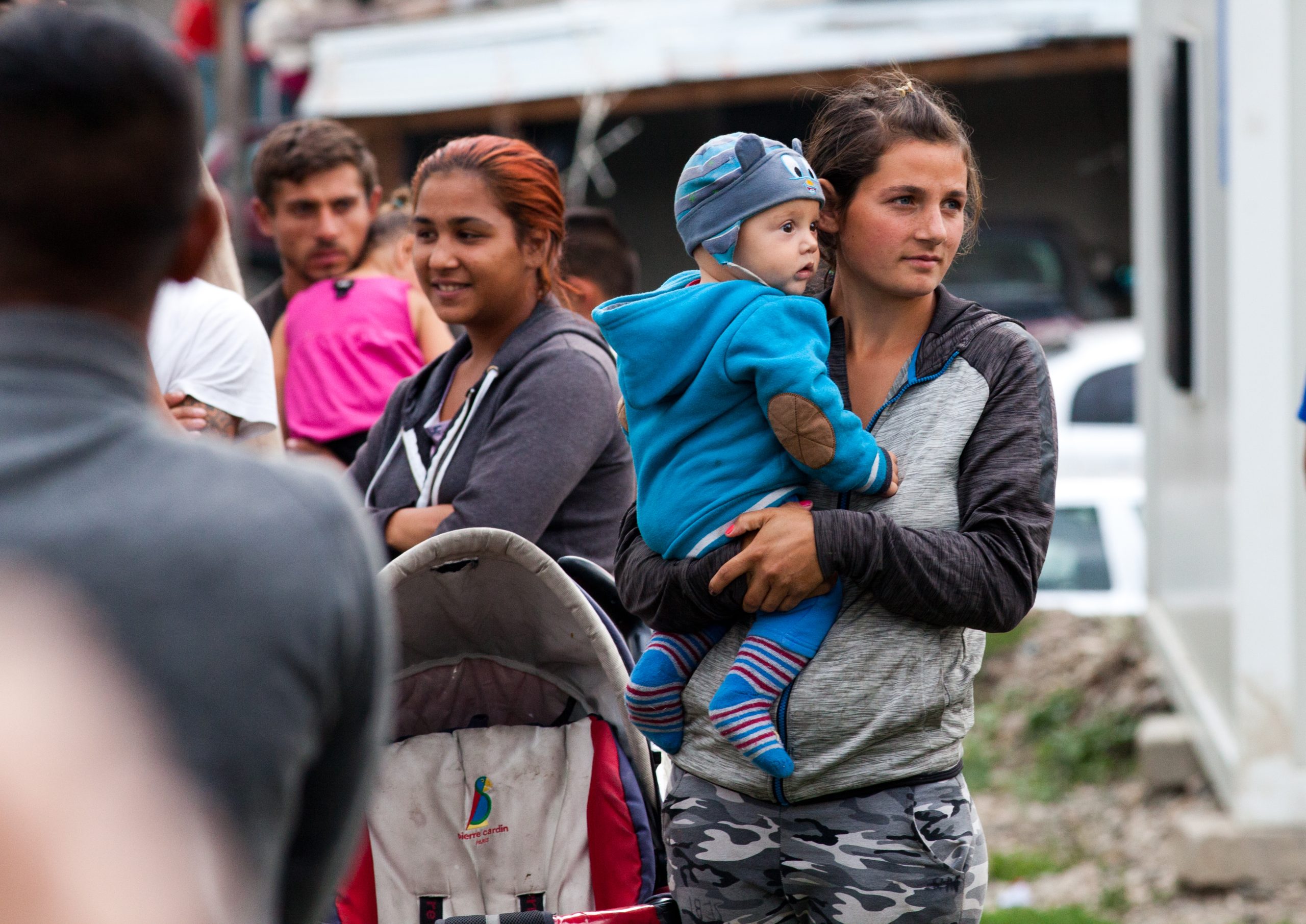
Moldova’s Ministry of Health, National Agency for Public Health, UNICEF and the Roma youth organisation TĂRNĂ ROM launched an initiative in Soroca and Otaci to strengthen vaccination trust and access for children in Roma communities. It will train health workers, social assistants, community mediators and Roma mother leaders; establish safe dialogue groups; adapt medical-centre hours; and integrate mediators into reminders and follow-up. UNICEF reported 2025 national coverage of 83.8% for DTP, 84.3% for polio and 79.2% for MMR, with around 4,000 children receiving no vaccine dose.
Why it matters
- Public authorities: Need to measure whether adapted services close coverage gaps, not merely how many information sessions are delivered.
- Clinicians: Need training and accountability for inclusive, non-discriminatory communication at every point of contact.
- Roma families and advocates: Need community-designed pathways, trusted mediators and a safe route to raise concerns without losing access to care.
The most important sentence in Moldova’s new vaccination plan is not about misinformation. It is about experience.
Research underpinning the initiative found that Roma families generally trust medicine and understand the value of vaccination. Delays can follow something more concrete: difficult encounters with health staff, language and cultural gaps, discrimination, and care perceived as disrespectful.
That finding matters because it shifts responsibility. When coverage falls, institutions often describe the public as hesitant, resistant or poorly informed. Sometimes those labels hide a service that is inconvenient, intimidating or openly exclusionary.
The initiative in Soroca and Otaci begins to correct that imbalance. Community mediators will be brought into reminder and follow-up processes. Medical centres will adapt working hours and create dedicated time for information, empathetic communication and child-friendly care. Families will have safe spaces for dialogue rather than another one-directional campaign telling them what they should believe.
This is not softer public health. It is more exact public health. A missed vaccination can be caused by transport, timing, documentation, language, fear of humiliation or uncertainty after a negative clinical encounter. Each barrier requires a different intervention. Calling all of them “hesitancy” produces a cheaper explanation and a weaker response.
The national numbers leave little room for complacency. Moldova’s DTP, polio and MMR coverage all declined in 2025 and remain well below the 95% benchmark cited by UNICEF. Around 4,000 children are zero-dose. In that context, local trust-building should not remain a small project at the margins of the system. It should generate a model that can be tested, measured and expanded.
The evaluation must also be honest. Attendance at training sessions is not the outcome. The outcomes are children reached, missed appointments recovered, complaints resolved, families returning voluntarily and coverage gaps narrowing without coercion.
For IPM, Moldova is testing a principle with relevance far beyond Roma communities: access is produced in the interaction between a system and a person. When that interaction carries disrespect, the pathway is already broken.
