
IPM Take
A vegetable may not have one biological effect.
It may have thousands, depending on who is living in the gut.
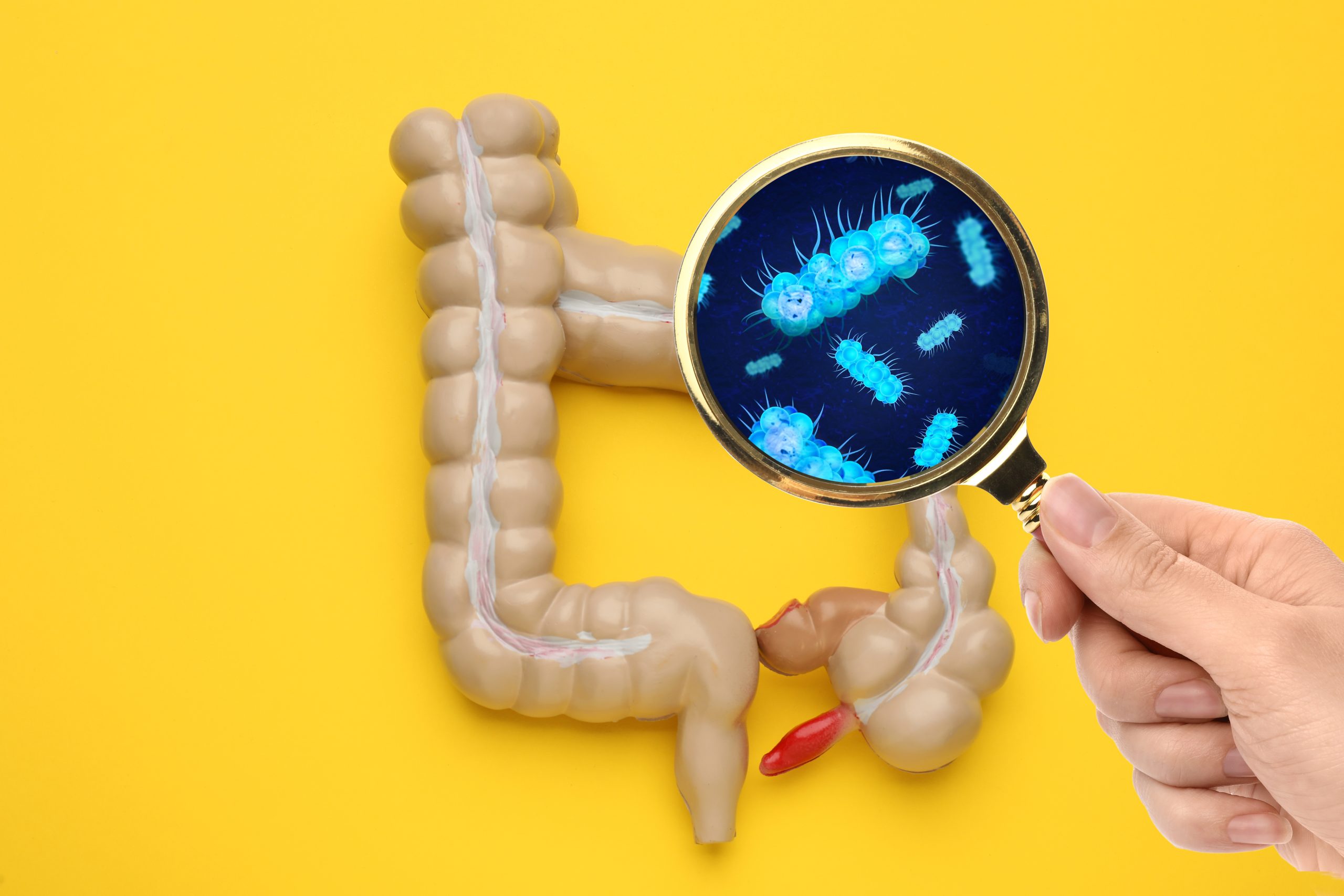
This study suggests that gut bacteria can take nitrate from foods such as beetroot and leafy greens and combine it with non-heme iron to generate biologically active molecules that move beyond the intestine and influence cardiovascular and metabolic pathways.
That makes the finding bigger than another story about vegetables being healthy.
It raises a precision-medicine question: could two people eat the same food and generate different cardiometabolic effects because their microbiomes process it differently?
The answer is not yet known. Most of the evidence comes from bacteria, cells and mice, and researchers do not yet have an established method for routinely measuring this pathway in people.
Precision nutrition becomes interesting precisely where generic dietary advice stops being enough.
Executive Summary
Researchers led by Karolinska Institutet report that nitrate-reducing gut bacteria can generate dinitrosyl iron complexes from inorganic nitrate and non-heme iron. Nitrate is abundant in foods including beetroot, spinach, rocket and lettuce, while non-heme iron is found in beans, whole grains and green vegetables.
DNICs are nitric oxide-related molecules that can act as relatively stable signalling entities. The researchers detected them in conventional animals but not in germ-free mice, strongly implicating the gut microbiota in their formation. Experimental work also identified bacterial nitrate reductase as an important part of the pathway.
In mouse models of metabolic and cardiovascular disease, increasing DNIC exposure through dietary nitrate and iron or administering synthetic DNICs improved several measures, including blood pressure, vascular function, glucose regulation and liver fat accumulation. A Karolinska research programme separately describes improvements in glucose control and diabetes-associated cardiovascular complications in a mouse model of type 2 diabetes.
The crucial limitation is translation. The researchers say the mechanism remains to be characterised in humans, and their next steps include developing methods to measure DNICs in people and testing whether diet or microbiome composition can meaningfully alter the pathway.
Why it matters
- Clinicians: The findings do not justify nitrate, iron or microbiome supplementation for cardiometabolic prevention. Human intervention evidence is still needed.
- Researchers: Measuring DNIC formation in people is now a major translational challenge. Human studies will need to determine whether microbiome differences predict who generates these molecules and whether concentrations correlate with clinical outcomes.
- Policymakers: Precision nutrition may eventually require moving beyond universal food recommendations toward understanding how host biology and microbiome composition modify dietary effects.
- Industry / innovation partners: DNICs, bacterial nitrate-reduction pathways and microbiome-targeted interventions could become therapeutic or biomarker opportunities, but the science is still preclinical.
A beetroot is not the end of its own biological story.
Neither is spinach.
Once food reaches the intestine, trillions of microorganisms gain access to its chemical components. What happens next may determine whether some nutrients remain nutrients or become something closer to biological signals.
New research published in Cell offers an unusually concrete example.
Researchers led by Karolinska Institutet found that gut bacteria can use inorganic nitrate and non-heme iron to form dinitrosyl iron complexes, known as DNICs. Nitrate occurs naturally at high levels in vegetables such as beetroot and leafy greens. Non-heme iron is common in beans, whole grains and green vegetables.
The interesting part is what the bacteria do with them.
The microbiome appears to manufacture the signal
DNICs are nitric oxide-related complexes containing iron and nitric oxide groups. Nitric oxide has a central role in vascular biology, but it is chemically short-lived. DNICs can act as more stable signalling entities and have long attracted interest because of their potential effects on vascular and metabolic pathways. Earlier chemical research has described DNICs as common nitric oxide-derived species whose biological functions remain incompletely understood.
The new study places gut bacteria directly into that biology.
Using electron paramagnetic resonance and complementary experiments, the researchers showed that mixed gut microbiota and bacteria including E. coli could generate DNICs from nitrate and non-heme iron. Bacterial nitrate reductase was required for the process.
Perhaps the clearest clue came from germ-free animals.
DNICs could be detected in conventional mice but were absent in germ-free mice, suggesting that the microbiota is not merely influencing their concentration. It may be fundamental to their production.
Once produced, the compounds were found beyond the gut, particularly in organs including the liver and kidneys.
That turns the microbiome from a digestive companion into something closer to a biochemical factory.
The cardiometabolic effects were substantial, in mice
The researchers then asked whether increasing DNIC availability actually changed disease biology.
In experimental models, it did.
Increasing DNIC levels through nitrate and iron supplementation, or administering synthetic DNICs directly, was associated with lower blood pressure, improved vascular function, better glucose control and less fat accumulation in the liver.
Karolinska’s own diabetes research programme describes related work in a mouse model of type 2 diabetes, where microbiota-derived DNICs improved blood glucose and reduced diabetes-associated cardiovascular complications.
Those are potentially important cardiometabolic effects.
They are also animal data.
No human trial has yet shown that increasing DNIC production prevents diabetes, lowers cardiovascular event rates or treats metabolic liver disease.
That distinction is crucial.
This is not evidence that people should start combining beetroot juice with iron supplements.
The precision-medicine question is more interesting than the diet hack
The deeper implication lies in variability.
Dietary guidelines tend to assume that foods produce reasonably predictable biological effects across populations.
The microbiome complicates that assumption.
If DNIC formation depends partly on the presence, abundance and activity of nitrate-reducing bacteria, two people consuming similar quantities of nitrate and iron might not necessarily generate the same downstream molecules.
The diet may be identical.
The biological exposure may not be.
That is one reason microbiome research has become increasingly relevant to precision medicine. Large human studies have already found associations between gut microbial composition, diet and cardiometabolic characteristics, while repeatedly stressing that association alone cannot establish causation.
DNICs offer something more mechanistic: a candidate molecule connecting a dietary substrate, specific microbial activity and host physiology.
But the chain has not yet been demonstrated end to end in humans.
Human measurement is the next bottleneck
The researchers now plan to develop methods capable of measuring DNIC levels in people and to determine how these molecules are produced, distributed and metabolised in the human body. They also want to test whether diet or changes in microbiome composition can alter DNIC production.
Those studies could determine whether DNICs become biomarkers, therapeutic targets or simply another interesting pathway that works far more cleanly in experimental models than in real life.
The implications for precision nutrition could be considerable.
Medicine has spent decades asking what people eat.
The microbiome era is forcing a second question:
What does their biology turn that food into?
That may ultimately prove much more informative.
