
IPM Take
Hypertension care is increasingly leaving the clinic.
That should be good news. Blood pressure fluctuates from minute to minute, and a few measurements taken during an appointment offer only a narrow view of a condition that operates continuously. Measuring at home over several days can provide a much richer picture, help distinguish persistent hypertension from white-coat effects and show whether treatment is actually controlling blood pressure during ordinary life.
The problem is that moving measurement into the home also moves part of clinical quality control there.
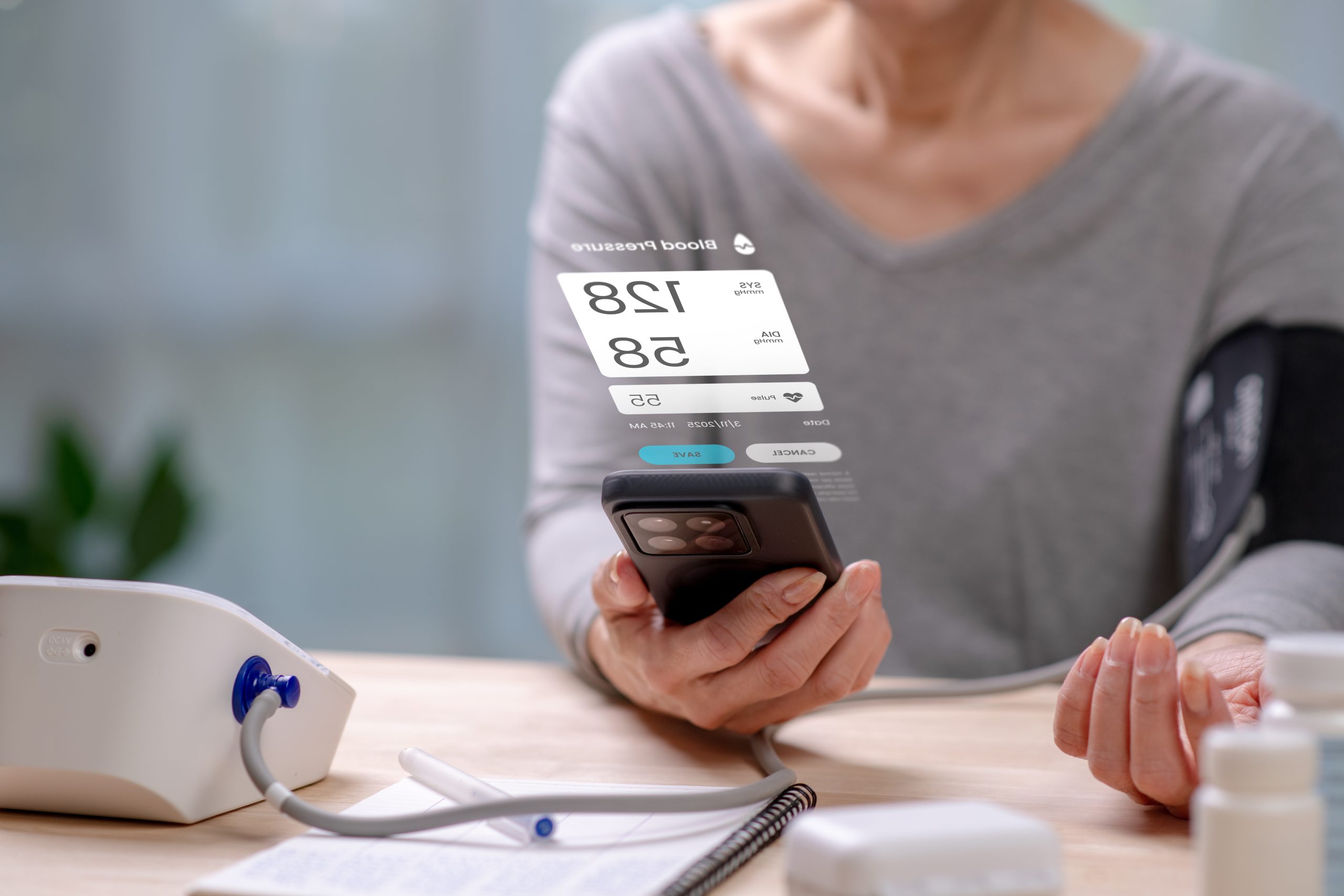
A patient can buy a blood pressure monitor online, wrap the cuff around their arm, press a button and receive two apparently precise numbers within seconds. What the screen does not reveal is whether the device has been independently validated, whether the cuff fits correctly, whether the arm is supported at heart level or whether caffeine, exercise, conversation or five minutes of missing rest has distorted the reading.
That matters because hypertension treatment depends on relatively small numerical differences. A systematic error of several millimetres of mercury repeated over weeks can change how a patient is classified, whether medication is intensified and whether clinicians believe treatment is working.
The 2025 US hypertension guideline therefore treats home monitoring not as a consumer wellness activity but as a clinical tool. It recommends validated devices, appropriate cuff sizing and standardized measurement protocols, and stresses that home monitoring works best when readings are integrated with healthcare-team follow-up.
That last part may be the most important.
The future of hypertension management is not simply putting a blood pressure monitor in every home. It is building a system in which the numbers produced there are accurate enough, structured enough and connected enough to influence care safely.
Executive Summary
Home blood pressure monitoring has become an established component of contemporary hypertension care. The 2025 American Heart Association and American College of Cardiology blood pressure guideline states that out-of-office measurement can provide information beyond office readings for both confirmation and management of hypertension. Home monitoring captures more measurements over days or weeks and can therefore provide a better estimate of a patient’s usual blood pressure than an isolated clinic value.
The guideline recommends automatic validated devices with appropriately sized cuffs and standardized measurement technique. For most patients undertaking structured home monitoring, two measurements taken one minute apart in the morning and evening over several days provide substantially more useful information than occasional unscheduled readings.
Correct preparation matters. Patients should avoid smoking, caffeine and exercise for at least 30 minutes beforehand, empty their bladder, rest quietly for at least five minutes, sit with their back supported and feet flat on the floor, keep their legs uncrossed and support the bare arm at heart level.
These details are not cosmetic. Incorrect cuff size, body position and inadequate rest can systematically alter blood pressure readings.
The consumer-device market creates an additional problem. A 2023 JAMA investigation of popular blood pressure monitors sold online across ten countries found that 79% of upper-arm devices and 83% of wrist devices among the best-selling products examined were not validated for measurement accuracy.
Validation itself also requires scrutiny. A 2026 systematic review of published blood pressure monitor validation studies found that although 184 device validations were reported by their authors as successful, only 146 fulfilled all relevant protocol criteria on independent review. The reviewers judged approximately 26% of reported successful validations inadequate because of methodological or protocol deficiencies.
Independent resources such as the US Validated Device Listing and STRIDE BP therefore attempt to separate devices that have undergone acceptable validation from products whose accuracy is uncertain.
The newest hypertension guideline also draws a clear boundary around cuffless technology. Smartwatches and other cuffless devices are increasingly capable of producing blood-pressure estimates, but the guideline advises against relying on them for clinical blood pressure measurement until accuracy and reliability improve.
The policy challenge is therefore shifting. Home monitoring is no longer experimental. Ensuring that home-generated measurements are clinically trustworthy is now the harder problem.
Why it matters
- HTA bodies: A blood pressure monitor is inexpensive compared with most cardiovascular technologies, but low unit cost does not make measurement accuracy unimportant. Procurement and reimbursement decisions should distinguish clinically validated devices from products that merely generate a blood-pressure number. Digital connectivity, automated storage and remote transmission may add value when they improve adherence and clinical review, but convenience should not substitute for validated accuracy.
- Payers: Home monitoring can potentially improve hypertension control while reducing reliance on repeated clinic measurements, particularly when combined with structured treatment protocols and healthcare-team follow-up. Reimbursement models should therefore consider the entire pathway: validated equipment, patient training, data transmission and clinician response. Providing a monitor without the infrastructure to use the readings may capture only a fraction of the potential benefit.
- Industry / innovation partners: The market is moving rapidly toward connected monitors, wearable sensors and cuffless blood-pressure estimation. The commercial prize is substantial because hypertension affects enormous populations and monitoring is repetitive by nature. But cardiovascular medicine is increasingly drawing a line between generating data and generating clinically reliable data. Validation, interoperability, transparent performance and real-world accuracy will matter more than the novelty of the form factor.
Blood pressure looks like one of medicine’s simplest measurements.
Wrap a cuff around the arm. Inflate it. Read two numbers.
The apparent simplicity hides an uncomfortable fact: blood pressure is unusually easy to measure badly.
It changes with physical activity, stress, pain, conversation, caffeine, nicotine, bladder fullness, posture and even the position of the arm. The cuff itself has to fit the patient’s arm, and the device converting oscillations in that cuff into systolic and diastolic values needs to be accurate.
In a clinic, at least some of those variables can be controlled.
At home, the patient becomes part of the measurement system.
That is increasingly important because contemporary hypertension management actively encourages measurement outside the clinic.
The rationale is strong. A clinic appointment captures blood pressure at one particular moment, often in an environment capable of changing it. Some people experience higher readings in medical settings, the classic white-coat effect. Others can have apparently acceptable clinic pressure while blood pressure outside the office remains elevated.
Repeated home measurements make those patterns easier to identify.
They also change the way treatment is monitored.
A clinician deciding whether an antihypertensive medicine is working does not necessarily need to wait weeks for another appointment. A structured record of home measurements can show whether average pressure is falling, whether morning values remain elevated or whether treatment may be producing excessively low readings.
The 2025 US hypertension guideline therefore gives home blood pressure monitoring a prominent place in management. It describes home monitoring combined with frequent interaction with multidisciplinary teams and standardized treatment protocols as an important tool for improving blood-pressure control.
The phrase “standardized” is doing a great deal of work.
Consider what happens when the cuff is too small.
The pressure required to compress the artery can be overestimated, producing a reading that is falsely high. An excessively large cuff can push the result in the opposite direction.
That becomes particularly relevant as obesity becomes more common. A standard cuff supplied with a consumer monitor may not fit every arm, and a device that has technically been validated does not automatically remain validated across cuff sizes that were never included in the original testing.
Position matters too.
Someone checking blood pressure while sitting on the edge of a bed, with their legs crossed and unsupported arm hanging below heart level, is not reproducing the conditions on which clinical thresholds were developed.
Neither is someone who measures immediately after climbing stairs, drinking coffee or answering work emails.
The American Heart Association’s home measurement instructions are deliberately unexciting: avoid smoking, caffeine, alcohol and exercise shortly before measurement; empty the bladder; sit quietly for at least five minutes; support the back and feet; keep the legs uncrossed; place the cuff on bare skin; support the arm at heart level; remain silent; and take at least two measurements one minute apart.
The ritual can look excessive for something as routine as pressing a button.
It exists because the difference between a well-measured and poorly measured blood pressure can be clinically meaningful.
That creates a paradox.
Healthcare systems increasingly want patients to measure blood pressure independently because home monitoring can produce better information.
But independence works only if patients reproduce enough of the clinical measurement standard themselves.
The first weak point is often the device.
Consumers can reasonably assume that a blood pressure monitor available from a pharmacy or major online retailer has been demonstrated to measure blood pressure accurately.
That assumption is not always justified.
In 2023, researchers examined popular upper-arm and wrist monitors appearing on Amazon’s top-selling lists in ten countries. Most were not validated. Seventy-nine percent of the upper-arm products and 83% of wrist-cuff devices examined lacked recognised validation.
The study did not establish that every nonvalidated device was inaccurate.
It established something more basic: there was insufficient evidence to know that they were accurate.
That distinction is essential.
A device should not need to be proven wrong before accuracy matters. If clinicians are going to make treatment decisions from its measurements, the burden should be demonstrating that it is sufficiently accurate in the first place.
This is why independent validated-device registries have become important.
In the United States, the Validated Device Listing uses an independent review process to assess whether submitted devices meet defined criteria for clinical accuracy.
Internationally, STRIDE BP maintains lists of validated and preferred devices and assesses the evidence against recognised validation protocols.
For home monitoring, STRIDE BP gives preference to upper-arm devices validated using accepted contemporary protocols and, for preferred models, features such as automated storage or connectivity that allow multiple readings to be recorded reliably.
That functionality sounds mundane.
It solves another common home-monitoring problem: selective reporting.
Patients may remember the unusually high reading that frightened them or the reassuring low one they preferred. Handwritten logs can contain transcription mistakes or omit measurements.
Automatic storage creates a more objective record.
Connected devices can go further by transferring readings into an application or clinical system, making remote hypertension management more scalable.
But digital connectivity introduces an important principle that extends far beyond blood pressure.
Connectivity cannot rescue an inaccurate sensor.
A beautifully designed application displaying unreliable readings remains an unreliable medical system.
And the validation problem is not solved simply because a manufacturer publishes a study.
A 2026 systematic review examined validation research conducted since the introduction of the modern universal protocol for blood pressure measurement devices. Of 197 validation studies assessed, most devices were reported by their investigators as passing. Yet independent review found that a substantial proportion of those apparently successful studies did not fully satisfy the protocol requirements.
Among 184 validations reported as successful, 146 met all the relevant criteria.
The reviewers considered 51 published validations inadequate overall, including studies with incomplete blood-pressure ranges or deviations from required measurement protocols.
This is an unusually important finding for such an ordinary medical device.
Validation is supposed to be the quality filter.
If validation studies themselves can be inadequate, simply printing “clinically validated” on packaging should not end the conversation.
Independent review becomes valuable precisely because consumers and clinicians cannot reasonably audit a device’s technical literature every time they buy a monitor.
The challenge will become greater as blood pressure moves from cuffs to wearables.
Smartwatches and other cuffless devices promise something conventional home monitoring cannot provide: measurements without deliberately stopping, sitting down and inflating a cuff.
In theory, continuous or near-continuous blood-pressure information could transform understanding of hypertension.
It could reveal patterns during work, sleep, exercise and stress that conventional measurement barely samples.
The clinical attraction is obvious.
The evidentiary gap is equally important.
The American Heart Association’s scientific statement on cuffless blood-pressure devices concludes that major uncertainties remain over accuracy, calibration, interpretation and how the very large number of measurements generated by these technologies relates to established treatment thresholds.
The 2025 hypertension guideline is consequently explicit: clinicians should avoid relying on cuffless devices, including smartwatches, for accurate blood-pressure measurement until they demonstrate greater precision and reliability.
That position may eventually change.
The measurement standard should not change simply because the device became easier to wear.
This is an important lesson for digital cardiovascular medicine more broadly. Healthcare has become fascinated with increasing the volume of patient-generated data. Wearables can record heart rate continuously. Rhythm monitoring can run for days. Glucose sensors generate hundreds of readings. Home devices can track oxygen saturation, weight and blood pressure.
More data can improve care.
More inaccurate data can create more confident mistakes.
Blood pressure makes the problem unusually visible because the clinical thresholds are familiar and treatment decisions are common.
A home systolic pressure persistently around 150 mm Hg tells a clinician something very different from one averaging around 125 mm Hg.
If the difference is partly caused by the cuff rather than the patient, the downstream consequences can include inappropriate medication escalation, unnecessary investigation or false reassurance.
That is why the home-monitoring pathway needs to begin before the first measurement.
Patients need to know which device to purchase.
The cuff needs to fit.
Technique should ideally be demonstrated rather than assumed.
The monitor can be brought to a clinic and compared with office equipment, as the American Heart Association recommends.
That final step deserves more attention.
A clinical study involving 152 patients who brought their home monitors into a hypertension clinic found that more than one in five devices failed an office-based agreement test using the American Medical Association’s protocol.
That does not mean one in five validated monitors on the market is inherently defective. Devices age, cuffs deteriorate, individual equipment may malfunction and the study involved a specific clinical sample.
It does show why home equipment should not automatically be treated as permanently trustworthy.
Measurement quality requires maintenance.
Health systems already understand this inside hospitals.
Clinical equipment is purchased according to specifications, maintained, calibrated and incorporated into quality-management systems.
The patient’s home sits outside most of that infrastructure.
Yet the readings can flow directly back into medical decisions.
That asymmetry becomes more important as remote care expands.
Home blood pressure monitoring has particular potential for hypertension because treatment is inherently longitudinal. A clinician does not need a sophisticated imaging test every week. They need reliable pressure measurements and a system capable of acting on them.
The strongest evidence suggests that home monitoring becomes more effective when paired with clinical support rather than used in isolation.
That could involve pharmacists adjusting medication under protocol, nurses reviewing uploaded readings, primary-care teams responding to sustained elevation or digital systems summarising average values for clinician review.
The device then becomes one component of a care model.
Without that connection, home monitoring can degrade into a pile of numbers.
Patients may check repeatedly when anxious, react to individual readings rather than averages or alter medication themselves. The Indian cardiology guidance prompting the current discussion makes the same point: home devices are monitoring tools, not substitutes for professional assessment, and medication should not be adjusted independently on the basis of isolated values.
The policy opportunity is therefore broader than encouraging people to buy monitors.
Health systems could make validated-device selection easier, prescribe or reimburse appropriate monitors for patients who cannot afford them, provide cuffs matched to arm circumference, standardize patient education and build simple pathways for transmitting readings.
That would transform home blood pressure from a consumer purchase into healthcare infrastructure.
Equity matters here too.
An inexpensive unvalidated monitor may be attractive precisely to patients with fewer resources. A high-quality connected monitor may cost more and require a smartphone, internet access and digital literacy.
If accurate home monitoring becomes an increasingly important component of hypertension management, access to validated equipment cannot quietly become another determinant of whose blood pressure is managed well.
The same concern applies globally.
Hypertension is one of the world’s most important modifiable cardiovascular risk factors, and home monitoring could be particularly valuable where repeated clinic attendance is difficult.
But a strategy based on distributing large numbers of inexpensive devices succeeds only if those devices produce trustworthy measurements.
Scale magnifies benefit.
It also magnifies measurement error.
None of this diminishes the importance of home monitoring.
It strengthens the case for doing it properly.
The clinic was never inherently superior because it had four walls and a waiting room. In fact, hurried office measurement can itself be poor. Home readings can provide more representative information precisely because they are repeated in normal life.
The future is therefore not a choice between professional measurement and patient measurement.
It is a shared measurement system.
Patients generate much of the data. Clinicians interpret trends rather than isolated numbers. Devices meet independent accuracy standards. Technique is taught. Digital infrastructure reduces transcription and reporting errors. Treatment changes remain tied to clinical protocols rather than the emotional impact of a single reading.
That is what makes home monitoring healthcare rather than self-tracking.
The blood pressure monitor may be one of the least glamorous technologies in cardiovascular medicine.
It is also attached to decisions about one of the most consequential modifiable causes of stroke, heart disease and premature death.
The quality standard should reflect that.
Moving blood pressure care into the home can make hypertension management more precise. But only if healthcare systems stop treating the accuracy of home measurements as something the patient has to figure out alone.
