IPM Take
Diabetic retinopathy screening is a natural setting for personalised, risk-based prevention: the population is already identifiable, monitoring intervals can be tailored to disease status, and early detection can prevent avoidable vision loss. This study shows that autonomous AI can be embedded where people with diabetes already receive routine care, rather than requiring a separate visit to an eye clinic. The key policy question is no longer only whether AI can detect disease, but how services can guarantee confirmatory examination, referral completion and equitable access after a positive result.
Executive Summary
In a study published online in BMJ Open Ophthalmology-indexed British Journal of Ophthalmology in June 2026, researchers evaluated autonomous AI screening for diabetic retinopathy in an endocrinology outpatient clinic in Israel. Among 256 adults with type 1 or type 2 diabetes and no previously reported retinopathy, the AEYE-DS system produced a definitive result for 245 participants (95.7%) without pharmacological dilation. Seventy-six participants (29.6%) screened positive for more-than-mild diabetic retinopathy. Of the 34 people who completed confirmatory retinal-clinic examination, four (11.8% of those evaluated) needed anti-vascular endothelial growth factor treatment or panretinal photocoagulation. More than 80% of patients reported that screening was easy to use, time-efficient and recommendable. The findings support point-of-care AI as a scalable screening pathway, provided positive results are followed by reliable specialist assessment.
Why it matters
- Clinicians: The study suggests AI-enabled retinal imaging can be delivered in diabetes clinics by a novice, non-ophthalmic operator, potentially reducing barriers created by separate appointments and dilated examinations. Clinicians should nevertheless treat a positive AI result as a trigger for confirmatory assessment, not a diagnosis.
- Public authorities: Integrating screening into existing diabetes care could improve reach where ophthalmology capacity is constrained. Programmes will need clear governance on image quality, algorithm performance, referral tracking and follow-up completion.
- Patients and advocates: Screening during a routine diabetes visit may make eye checks more convenient and less burdensome. Patients should still understand that a negative screen does not remove the need for ongoing diabetes care and scheduled eye monitoring.
For many people living with diabetes, the eye examination that could protect their sight is the appointment they are least likely to attend.
Diabetic retinopathy- damage to the small blood vessels of the retina caused by prolonged high blood glucose- often begins without symptoms. By the time vision becomes noticeably blurred or distorted, treatment may be more complex, and some damage may already be irreversible.
A new real-world study suggests that the screening pathway could begin closer to where diabetes care already happens: in the endocrinology clinic.
Screening without a separate visit
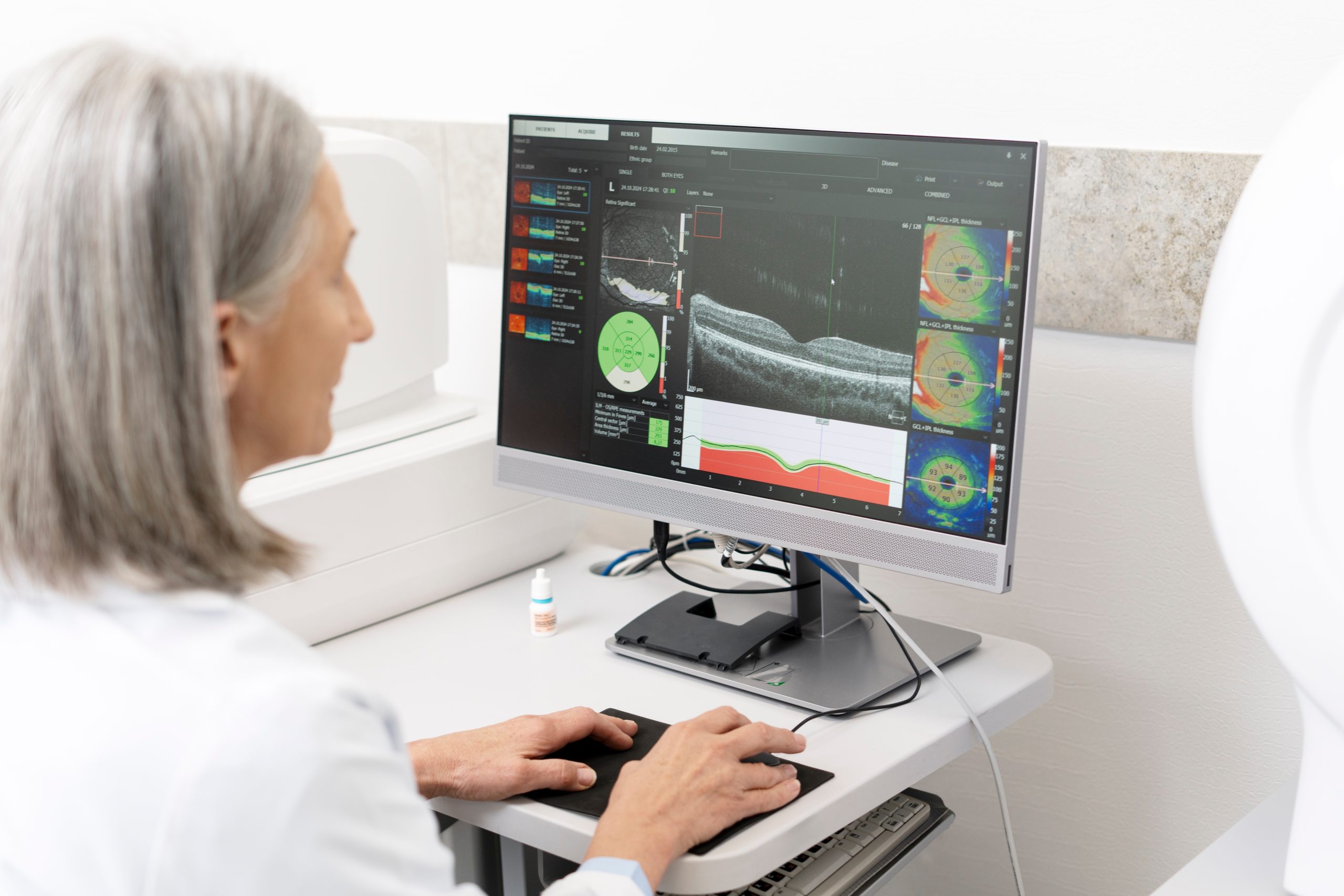
Researchers at Sheba Medical Center and collaborators evaluated the AEYE Diagnostic Screening system, an autonomous AI tool used with a Topcon NW500 fundus camera, in a routine endocrinology outpatient setting. Adults with type 1 or type 2 diabetes and no previously reported diabetic retinopathy were invited to undergo imaging during routine follow-up.
Importantly, the photographs were macula-centred, non-mydriatic images- meaning they were taken without pharmacological dilation of the pupil. A novice, non-ophthalmic operator acquired the images, and the AI system analysed them for more-than-mild diabetic retinopathy, the threshold at which ophthalmic assessment is generally needed
The model was therefore not simply a laboratory demonstration. It tested whether AI screening could function within the practical constraints of a busy diabetes clinic.
High imageability, clear referrals
Definitive AI results were obtained for 245 of 256 participants, or 95.7%, without dilation. This high imageability rate matters because unusable images are a common operational barrier in retinal screening programmes.
Seventy-six participants – 29.6% of those screened – received a positive result for more-than-mild diabetic retinopathy. An AI-positive result prompted physician counselling and automated referral for confirmatory examination at the institution’s retina clinic.
Of those referred, 34 participants completed a confirmatory examination. Four – 11.8% of those evaluated – required treatment with intravitreal anti-vascular endothelial growth factor therapy or panretinal photocoagulation.
These figures should be read carefully. They do not mean that 29.6% of all screened patients had confirmed sight-threatening disease; they describe the proportion with an AI-positive screen. The treatment finding applies only to the minority who completed confirmatory assessment, and external follow-up outside the institution was not captured.
The referral gap remains
The study’s most important operational finding may be the gap between screening and confirmation.
Although the system identified a clinically relevant group requiring assessment, fewer than half of AI-positive patients completed the confirmatory retina-clinic examination within the study’s captured follow-up. This does not prove that the AI pathway caused non-attendance, but it highlights a familiar challenge in screening: detection alone does not guarantee care.
For health systems, this makes referral tracking as important as algorithm accuracy. A positive result must lead to a booked appointment, a clear explanation of why it matters, and active follow-up when patients do not attend.
The researchers also noted that several AI-positive patients had previously unrecognised ocular conditions, illustrating that retinal imaging can surface findings beyond diabetic retinopathy. However, the study did not provide a full systematic analysis of these incidental findings.
What patients experienced
Patient acceptability was encouraging. More than 80% of participants reported that the screening was easy to use, time-efficient and something they would recommend.
This matters because convenience is not a cosmetic feature of preventive care. For people managing glucose monitoring, medication, diet, complications and multiple appointments, even a modest reduction in logistical burden can influence whether recommended screening happens.
The study also reported high satisfaction with the speed of the process, supporting the idea that point-of-care screening can fit into an existing clinical encounter rather than compete with it.
Personalised medicine opportunity
Diabetic retinopathy is well suited to personalised prevention because risk is not uniform. Duration of diabetes, glycaemic control, blood pressure, kidney disease, pregnancy and prior retinopathy status all influence an individual’s need for monitoring.
AI screening could become one layer in a broader risk-stratified pathway. A person with no retinopathy and stable metabolic control may require less frequent review than someone with early retinal changes, poor glycaemic control or progressive kidney disease. The study itself did not test individualised screening intervals, so that extension remains a research and implementation question rather than an established practice.
The more immediate opportunity is operational: use AI to bring the first assessment to the patient, reserve specialist time for people who need it, and build referral pathways that close the loop after a positive result.
Looking ahead
Autonomous AI will not replace ophthalmologists. Its value lies in extending the reach of screening, standardising the first assessment and helping scarce specialist capacity focus on confirmation and treatment.
The next test for services will be longitudinal: whether AI-enabled screening in diabetes clinics increases completed eye examinations, reduces late presentation and improves vision outcomes over time. This study provides a credible real-world signal, but it was a single-centre evaluation and did not capture external follow-up.
The promise is straightforward: make sight-saving screening part of routine diabetes care, then make sure no positive result disappears into an unfilled referral.
Closing line: In diabetic eye care, the most valuable AI may be the kind that turns a routine diabetes visit into an earlier chance to protect vision.
