
IPM Take
Continuous glucose monitoring changed diabetes care partly because it revealed something a single blood measurement could not: the pattern between measurements.
Cholesterol could be heading toward a similar idea.
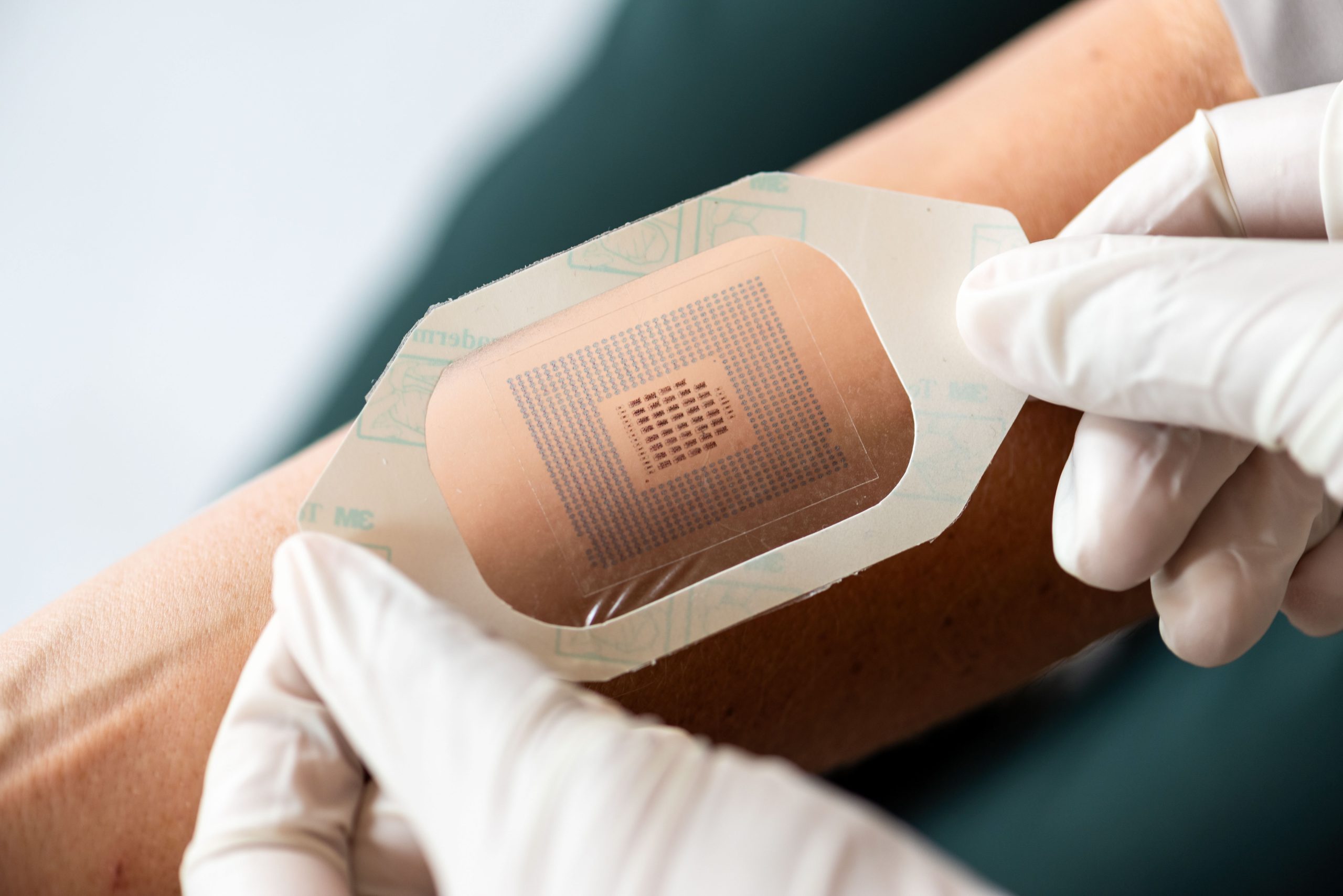
A new wearable patch continuously measures cholesterol and triglycerides in sweat, while a causal machine-learning model attempts to translate those measurements into estimates of blood lipid concentrations. The researchers also captured different lipid responses after different meals and during everyday activities.
That is potentially powerful.
It is also very early.
The sweat-to-blood relationship is affected by factors including BMI, sex and sweat rate, and the validation cohort included only 24 participants. The device is therefore better understood as a research platform for personalised metabolic monitoring, not a replacement for the lipid panel ordered in clinical practice.
The bigger question is not whether we can put another sensor on the body.
It is whether continuous lipid data would change decisions enough to justify collecting it.
Executive Summary
Researchers from Caltech and collaborating institutions have developed a wearable epidermal sensor capable of continuously measuring cholesterol and triglycerides in sweat. The study was published in Nature Sensors on 29 July 2026 and highlighted in a Nature Sensors News & Views article on 21 August.
The system uses multi-step enzymatic reactions to detect complex lipids. For triglycerides, the researchers developed a polymer-based module that gradually releases ATP into sweat, allowing the reaction needed for sensing to continue for more than 20 hours.
The team demonstrated continuous monitoring during fasting, lipid-rich meals, mixed meals, protein-rich meals and a high-fat, high-carbohydrate drink, showing different post-meal patterns. During a 24-participant validation study, simultaneous sweat and blood measurements were used to train and assess a causal machine-learning model that accounted for physiological factors including sweat rate, BMI and sex.
The technology is promising, but the study itself acknowledges that the number of independent participants was modest. Blood measurements remained the clinical reference used to train and validate the model, and the work does not establish that wearable lipid monitoring improves cardiovascular outcomes or can replace conventional laboratory testing.
Why it matters
- HTA bodies: Future assessment would need evidence that continuous lipid monitoring changes treatment decisions or outcomes, not simply that the sensor can generate frequent measurements.
- Payers: A low-burden wearable could make repeated cardiometabolic monitoring easier, but reimbursement will depend on whether additional data translate into better prevention, treatment adherence or reduced downstream costs.
- Industry / innovation partners: Sweat sensing, microfluidics and causal machine learning could create a new category of personalised metabolic diagnostics, but robust external validation and clinically meaningful endpoints will be essential.
Cholesterol testing has barely changed from the patient’s perspective.
A clinician orders a lipid panel. Blood is drawn. The laboratory produces a snapshot of cholesterol and triglyceride levels.
Then weeks, months or sometimes years pass before another snapshot appears.
Researchers at Caltech are asking whether lipids could instead be monitored as a moving picture.
Their experimental wearable patch continuously analyses sweat for cholesterol and triglycerides and uses machine learning to estimate what those measurements could mean for lipid concentrations in blood. The work, published in Nature Sensors, was highlighted this week in a News & Views article focused on the potential of continuous sweat lipid sensing.
Cholesterol monitoring is harder than glucose monitoring
Continuous glucose monitors have demonstrated what wearable biomarkers can do when a clinically important molecule can be measured repeatedly.
Lipids are more difficult.
Much of the cholesterol in sweat exists as esterified cholesterol, which the sensor cannot detect directly. The researchers therefore created a two-stage reaction that first converts it into free cholesterol and then generates an electrochemical signal that the device can measure.
Triglycerides posed another problem because their detection requires ATP, which is consumed during the sensing reaction.
The team developed what it calls a Poly-CORE module, a polymer system that stores ATP and releases it gradually when exposed to sweat. In laboratory testing, that approach sustained the chemistry required for triglyceride sensing for more than 20 hours.
The result is a patch capable of doing something conventional lipid testing cannot: watching levels change over time.
Researchers tracked responses after different foods, including a lipid-rich meal, pizza, a protein-rich meal and a high-fat, high-carbohydrate milkshake. The sensor detected distinct postprandial patterns and was also tested during ordinary daily activities.
That creates an obvious precision-medicine appeal.
Rather than being told that a particular meal is generally good or bad for cholesterol, people could theoretically observe their own metabolic response.
But there is a major complication.
Sweat is not blood
The concentration of a lipid in sweat does not map neatly onto its concentration in circulation.
Sweat rate changes concentrations. BMI can affect relationships between sweat and blood measurements. Sex and other physiological characteristics may matter too. Even the route by which molecules enter sweat introduces biological complexity.
The researchers addressed this with causal machine learning.
In a validation study involving 24 participants, they collected sweat and blood samples at the same time. Blood measurements were taken at intervals and served as the clinical reference. The model then used sweat measurements together with physiological variables to improve individual estimates of blood cholesterol and triglycerides.
That distinction is critical.
The patch did not independently demonstrate that sweat cholesterol is interchangeable with a laboratory lipid panel.
The blood test was needed to teach and validate the algorithm.
The authors themselves describe the participant number as modest and argue that larger studies will be necessary to improve generalisability.
That caution reflects a wider problem in wearable sweat sensing. A Nature Biotechnology review noted that while wearable sweat technology has advanced rapidly, the physiological relevance of many sweat biomarkers to conventional health measures still needs to be firmly established.
More data is not automatically better care
If the technology eventually works reliably, the possibilities are considerable.
A patient starting a lipid-lowering drug could potentially see metabolic changes without waiting months for another blood test. Researchers could examine personalised responses to food and exercise. High-risk patients might be monitored more frequently without repeated venepuncture.
But continuous monitoring creates its own policy problem.
Do cholesterol and triglycerides fluctuate on a timescale where constant measurement improves clinical decisions?
What thresholds should trigger intervention?
Could patients become anxious over normal post-meal variation?
Would clinicians be expected to review streams of lipid data in the same way diabetes teams increasingly review glucose traces?
And who pays for the infrastructure needed to interpret it?
Those questions become more important as medicine shifts from occasional tests toward permanent monitoring.
The technical achievement here is significant. Researchers have taken chemically difficult biomarkers, measured them through the skin and combined them with personalised modelling to approximate systemic lipid levels.
But the next stage cannot simply be a larger sensor study.
It needs to show clinical utility.
A wearable cholesterol monitor will matter when it tells clinicians something actionable that the conventional blood test misses, and when acting on that information improves health.
Until then, the patch may change how often we can measure lipids.
It has not yet changed what those measurements mean.
