
IPM Take
Cardiovascular medicine has spent decades telling patients to control the risks they can change. Air pollution exposes the limit of that philosophy because the patient can control blood pressure, take a statin and stop smoking, yet still breathe whatever the city puts into the air.
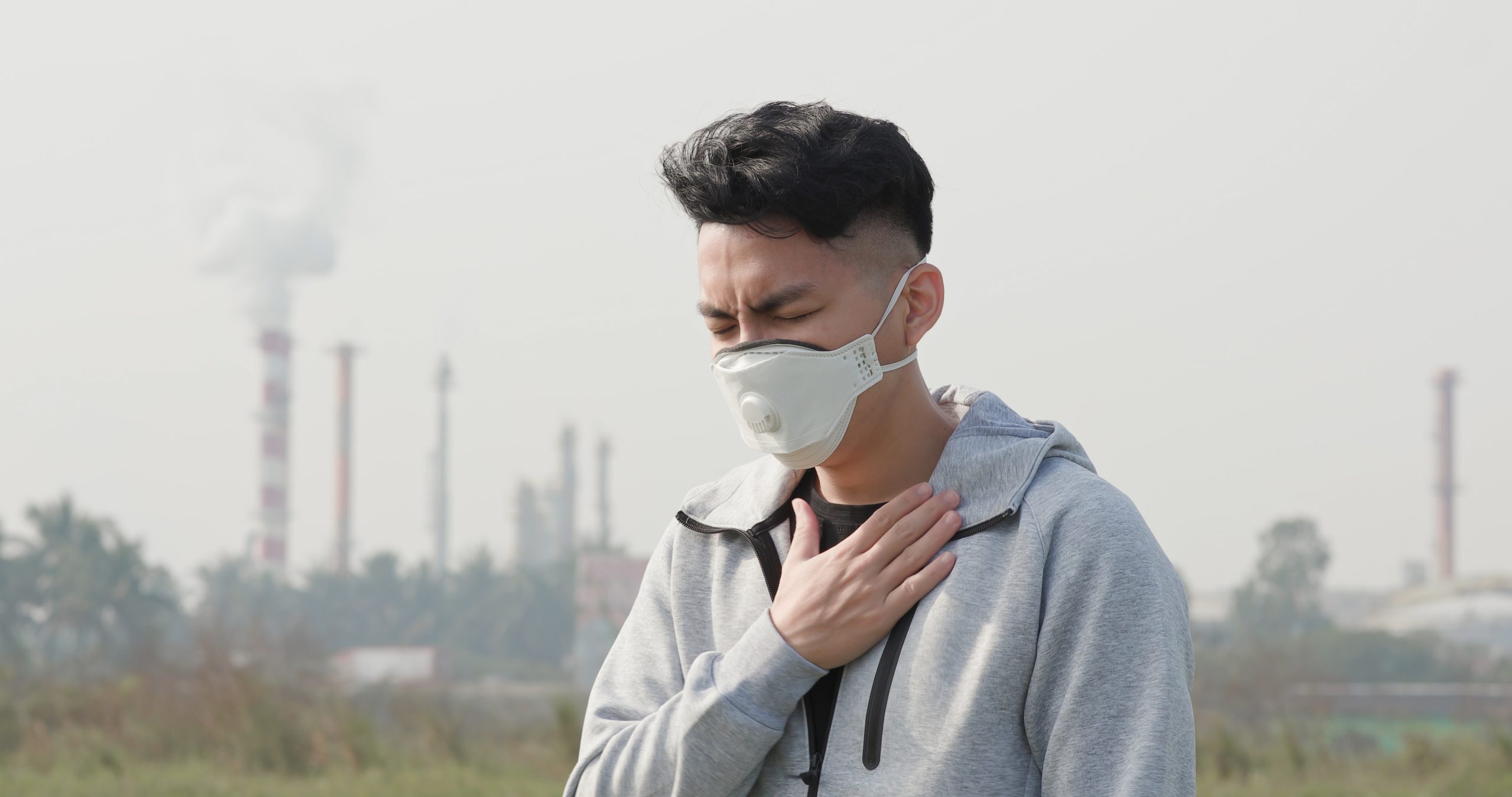
Research discussed at the 2026 World Congress of Cardiology in Rio de Janeiro brings that tension into unusually practical focus. In a small randomized crossover trial involving patients with heart failure, a simple polypropylene particulate filter reduced the concentration of diesel particles reaching participants and blunted short-term changes in endothelial function and B-type natriuretic peptide, a biomarker widely used in heart failure.
That is clinically intriguing, particularly for patients living in cities where particulate pollution remains severe.
It is not evidence that masks prevent heart-failure admissions, myocardial infarctions or cardiovascular deaths, and it should not allow environmental policy to drift toward a model in which vulnerable patients are expected to protect themselves individually from polluted air.
Air pollution was associated with an estimated 8.1 million deaths globally in 2021 and ranked second only to high blood pressure among global risk factors for mortality. The World Heart Federation attributes more than one fifth of cardiovascular deaths to air pollution.
Against numbers of that scale, a filter is best understood as harm reduction.
The intervention that reaches everyone is cleaner air.
Executive Summary
Research highlighted at the 2026 Brazilian Congress of Cardiology and World Congress of Cardiology revisited evidence linking fine particulate air pollution with cardiovascular disease and examined whether personal filtration could mitigate some of its acute cardiovascular effects.
Fine particulate matter, or PM2.5, consists of particles no more than 2.5 micrometres in aerodynamic diameter. These particles can penetrate deep into the lungs and contribute to systemic inflammatory, vascular and cardiovascular effects.
The global burden is substantial. The State of Global Air 2024 report estimated that air pollution contributed to 8.1 million deaths worldwide in 2021, making it the second-leading global risk factor for death after high blood pressure. Noncommunicable diseases accounted for nearly 90% of the associated disease burden.
One longitudinal study involving 5,342 adults in urban Delhi found that greater exposure to PM2.5 was associated with higher systolic blood pressure. An interquartile-range increase in monthly exposure was associated with a 1.77 mmHg higher systolic blood pressure, while the corresponding annual exposure difference was associated with a 3.33 mmHg increase. A one-year interquartile-range increase in exposure was associated with a 1.53-fold risk of incident hypertension.
The most direct intervention evidence comes from the FILTER-HF trial, a randomized, double-blind, three-way crossover study involving 26 patients with heart failure and 15 healthy controls.
Participants underwent separate exposures to clean air, diluted diesel exhaust and filtered diesel exhaust. Filtration reduced PM2.5 concentration from approximately 325 µg/m³ to 25 µg/m³.
Among patients with heart failure, unfiltered diesel exposure worsened endothelial function and increased median B-type natriuretic peptide from 47.0 pg/mL to 66.5 pg/mL. During filtered exposure, endothelial function improved relative to unfiltered pollution and BNP fell to 44.0 pg/mL.
However, the filter did not reverse every measured effect, including the reduction in six-minute walking distance, and the trial was a small short-term laboratory experiment rather than an outcomes trial.
The findings therefore support further evaluation of filtration as a targeted exposure-reduction strategy for vulnerable people, not routine clinical claims that masks prevent cardiovascular events.
Why it matters
- HTA bodies: Personal protective equipment and indoor filtration occupy an unusual space between medical intervention and environmental policy. Before respiratory filtration could become a formal cardiovascular prevention strategy, evidence would be needed on real-world exposure reduction, adherence, clinical outcomes and cost-effectiveness rather than short-term biomarkers alone.
- Payers: Patients with heart failure, coronary disease and other high-risk conditions may benefit disproportionately from reducing severe pollution exposure, but reimbursement for masks or filtration should not develop independently of broader prevention policy. The economic comparison is not simply filter versus no filter, but personal protection versus interventions that reduce exposure across entire populations.
- Industry / innovation partners: There is room for better wearable pollution sensors, filtration technologies, indoor air systems and personalised exposure alerts for high-risk cardiovascular patients. The evidence standard should nevertheless remain high: reducing measured particulate exposure or changing a biomarker is not equivalent to showing fewer hospitalisations or cardiovascular events.
Air pollution creates an uncomfortable problem for modern preventive cardiology because it is simultaneously a cardiovascular risk factor and something the individual patient may have remarkably little power to change.
A patient can stop smoking. Blood pressure can be treated. LDL cholesterol can be lowered. Diabetes can be managed. Physical activity can be prescribed.
Breathing is less negotiable.
That distinction was at the centre of discussions at the 2026 Brazilian Congress of Cardiology and World Congress of Cardiology, where researchers highlighted the cardiovascular burden associated with fine particulate pollution and revisited a deceptively simple question: if the air cannot immediately be made clean, can filtering it protect the heart?
The question matters because particulate pollution has moved far beyond its historical framing as primarily a respiratory-health issue.
The State of Global Air estimated that outdoor and household air pollution together contributed to 8.1 million deaths in 2021, placing air pollution behind only high blood pressure among global mortality risk factors and ahead of tobacco in the ranking used by the report.
Much of that burden comes through noncommunicable disease.
Fine particulate matter is particularly important because its small size allows particles to penetrate deep into the respiratory system, while the biological consequences extend beyond the lungs. Exposure has been linked to inflammation, endothelial dysfunction, autonomic disturbance, thrombosis, atherosclerotic processes and changes in blood pressure, creating several plausible pathways between polluted air and cardiovascular events.
Those pathways matter even when the effect on any single person looks modest.
Blood pressure provides a useful example.
In a longitudinal cohort of 5,342 adults in Delhi, researchers used detailed spatial models to estimate residential exposure to PM2.5 and followed participants with repeated blood-pressure measurements.
Pollution levels were extraordinarily high by international standards. Median annual exposure at baseline was around 92 µg/m³, while the World Health Organization’s current annual PM2.5 guideline is 5 µg/m³.
Higher exposure tracked with higher blood pressure.
An interquartile-range increase in monthly PM2.5 exposure was associated with an average 1.77 mmHg increase in systolic blood pressure, while the equivalent difference in annual exposure was associated with a 3.33 mmHg increase.
Those differences can sound small when compared with the changes produced by antihypertensive medication in an individual patient.
At population scale, they are not trivial.
Blood-pressure distributions determine the number of people who cross diagnostic thresholds and accumulate vascular risk over decades. A relatively small environmental shift affecting millions of people can therefore produce a disease burden very different from a larger intervention affecting a few thousand.
The study also found an association with new hypertension, with a one-year interquartile-range difference in PM2.5 exposure corresponding to a 1.53-fold higher risk of incident hypertension.
The study was observational, so it cannot establish that particulate pollution alone caused every additional case of hypertension. Environmental exposures are difficult to isolate, and pollution correlates with traffic, urban form, socioeconomic conditions and other factors.
But the findings fit within a much larger body of epidemiological and mechanistic evidence linking PM2.5 exposure with cardiovascular disease.
The FILTER-HF experiment approached the question from another direction.
Instead of asking what happens to cardiovascular health across years of living in polluted cities, researchers created controlled conditions in which participants breathed diluted diesel exhaust and then tested whether filtering the particles altered the immediate cardiovascular response.
The trial enrolled 26 people with heart failure and 15 healthy volunteers in a randomized, double-blind crossover design. Every participant underwent three different conditions: clean air, unfiltered diesel exhaust and diesel exhaust passed through a polypropylene particulate filter.
That design is valuable because each participant effectively serves as his or her own comparator, reducing some of the variability that complicates observational pollution research.
The difference in particulate exposure was substantial.
Unfiltered diesel exhaust contained approximately 325 µg/m³ of PM2.5, while passing the polluted air through the filter reduced the measured particulate concentration to approximately 25 µg/m³.
Among participants with heart failure, endothelial function deteriorated during unfiltered diesel exposure. The reactive hyperaemia index fell from a median of 2.17 under clean-air conditions to 1.72 with diesel exhaust.
Filtering the polluted air improved the index to 2.06.
BNP moved in the same direction.
Median BNP increased from 47.0 pg/mL under clean-air conditions to 66.5 pg/mL after unfiltered diesel exposure, then fell to 44.0 pg/mL with filtration.
Those changes are biologically interesting because endothelial dysfunction is implicated in cardiovascular disease while BNP reflects cardiac wall stress and plays an established role in heart-failure assessment.
But the numbers need to remain in context.
Forty-one people participated in the trial, only 26 of whom had heart failure. The exposure was brief, experimental and far more controlled than anything a patient encounters walking beside traffic or spending years in a polluted city.
Most importantly, the study did not test whether using a filter for months or years prevents decompensated heart failure, hospitalisation, myocardial infarction, stroke or death.
It tested physiology.
Even within that experiment, filtration did not reverse every measured effect. Diesel pollution reduced six-minute walking distance, but the filter did not significantly restore the lost distance.
That nuance is important because environmental medicine is particularly vulnerable to a common translational error: moving from a plausible biomarker effect to a public-health recommendation before clinical outcomes are known.
A filter reducing particulate exposure is not surprising.
Showing that the resulting exposure reduction produces fewer cardiovascular events would be much more consequential.
The distinction becomes even more important because masks and filters create a powerful political temptation.
They allow an environmental problem to be converted into an individual behaviour.
A patient with heart failure can be told to check pollution alerts, stay indoors during severe pollution and wear respiratory protection when exposure cannot be avoided. Those recommendations may be sensible forms of harm reduction.
But if personal protection becomes the dominant response, responsibility shifts.
The question stops being why urban air contains dangerous concentrations of particulate matter and becomes why a patient did not wear the right mask.
That would repeat a familiar pattern in preventive health policy, where structural exposures are translated into individual responsibility because behaviour is easier to prescribe than infrastructure is to reform.
Air pollution does not originate primarily in the cardiology clinic.
Transport policy matters. Energy generation matters. Industrial emissions matter. Household fuels matter. Agriculture and waste burning matter. Urban planning matters.
The World Heart Federation has increasingly pushed cardiovascular organisations to recognise that point, arguing that air pollution should be treated as a major cardiovascular risk factor and calling for action across energy, transport, housing, industry and municipal policy.
That is an unusual position for cardiovascular medicine only if prevention is defined narrowly.
If the aim is to prevent myocardial infarction and stroke, reducing an exposure responsible for millions of deaths belongs in cardiovascular policy even when the intervention is a cleaner bus fleet rather than a prescription.
The WHO air-quality guidelines reflect the same population-level logic.
The organisation recommends an annual PM2.5 concentration of 5 µg/m³ and a 24-hour concentration of 15 µg/m³, levels intended as health-based benchmarks for governments rather than personal thresholds for individual decision-making.
Many populations remain far above them.
This is where the geography of air pollution becomes inseparable from health equity.
People with the greatest cardiovascular vulnerability may have the least ability to modify their exposure.
Someone with heart failure living beside a major traffic corridor cannot necessarily move home. An outdoor worker cannot always avoid polluted days. A family relying on polluting fuels may not have access to cleaner alternatives. Residents of highly polluted cities cannot remain indoors indefinitely.
Even indoor exposure reduction depends on housing quality, ventilation, electricity and the ability to purchase effective filtration.
Personal protection therefore works best as one layer in a hierarchy of intervention, not as the endpoint.
For a patient with severe cardiovascular disease facing an acute pollution episode, reducing exposure may be clinically rational. Staying indoors when outdoor air is particularly poor, using effective filtration where appropriate and avoiding strenuous outdoor activity during pollution peaks can all form part of risk reduction.
At the same time, these strategies need much stronger outcomes evidence if they are to become formal cardiovascular interventions.
Research should answer questions that the FILTER-HF trial could not.
Which patients benefit most? Is heart failure different from stable coronary disease? What level of exposure should trigger additional precautions? Which masks actually provide reliable protection when worn by older people or patients with breathlessness? Can patients tolerate them for meaningful periods? Does indoor filtration produce similar biological effects? Most importantly, do any of these interventions prevent hospitalisations or cardiovascular events?
The answer cannot be assumed from particle filtration alone.
Fit matters. Filter performance matters. Real-world adherence matters. A device that works in a controlled laboratory tube does not automatically reproduce that performance when worn intermittently on a crowded street.
There is also a potential clinical paradox.
Patients with advanced cardiovascular or respiratory disease may be among those with the greatest theoretical need for exposure protection while also being among those who find tight-fitting respiratory protection most uncomfortable.
That makes implementation research essential.
The larger intervention, however, requires no patient adherence at all.
When a power plant emits less particulate pollution, everyone downwind breathes cleaner air. When public transport becomes cleaner, exposure falls for people who would never download an air-quality application. When urban planning reduces traffic pollution around homes and schools, benefits reach people who never enter a preventive cardiology programme.
Those are unusually equitable characteristics for a cardiovascular intervention.
They are also why air pollution challenges conventional divisions between clinical medicine and public policy.
Cardiologists are trained to alter biological risk after exposure reaches the patient. Environmental cardiovascular prevention asks whether some of that risk should be removed before it arrives.
The FILTER-HF trial suggests that blocking particles at the last possible point, immediately before inhalation, can change measurable cardiovascular physiology in vulnerable patients.
That is valuable evidence.
It is also evidence of how late in the causal chain medicine is intervening.
The first intervention could occur at the power station, vehicle exhaust, construction site or industrial source. A second could occur through urban regulation and air-quality standards. A third could protect indoor spaces. Only near the end of that sequence does responsibility arrive at the individual patient’s face.
Health systems need all of those levels because cleaner-air policy is not instantaneous, and vulnerable patients live in polluted environments now.
The mistake would be allowing the most immediately available intervention to become the most politically convenient one.
The cardiovascular community has spent years expanding prevention beyond the hospital, recognising nutrition, physical activity, housing and social conditions as determinants of disease.
Air pollution requires the same intellectual shift.
A cardiologist may be able to tell a patient when to avoid exposure and perhaps, eventually, which filter to use.
But preventing pollution-related cardiovascular disease at scale requires decisions that cardiologists do not control.
That is precisely why they may need to become louder participants in them.
A mask can reduce what reaches one patient’s lungs. Cardiovascular policy has to ask why millions of patients are being asked to breathe polluted air in the first place.
